Did The North Carolina State Health Plan get it right? Not yet, but they still have time.
Each of you lives in one of the 50 states we call the USA. Your state most likely has a humongous health plan that covers state employees, and your tax dollars, in part, go to fund it. Are your tax dollars hard at work? Doubtful. But, you still have a stake in the matter.
In North Carolina, where I reside, our State Health Plan has found its way into the national spotlight a variety of times. When former State Treasurer Dale Folwell tried to rein in spending, he managed to piss off the healthcare industrial complex we affectionately refer to as “The Cartel”. My buddy Carl Schuessler coined that term, and at first, I was hesitant to adopt it. Now I fully support calling the medical establishment exactly what it is.
Even DPC’s newest friend, Mark Cuban said this on X — Mark Cuban on X: “Thank you to the state of North Carolina for posting their benefits contracts. And again, to @claudeai for the simple summary of this and the next contracts. Here it is, written for anyone. The Aetna Contract, Explained The State Health Plan covers about 740,000 North” / X. Disappointingly, even Cuban isn’t holding the NCSHP to enough of a high standard, and the new State Treasurer should have kept the DPC doctor who was on the Board of Trustees, but he didn’t.
Former Treasurer Dale Folwell wasn’t shy about trying big reforms. First, he tried Reference-Based Pricing, a transparent, hospital pricing platform that reimburses hospitals at a multiple of the Medicare reimbursement rate. If my memory serves me, his offer to hospitals was 180% of Medicare.
The NC Hospital Association (as it was named at the time) ate his lunch over that move. He was vilified. Think about it this way. The lion’s share of hospital revenue comes from its Medicare business. If someone approached you and said, “I see the money you’re making over here…what if I pay you 80% more over there for a different population of patients?”, would you take that deal? Or would you walk away and get all your buddies to bully that person into submission?
I think you see what I’m trying to say. But, that’s not the only thing that landed Dale Folwell in the national spotlight. He also got interested in DPC and tried to dip the state’s toes in that water with his Clear Pricing Project. His first attempt saw Tryon Medical Partners highlighted as a transparent, hybrid DPC practice where members of the NCSHP could go for medical care and pay nothing out-of-pocket if they chose the DPC route. It was a good move but probably not bold enough to stand the test of time.
Folwell also went to war with the PBM he was dealing with at the time over how the NCSHP was going to cover GLP-1s. That didn’t go well. The Cartel won.
Why am I telling you this story?
The biggest reason Treasurer Folwell’s initiatives didn’t last is that there was a lack of useful claims data. The State Treasurer’s office (which oversees the NCSHP) was prohibited from seeing or using certain data to make decisions on how the NCSHP was going to manage the plan. It was so bad that during Treasurer Folwell’s term, he had to push forth the “State Health Plan Data Transparency Bill — An Act Allowing the North Carolina State Health Plan to Access and Utilize Its Own Claims Payment Data While Continuing to Protect the Confidentiality of the Information.” That bill was passed in the NC General Assembly in 2021. Imagine having to pass a law just so you can get your own plan’s data. Crazy.
Here’s where you’re going to get mad at me. But I hope to win you back to my side if you’ll keep reading.
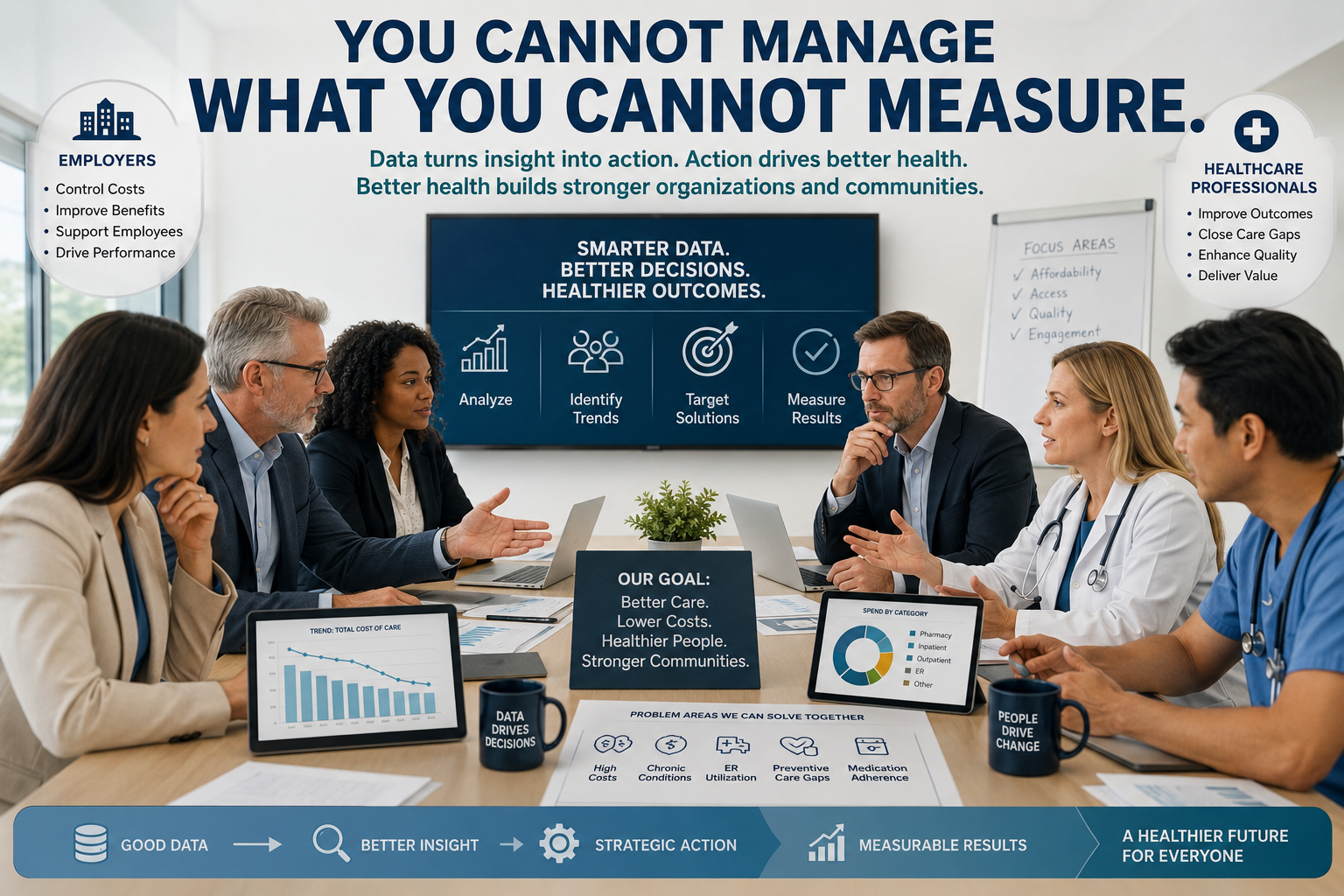
I know the word “data” is not welcome in discussions about how DPC practices interact with employer-sponsored health plans. Personally, I think we have a difference in definition on what that word actually means. When the health plan in question is structured properly, data helps everyone at the table. After all, “you cannot improve on that which you cannot measure”.
When DPC is at the foundation of the health plan design, and DPC has a front-and-center seat at the table, the data collected continues to prove, repeatedly, that DPC is the only prudent choice in how health plans should pay for primary care. But please bear in mind that the health plan must pay for much more than primary care, a burden I’m sure you’re happy you don’t have to bear. Smart health plans prove that when DPC is the preferred type of primary care, the plan spends much less on many other things simply because it has the right seat at the table.
Take this example – DeSoto Memorial Hospital’s health plan, where Epiphany Health, Dr. Lee Gross’ DPC practice in Florida, is the preferred primary care option in the hospital’s plan design. DeSoto Memorial Hospital chooses the FairCost Health Plan architected by the aforementioned Carl Schuessler. DPC Dr. Lee Gross is an integral key to the success of the plan, and the data proves it.
Watch here as Dr. Gross shows the FairCost Health Plan’s data, proving to the audience at the Free Market Medical Association that DPC is the right way to pay for primary care beyond a shadow of a doubt — https://youtu.be/0ZOmjgBOJTU?si=JjTq1Mc1XmGBs46n.
But don’t just take the good doctor’s word for it. Listen here as one of the employees of DeSoto Memorial shares her story and how the plan has worked for her — https://youtu.be/U24-ltQTaHQ?si=VX7rE83PlmE9iDbr.
Here’s the moral of the story. When a health plan is designed properly, and DPC sits in the right seat at the table, contributing value to all aspects of how care is delivered to that population of employees, the data speaks for itself, and DPC practices do not have to bear the burden of “metrics” the way you were terrorized with it in the past. It’s time for a more mutually agreeable definition of “data”.






Have you figured out what it is we should measure? And then the next question is how do we measure it.