The After-Visit Summary Wasn’t Built for Direct Primary Care
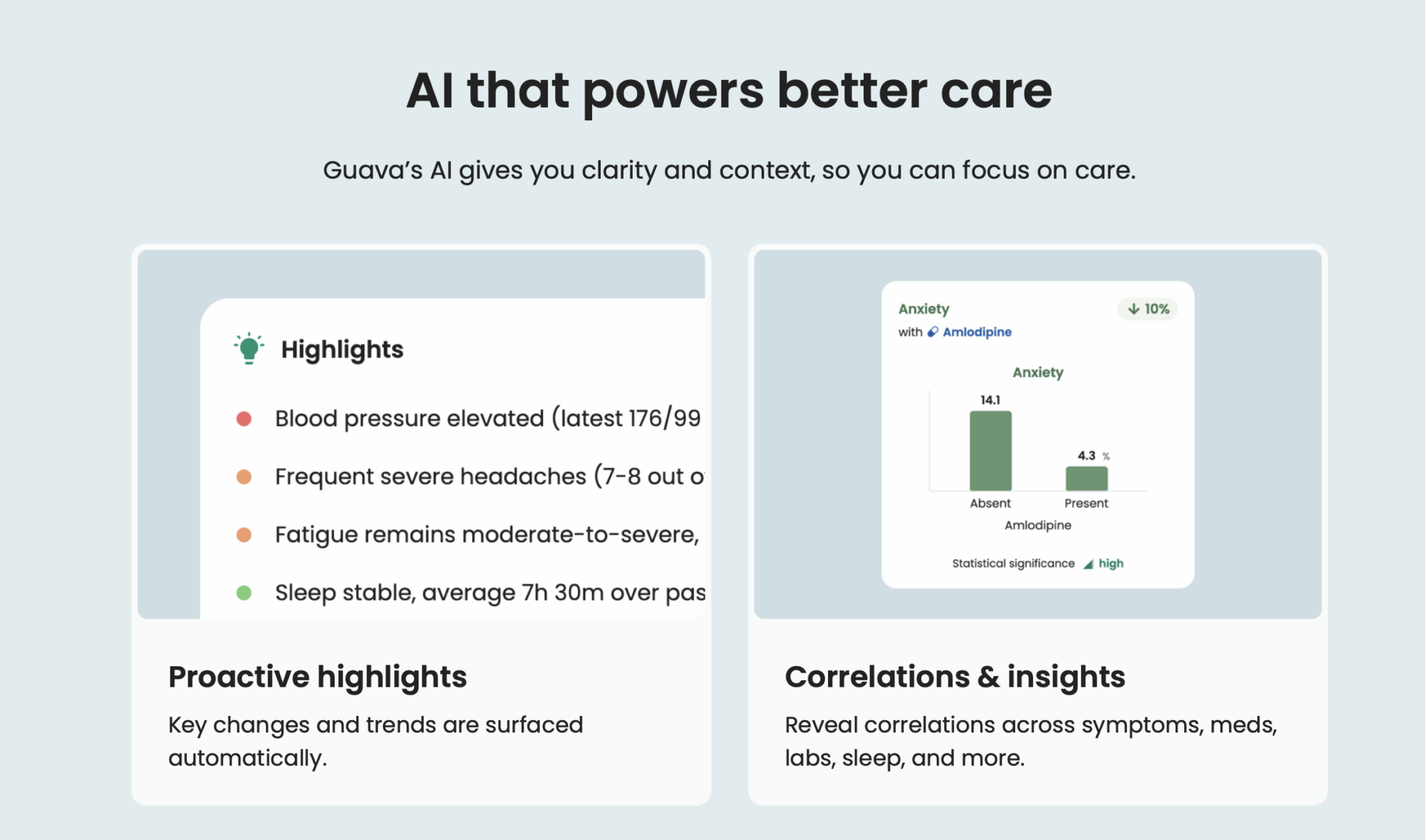
Summary: An after-visit summary documents one appointment, but direct primary care is an ongoing relationship. Guava’s AI summaries turn records, labs, and wearable data into patient-friendly medical reports that show members their progress over months, plus clinician-facing briefs that cut pre-visit chart prep to minutes.
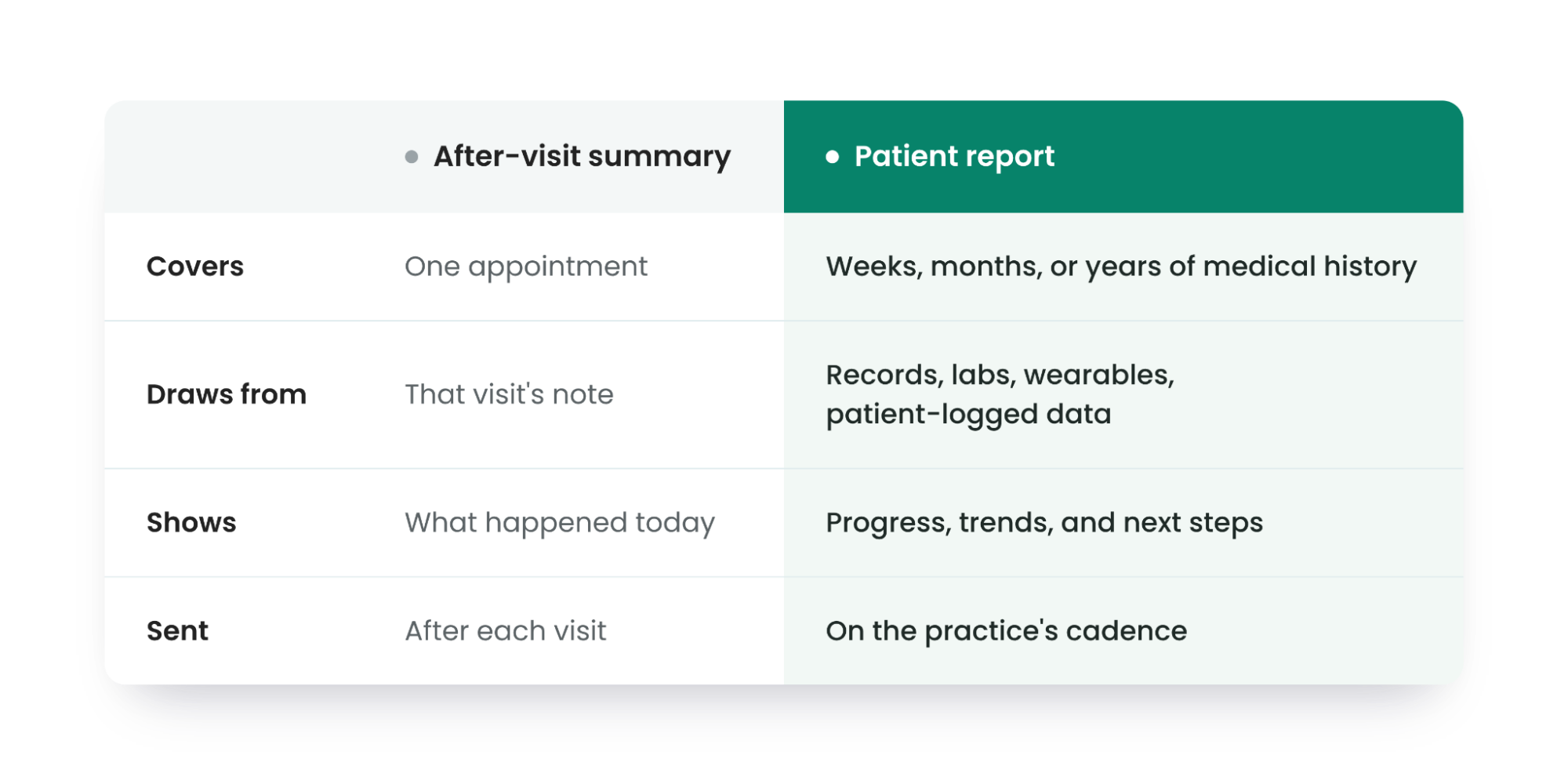
The after-visit summary was designed for fee-for-service medicine: one appointment, one note, and perhaps a list of instructions. It answers a narrow question: what happened today?
That model doesn’t fit how DPC practices function. If you run a DPC practice, you’re likely texting patients between visits, ordering labs on their schedule rather than a payer’s, and watching wearable data accumulate in the background. Much of that work would never make it into a chart note, and an after-visit summary isn’t meant to capture it.
When members can’t see what’s happening between visits, it gets harder for them to connect their monthly payment to the care they’re actually receiving. Guava‘s AI summaries help patients feel the tangible value of your care, and they help you expedite your chart review process as well.
Where does the data come from?
Both summary types are built on the data Guava consolidates. Guava brings a patient’s health data together into one unified record, including EHR data through direct integrations with Hint, Elation, Cerbo, athenaOne, and Akute, results from outside labs and patient portals, uploaded documents, messaging in Guava and Spruce, and data from more than 100,000 wearables and health apps. Every summary Guava generates, whether for patients or clinicians, draws on that single record.
What a patient report shows that an after-visit summary can’t
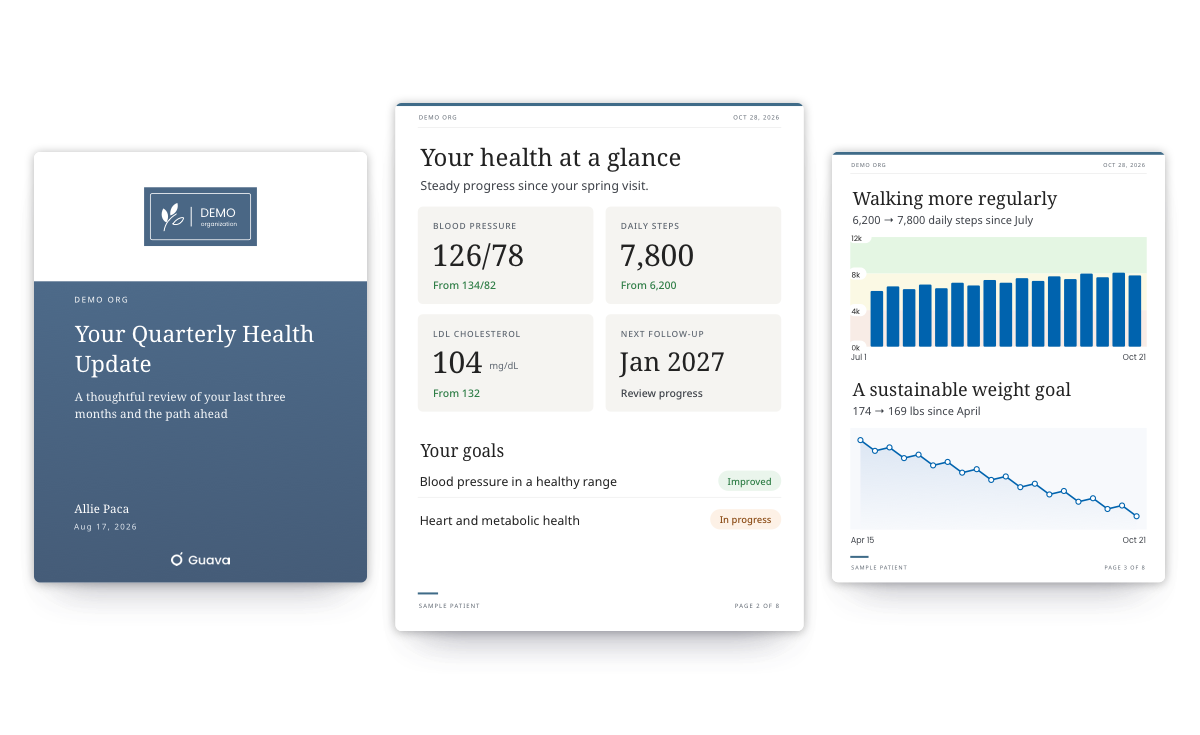
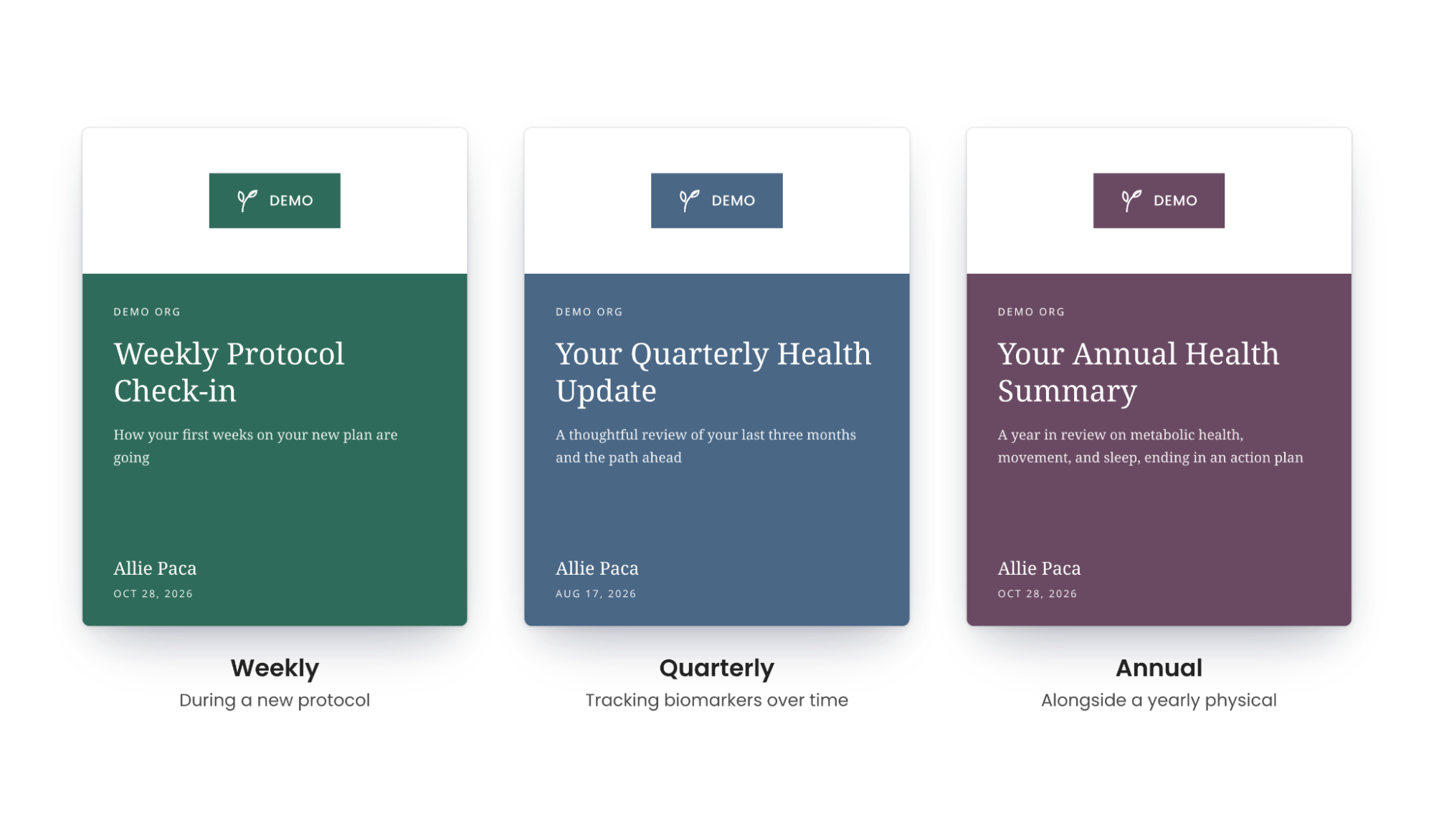
A patient-friendly medical report looks across weeks, months, or even years of records, labs, conditions, medications, family history, and wearable data to show where a patient started, what’s changed, and what comes next. It’s written in plain language, with your interpretation and next steps built directly into the document.
Research shows that even outside of DPC, patients want this context and interpretation from their doctors specifically. A 2025 JAMIA Open study found that older adults struggled to interpret their own lab results and said they’d rather have their physician explain them.
As opposed to after-visit summaries, reports also run on whatever cadence fits your panel. This could be monthly updates for members, quarterly reports organized around your practice’s pillars of health, or a one-off tied to abnormal lab results or a completed protocol. Physicians can build their template once, then apply it across their patient panel.
Before the visit: one brief instead of five portals
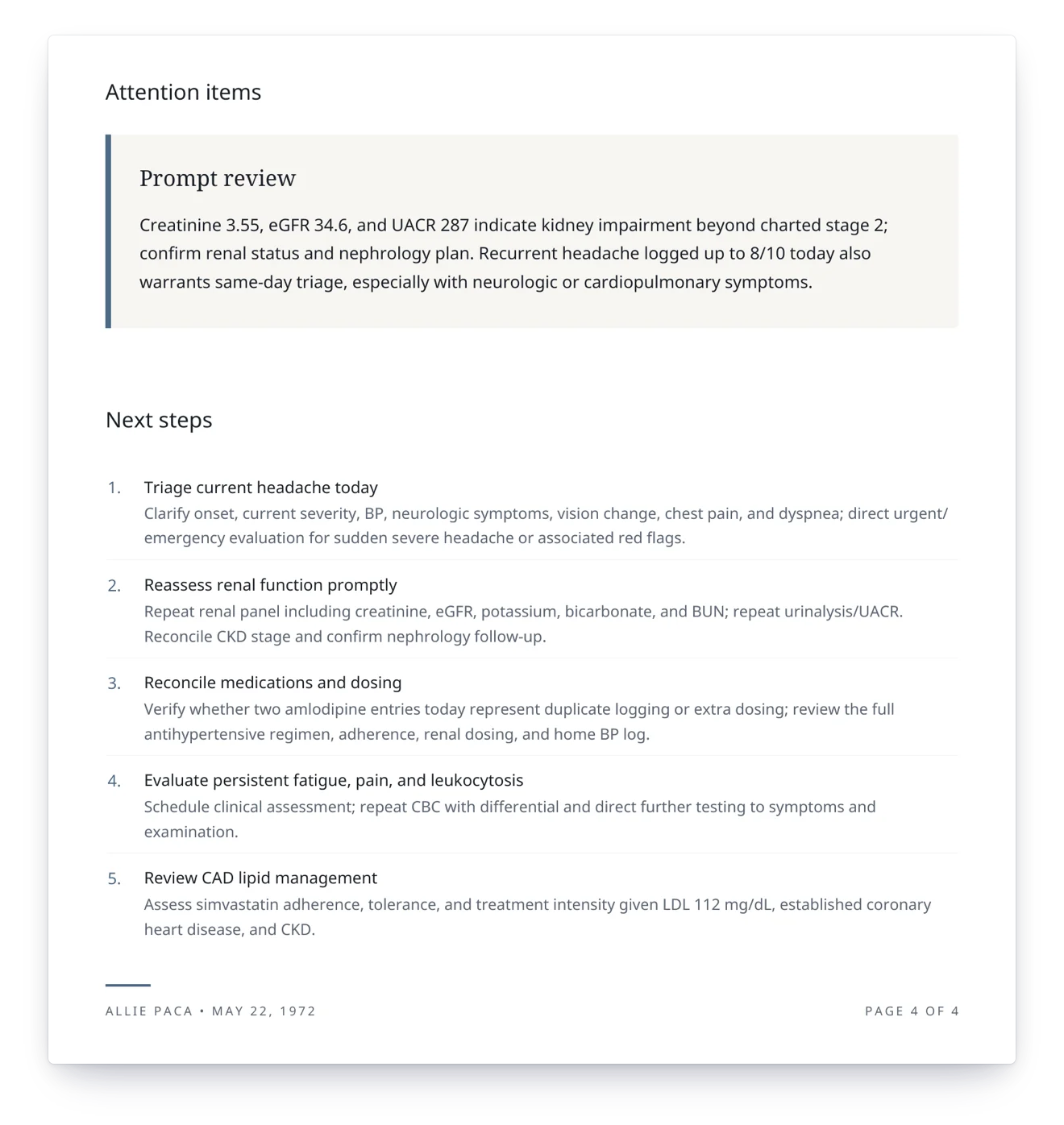
A clinician-facing AI summary turns the same record into one pre-visit brief: labs, medication changes, wearable trends, recent messages, and patient-tracked data, organized around what changed and what needs attention. Practices generate summaries for one patient, a full day’s schedule, or an entire panel in one to three minutes. With one click, clinician summaries can be saved back to Hint and Elation.
Clinical judgment stays with you
No patient report reaches a patient until you’ve reviewed and approved it. You can edit the language, reorder or remove sections, and add your own notes before anything goes out.
Guava also flags conflicting, sensitive, or missing information for a second look, such as office and home blood pressure readings that don’t match. These flags are there to direct your attention; they don’t make clinical determinations on their own. The AI handles the first draft and pulls the data together. You make the call.
What this means for your DPC practice
The after-visit summary still has a job to do: it documents the appointment. But a membership practice also needs to demonstrate the value of the relationship itself. Patient reports give your members a tangible record of how their health is changing. Clinician summaries give you back the prep time you need to keep delivering that level of care.
Read the full breakdown of AI clinical summaries, see how patient-friendly medical reports are built, or explore the Guava Provider Dashboard.
Frequently asked questions
Why isn’t an after-visit summary enough for DPC?
It documents a single appointment. DPC care is ongoing, so members need a report that shows how their health is changing across visits, labs, and wearable data.
What is a patient-friendly medical report?
A plain-language summary of a patient’s health and progress over time, built from records, labs, and wearable data, with the physician’s interpretation and next steps.
What is an AI clinical summary?
A structured, clinician-facing brief generated from a patient’s records, labs, and wearable data to prepare a provider before a visit.
Does a clinician review summaries before they’re used?
Every patient report is reviewed and approved by a clinician before it’s shared. Guava also flags conflicting or sensitive items for a second look.
What data sources feed into Guava’s summaries?
Integrations like Hint, Elation, Cerbo, and athenaOne, Practice Better, Akute, Practice Fusion, Spruce, and InBody, plus uploaded records, reports, patient portal connections, wearables, and patient-logged data.