AI Tools in Guava for DPC Physicians: Less Admin, More Patient Time
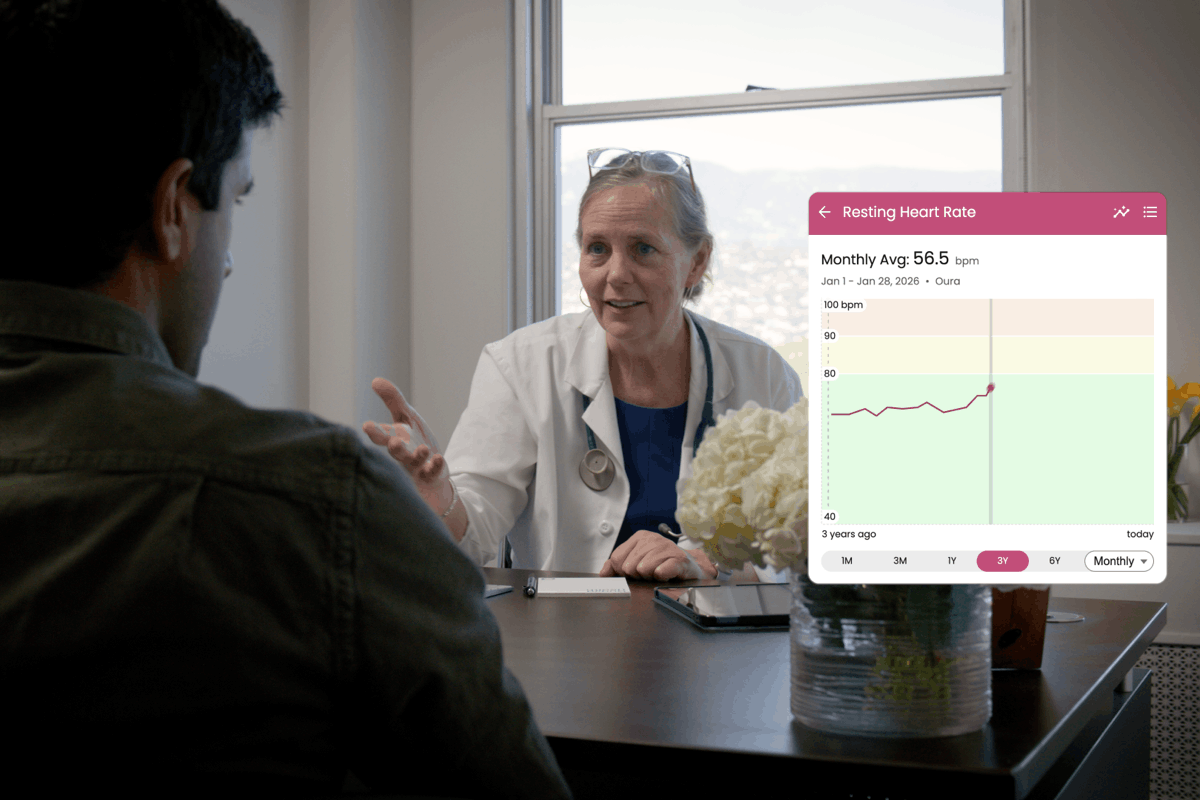
DPC and concierge physicians lose significant time each week hunting across fragmented labs, PDFs, and patient portals before they can think clinically. Guava’s Provider Dashboard addresses this with AI Highlights, plain-language history querying, automated document parsing, and pre-visit summaries. This is all layered on top of the EHR and practice management tools DPC practices already use.
When you think back to your last full clinic day, consider where the time actually went. How much of it was direct patient care? And how much was spent chasing a fax from an outside lab, scrolling a PDF for one number, or piecing together a patient’s history from four different portals?
For DPC and concierge physicians, this administrative drag is the hidden tax on the model. You built a practice around access, attention, and continuity. But data fragmentation continues to pull you away from the exam room, and no amount of streamlining your schedule or reducing panel size can fully fix it.
This post looks at how AI in a modern provider dashboard can reclaim that time, and why it matters for both care quality and long-term patient retention.
Why does record-hunting still eat so much of a DPC physician’s day?
Direct care removed the insurance middleman; however, it did not remove fragmented data. A single patient might arrive with lab results from three different facilities, each with its own units and reference ranges; physical records from a prior PCP; wearable data on their phone; and symptom information scattered across notes, texts, and memory.
According to the American Medical Association, physicians spend about 20 hours per week on indirect patient care and administrative tasks (AMA Organizational Biopsy). A significant portion of that time is not spent on documentation or review, but on retrieval.
The problem is not a lack of data. It’s a lack of a unified, searchable view of it. Pulling fragmented information into a clinical picture is slow, manual work that often must happen before you can even begin to think about the patient in front of you.
Does Guava replace the tools your DPC practice already uses?
No, and this is an important distinction. One of the first questions DPC physicians ask about any new platform is whether it will disrupt the workflow they’ve built around their existing tools.
Guava’s Provider Dashboard works as a complementary layer that sits alongside your existing tools. It integrates directly with Hint, Elation, Cerbo, athenaOne, Spruce, InBody, and more, so patient data flows into a single organized view without asking you to abandon the systems your practice already runs on.
For practices already running on EHRs with direct integrations, this means clinical records and billing continue in their existing system of record, while Guava adds longitudinal visibility, AI tools, and the patient app on top.
Does Guava surface records from outside my practice?
Records from other practices show up as well. Nearly every patient carries a trail of records from prior primary care doctors, specialists, hospitals, and ED visits, and much of that history lives in large systems like Epic, Cerner, or something else. Even when those records don’t arrive through the same direct integration, Guava can surface them in the dashboard via patient connections. So you’re not limited to the practices you work with today; you can see the wider picture of a patient’s care.
What other health systems and devices does Guava connect with?
Beyond direct EHR integrations, Guava also connects to Apple Health, Google Health Connect, Oura, Garmin, and over 100,000 additional health systems and portals. Patients can sync these directly or upload physical documents themselves—so records from outside your practice still reach the same consolidated dashboard without requiring anyone to start over.
What AI features in Guava’s Provider Dashboard actually reduce the workload?
Guava’s AI tools are built for retrieval and synthesis rather than clinical decision-making. This is a deliberate distinction: the goal is to remove the manual work that stands between you and the clinical call, but not to replace the call itself.
How does the AI Highlights feature work for pre-visit preparation?
AI Highlights auto-generates at the top of each patient’s profile, scanning their full Guava history to surface what’s most relevant. Something like a climbing biomarker, a new symptom pattern, or a recent encounter from another facility is flagged before you open the chart, allowing you to arrive at the appointment already oriented.
This is particularly useful for DPC physicians managing patients with complex or chronic conditions, in which meaningful changes can emerge gradually over weeks of data.
Can you query a patient’s full history in natural language?
Yes. Guava’s AI assistant lets you ask questions grounded in a specific patient’s complete longitudinal record — labs, messages, symptom logs, wearable data, uploaded documents — and receive answers without manually digging through a chart. “When did they last have a lipid panel?” or “Have they reported migraines before?” become fast lookups rather than manual searches.
How does Guava handle historical documents from new patients?
New patients, especially those who actively seek out a DPC practice, often arrive with years of records in PDF form. Guava’s AI parses uploaded documents and extracts structured information: lab values, diagnoses, medications, and more. Historical context that would otherwise require hours of manual review becomes accessible in minutes.
What do AI-generated patient summaries look like before a visit?
Customizable prompt templates let you generate a concise summary of what’s changed since the last visit, what’s trending, and what warrants follow-up. The prompts are reusable, so visit prep becomes a matter of reviewing rather than assembling. This allows you to spend that time thinking clinically rather than searching.
What happens when the administrative load drops?
Reducing time spent on records creates more time for patient care, which is central to the DPC and concierge practice model.
Patients who feel genuinely known tend to stay. Retention in a membership practice is driven by relationship quality, and relationship quality is protected when the physician can walk in prepared, ask better questions, and stay present. A tool that reduces the administrative drag between visits is, in practical terms, a tool that strengthens patient retention.
Dr. Radley Griffin, founder of Griffin Concierge Medical, put it this way: “Guava is providing opportunities for insight and touch points between visits, and our patients are seeing the benefit as well. Just last week with the assist from Guava, we were able to detect A-flutter in a patient, resulting in timely treatment and referral.”
How does the Guava patient app increase the value of DPC membership?
Retention is not only about the care experience during visits. It’s about what patients feel they receive for their monthly fee. The Guava app, which has a 4.8 rating on the App Store and 4.9 on Google Play, adds a layer of value that patients can see and use every day.
With the app, patients can:
- View and contribute to a consolidated health history, pulling in records from your practice and any external portals they connect
- Track symptoms easily, building a more precise picture over time
- Connect wearables so sleep, heart rate, activity, and other metrics flow in automatically
- Message their provider in context, without phone tag
- Use a HIPAA-compliant AI assistant to prepare for their own appointments, including generating a Visit Prep PDF to bring to the visit
That last feature matters more than it might seem. Patients who arrive organized and prepared make for sharper, more efficient visits. The AI assistant also supports engagement between appointments, so you have clarity instead of guesswork for weeks at a time, and patients aren’t left wondering whether their fee is worth it.
While many DPC practices offer direct provider access as their core differentiator, the Guava app turns membership into an ongoing, tangible experience. That membership reinforces retention from the patient side, while the dashboard reinforces it from yours.
What does this look like in practice?
For a DPC physician onboarding a patient with a 15-year fragmented medical history, Guava eliminates a significant manual chart-review burden. The physician enables a direct integration with their EHR; the patient connects outside portals and uploads documents; AI structures the data; and the physician opens a clean, searchable summary.
For a follow-up visit, AI Highlights flags a gradual rise in fasting glucose across three separate lab sources or a glucose monitor. The patient logged fatigue in the app the previous week. The connection is visible before the appointment begins, and the conversation can start where it should.
As Naomi Bauer, PT, DPT, a POTS and Long COVID Rehab Specialist, noted: “I can see at a glance how specific metrics are trending on daily, weekly, and monthly timeframes so I can have a better understanding of my clients’ status and progress.”
Time back in the room is the real metric
The direct care model works best when your energy goes directly toward patient care over paperwork. AI patient summaries, plain-language history search, document parsing, and auto-surfaced highlights each return a portion of that energy. The Guava patient app then deepens the relationship and raises the perceived and real value of your membership.
Less admin for you and more value for patients is a straightforward, durable strategy for strengthening retention, and it integrates with the Hint, Elation, Cerbo, athenaOne, Spruce, and InBody tools you already rely on.
Explore Guava’s Provider Dashboard at guavahealth.com/provider-dashboard, or reach out to the team at [email protected] to see the AI features in the context of your own workflow.
Frequently Asked Questions
What is a provider dashboard for DPC practices?
A provider dashboard is a platform where DPC and concierge physicians can view a patient’s records, labs, symptoms, and wearable data in one unified place. Guava’s Provider Dashboard adds AI tools that automatically search, summarize, and highlight longitudinal patient data. Read more about AI tools in Guava.
How does AI generate patient summaries before a visit?
Guava’s AI reviews a patient’s full history and recent changes, then produces a concise summary of what’s trending and what needs attention. The result is a visit prep process built around reviewing rather than manually assembling context from multiple sources.
Can AI parse old or uploaded medical records?
Yes. When patients upload historical documents such as PDFs, scanned labs, and prior visit notes, Guava’s AI extracts and structures key details like diagnoses, lab values, and medications, making years of fragmented history accessible and searchable.
What if a patient’s records aren’t available through a direct integration?
Guava can still surface those records via patient-initiated connections. Patients can link their existing portal accounts or upload physical documents directly, so records from large hospital networks, including systems without a direct integration with your practice, still flow into the dashboard.
How does reducing admin work support DPC patient retention?
By cutting the time physicians spend on record retrieval, the dashboard frees more of each visit for direct patient care. Stronger relationships and more attentive visits are the primary drivers of retention in a membership-based practice.
Is the patient AI assistant HIPAA-compliant?
Yes. The Guava app’s AI assistant is fully HIPAA- and GDPR-compliant. Patients can use it to review their health data, prepare questions, and generate a Visit Prep PDF before appointments. Read more about how Guava keeps data secure.
Does Guava replace tools like Hint, Elation, or Cerbo?
No. Guava integrates directly with Hint, Elation, Cerbo, athenaOne, Spruce, and InBody, and more. It is designed to complement your existing workflow, not replace it.
Does AI make clinical decisions in Guava’s Provider Dashboard?
No. Guava’s AI handles retrieval, synthesis, and summarization. Clinical decisions remain entirely with the physician.
Additional Resources:
- Guava Provider Dashboard FAQ
- How to Use Guava’s Provider Dashboard
- Understanding Your Liability as a Guava Provider
Meta data
Meta title
AI Tools in Guava for DPC Physicians: Less Admin, More Patient Time
Meta description
Discover how AI in Guava’s Provider Dashboard helps DPC and concierge physicians cut record-hunting, improve visit prep, and strengthen patient retention.