Hysteria or Hyperaldosteronism?
Written by Emily O’Rourke, MD
A 31-year-old healthy female without any history of Hypertension, Obesity or significant abnormalities on bloodwork went to the ER with sudden loss of use of her left hand with pain, numbness and tingling in addition to weakness. Her blood pressure was significantly elevated at 190/110 and remained elevated throughout her hospitalization with systolic blood pressure in the 150s. She also had hypokalemia (low potassium) and borderline hypomagnesemia (low magnesium). Following normal brain imaging, potassium replacement, and no additional bloodwork, she was discharged home and told that her symptoms were “all in her head”.
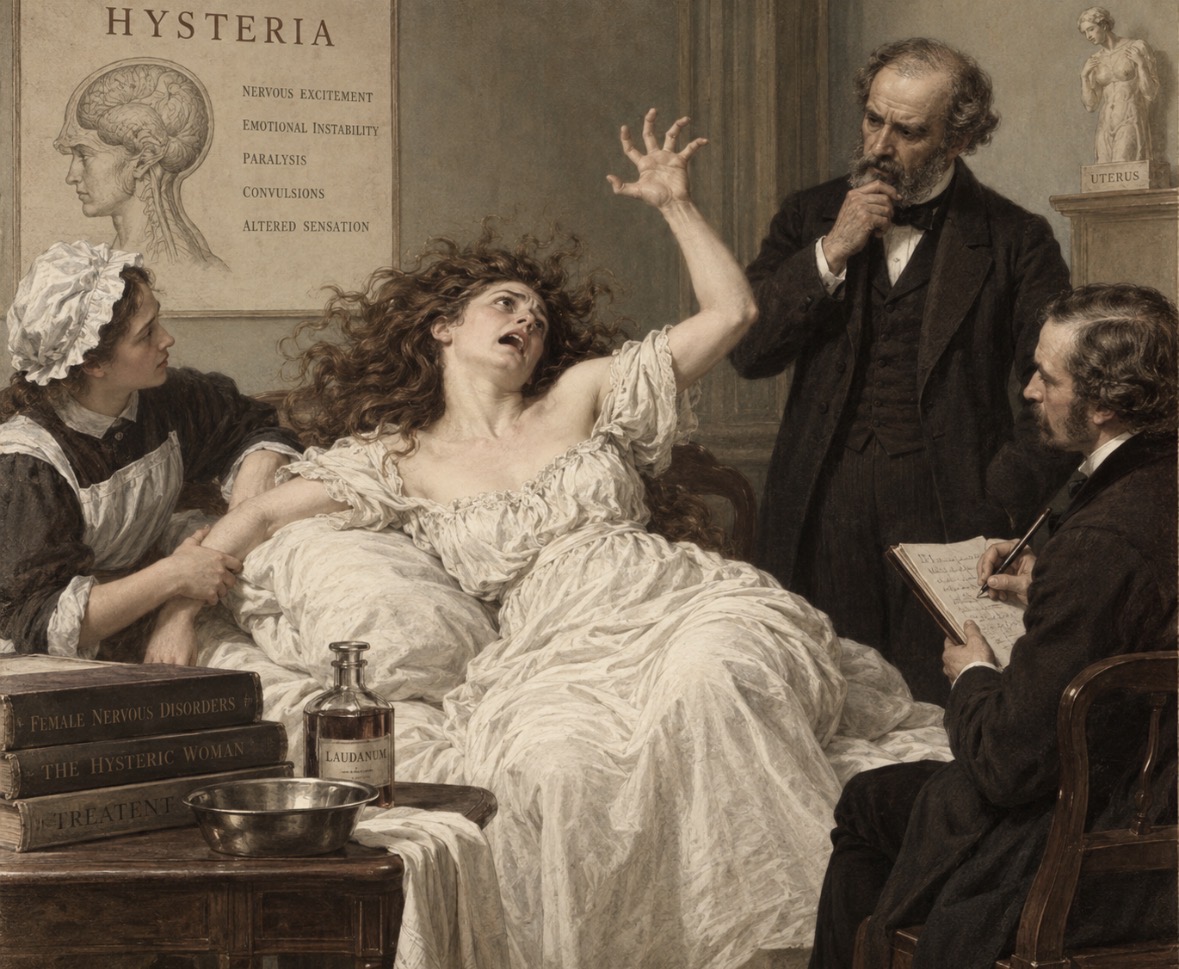
For nearly 4,000 years, doctors have been telling women that their symptoms are all in their heads. In 1900 BC, the term Hysteria, which means “wandering uterus”, was first used to explain symptoms in women from anxiety to seizures. Hysteria was still being used in the 1800s to explain nearly every symptom a woman could experience, from psychological symptoms of depression or anxiety to severe physical symptoms of syncope, seizures or paralysis. The diagnosis of Hysteria remained in the Diagnostic and Statistical Manual of Mental Disorders until 1980, when it was changed to Conversion Disorder, which was then changed to Functional Neurological Disorder in 2013.
When I saw this patient for her hospital follow-up, her blood pressure was elevated at 152/100 with tachycardia at 122 beats per minute. She noted recently elevated pulse and blood pressure on her Apple Watch leading up to her hospitalization, as well as increased anxiety and difficulty sleeping due to new-onset night sweats. I reassured her that her symptoms were real and were not caused by an anxiety disorder. I told her that I would help her determine the true underlying causes of her symptoms. After examining her, I diagnosed left cervical radiculopathy and ordered testing to rule out various endocrine conditions. Her labs came back consistent with Primary Hyperaldosteronism.
Up to 30% of patients diagnosed with Hypertension prior to age 40 have Primary Hyperaldosteronism as the underlying cause of their Hypertension. Meanwhile, psychogenic paralysis, now referred to as a Functional Neurological Disorder, is extremely rare, affecting less than 0.2% of the population. Primary Hyperaldosteronism causes severe hypertension, hypokalemia, hypomagnesemia, and muscle weakness. In retrospect, Primary Hyperaldosteronism was the most obvious diagnosis, easily diagnosed with a simple blood test. I find it strange that her symptoms were instead attributed to the exceedingly unlikely possibility of a Functional Neurological Disorder, but that’s what doctors have been doing for thousands of years.











Great job! FND diagnoses are on the rise in the covid vaccine injured, unfortunately. See Maddie de Garay’s story. She still cannot walk, 5 1/2 years later. Not surprising, most are women, but I know a few men with neurologic and cardiovascular injury. http://www.react19.org
My last FND-diagnosed patient was a man. I told at least 2 patients today that their problems were all in their heads. (And I am right.) And they’re both men too. We need a DSM-4 version of “Hysteria” for dudes.
Testerical?