Pediatric DPC’s Honest Problem
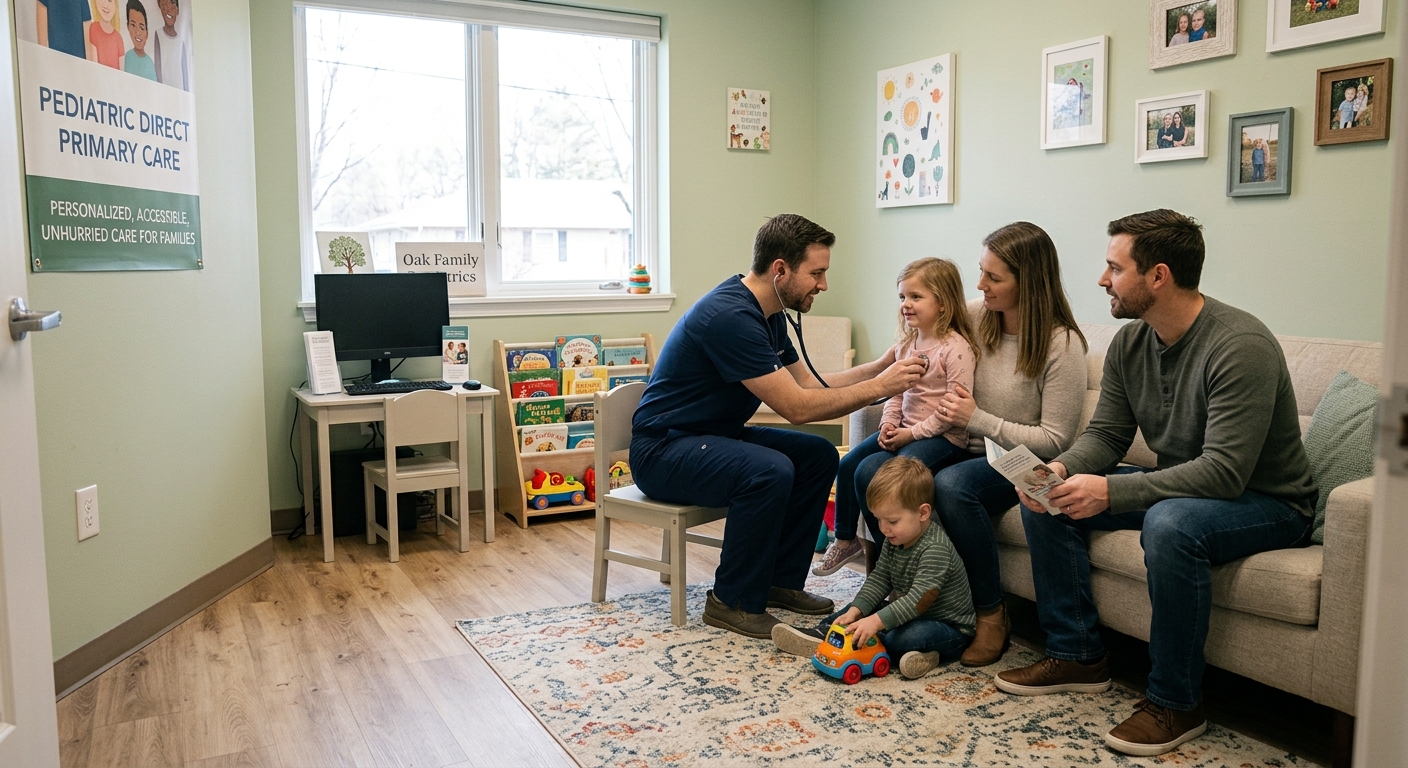
Family medicine DPC has a natural tailwind that pediatric DPC doesn’t. Employers.
When a company offers DPC as an employee benefit, it buys primary care access for its workforce. Adults. People with hypertension, diabetes, anxiety, chronic back pain. All conditions that drive real healthcare costs and make the ROI on a DPC membership easy to calculate. An employer can look at their claims data, see what employees spend on primary care and avoidable ER visits, and make a straightforward business case for a DPC contract.
Kids don’t fit that model. Children aren’t on the company payroll. They’re dependents, and dependent care benefits are structured, valued, and scrutinized differently. The employer-sponsored DPC pipeline that has fueled so much of the growth in family medicine DPC simply doesn’t flow the same way into pediatrics.
This matters more than it might seem. Business to business is almost always more lucrative than business to consumer. When you sell to an employer, you sign one contract and cover hundreds of lives. When you sell to families, you sign hundreds of contracts and cover the same number of lives. The revenue potential is similar on paper. The effort required is not. Family medicine DPC physicians can land a single mid-sized employer and fill a meaningful portion of their panel overnight. Pediatric DPC physicians recruit one family at a time, one conversation at a time, one enrollment at a time.
Without an employer subsidy, a pediatric DPC membership comes straight out of a family’s pocket even if it is through an HSA. For many families, that’s manageable. The value is real, the access is real, and they feel it immediately. But for plenty of others, even a modest monthly fee on top of whatever their healthcare dollars are going to places, pediatric DPC lands firmly in the category of almost a luxury service. Something nice to have if you can afford it. Not a necessity.
That perception is a problem. Because what we offer isn’t a concierge upgrade. It’s just medicine done right. But when the pricing mechanism positions it as optional, that’s how families see it.
Pediatric DPC is growing, but slowly, and this is a big reason why. The other reason is most employers partnering with a Family Medicine DPC will usually see kids as well. This makes standalone Pediatric clinics an even harder sell. Pediatric DPC almost becomes like a specialty direct care model which is also growing.
These are all signs and symptoms of an emerging market figuring out its role in the healthcare space.





Great article and makes a lot of sense. Peds DPC can work with employers. I have firsthand experience working with employers using both family docs and peds docs. We did it for years here in my town with our local county. Families that wanted a peds doc could chose that for their children. All kids under 4yo had access to the pediatrician included with DPC, since our family docs had a tough time getting vaccines. The peds DPC doc we worked with has a vaccine system and the employer paid for those vaccines directly to the Peds doc office. It was a beautiful connection of DPC for employers, Peds, and family docs. Unfortunately, our awesome Peds colleague and friend, Dr. Hill, died unexpectedly, and 100s of kids lost their DPC peds doc. So, the question is, can DPC docs work together? Can Pediatricians and family physicians be friends?
Can Pediatricians and family physicians be friends? YES. It’s actually a beautiful partnership helping people/patients/families live well or better during their circle of life, also known as their ‘dash’ (between birth and death dates) and we help each other mutually grow.