Fear Will Remove The D in DPC
Recently, there have been two awesome posts discussing the potential downfall of DPC. Emily O’Roarke wrote Is DPC Scalable? here and Ryan Neuhofel wrote The Rise of DPC (and its downfall) on Medium. They are great pieces of work, so please read them.
I just want to simplify some things here. If you start a Direct Primary Care practice, it will take one to two years to fill up. This is the average. When you are filled, do you think you would have ANY reason to work with third parties? Why would you work with the government? Would you work with Humana or United Healthcare, which someday may have DPC options? I hope not because the D in DPC stands for Direct! That means it is between you and the patient.
The reason many docs may jump on these options is that if they are just starting out, they want patients, and they want them fast. They are scared and need money to live on. This is totally understandable, but the problem is that these third parties salivate when they see newbies and prey on their fear. These third parties (there will be a lot more in the future) will guarantee that they won’t interfere when they send patients their way, but they will. Once they get their hooks into them, it’s over. They can change all their promises as the years go by, and these DPC Docs will have to capitulate because they won’t want to fire patients with whom they have a relationship.
Let’s say the government, after approving HSAs for DPC, now says it will give a certain amount of money each month to Medicare or Medicaid patients to use for Direct Primary Care. Great, you say! Will there be strings attached? Oh, maybe a metric here or there. Will it get worse? Of course! You see, the initial offering was only bait. As your practice fills with these patients, they start adding more metrics, hurdles, and constraints. Am I being ridiculous? Maybe, but I know some third parties already want back-end access to your EHR for data already. Why do you think that is?
How about the government? You know, the one who wastes billions and has no accountability for our tax dollars. Well, they think doctors always need to be scrutinized. We are evil, you know. It’s not so crazy to think that the government could use some crazy tactics if it wants control over you. No way, you say. Well, this is happening in Ohio:
Ohio lawmakers have proposed legislation that would enable utility companies to remotely control customer thermostats in order to reduce strain on the power grid “during periods of high demand”.
But that story is about Ohio and not even about healthcare. True. How hard would it be for the government (local, state, federal) to make up some emergency “during periods of high demand” and dictate how DPC practices operate (how many patients they take on, membership fees, etc.)?
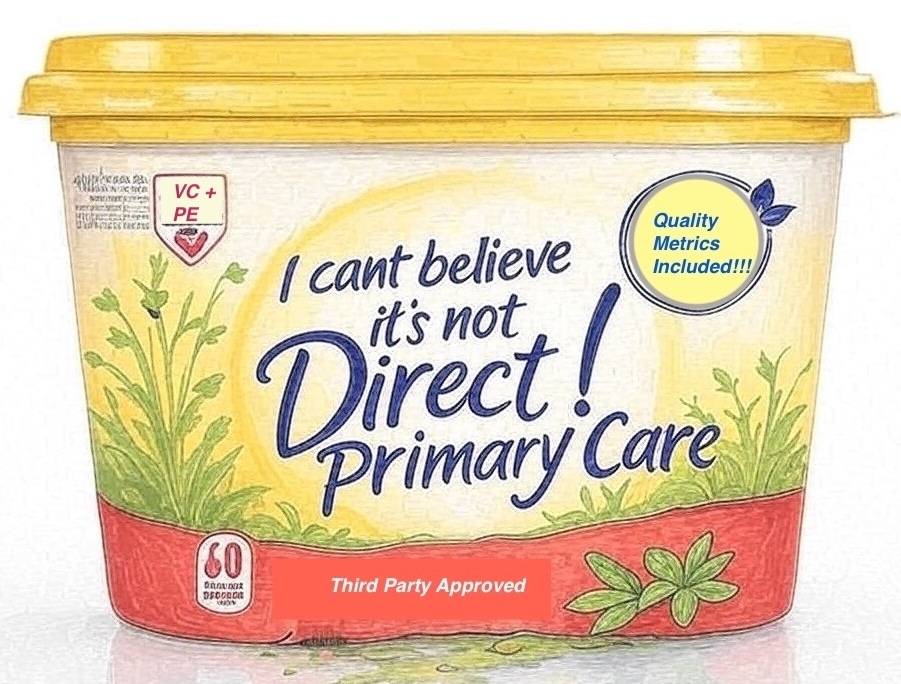
Maybe this is all paranoia, but go back and read those two articles I highlighted at the start of this post. Fear could remove the D in DPC, but fear could also save the purity of it. Between private equity scaling knock-off DPC practices and bastardizing the name, or the government and insurance companies getting their claws into private DPC practices and changing them from the inside, the biggest risk is that there will be no real DPC practices left in the future (hence, my image above).
If we don’t discuss this openly, then we are doing the future DPC doctors an injustice. This is why I love this blog, because it gets the word out. If you disagree with me or Emily or Ryan then please leave some comments and we can keep the conversation going. That is the point of DPC News.





DPC is fine as long as one locates a practice to where people can afford to pay the fees. Locate in the wrong area and one will go bankrupt. PERIOD. It’s supposed to be the refreshing primary care “savior” but it’s a piece “O” chit as people expect to be taken care of “FOR FREE”!!! Locate in the right place and one will have a nice bit of life. Me? I did a group practice, scheduled call and took care of all my patients in the hospital. Sweated out when I couldn’t get a patient transferred to specialty care that I knew they needed but kept them alive until I could get them OUT! I started out in surgery and did a 5 and a half year residency to complete my training. I couldn’t do the surgery route but I knew when I had to get surgeons involved in particular cases.