DPC Myth #22: Direct Primary Care is Unaffordable for the Poor (Especially Medicaid Recipients)
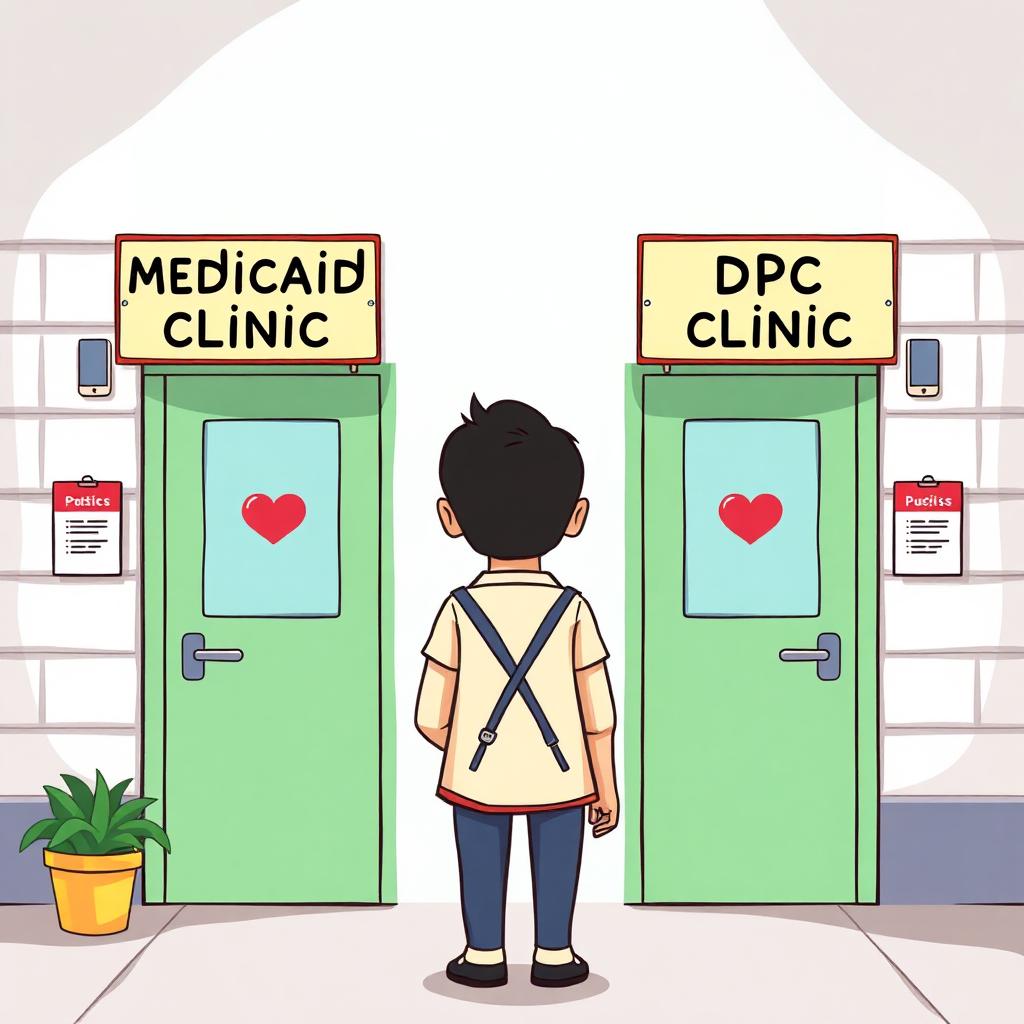
I grew up in a poor family. With the exception of not having the coolest clothes for school, I didn’t always know that at the time. Some of that ignorance was because of my parents’ priorities with their limited means. There were years that my family lived in subsidized housing and my family received food stamps. Despite limited means, my parents prioritized education and health.
With a brief AI search: The average costs of DPC for individual ranges from $50 to $100 Annually, this totals about $600 to $1,200, providing access to primary care services including office visits, screenings, and preventive care. For a family of five the average monthly cost ranges from $150 to $300. Annually, this totals between $1,800 and $3,600 for comprehensive primary care.
In contrast, concierge primary care practices typically charge much higher fees, often upwards of $1,500 to $3,000 per year for individuals, and $4,000 to $10,000 for families.
It’s essential to consider where low-income households choose to spend their money. Many choose different priorities than I saw chosen by my parents. Recent estimates show that Medicaid households often allocate a substantial portion of their budgets to non-essential items, including:
– Tobacco Products: Medicaid households can spend an average of $100 to $300 monthly on tobacco.
– Alcohol and Recreational Drugs: Combined spending can be $150 to $250 or more per month.
– Subscription Entertainment Services can range from $30 to $100 monthly, covering services like Netflix, Spotify, cable, etc. For families, this can accumulate to around $300 monthly when accounting for multiple subscriptions.
– Spending on Professional Sports: estimates suggest that spending on professional sports could range from $135 to $465 monthly, influenced by ticket prices, merchandise, and subscriptions.
It is estimated that a significant number of Medicaid recipients believe in the “right” to free or reduced healthcare. Surveys conducted by organizations like the Kaiser Family Foundation often reveal that a significant percentage of Medicaid recipients believe healthcare is a fundamental “right”; their reports show that 60-70% of low-income individuals hold the view that affordable or free healthcare is a necessary entitlement.
Yet, when comparing costs, combined spending in Medicaid households on tobacco, alcohol, professional sports and entertainment could easily exceed $1,800 annually, demonstrating that households currently spend substantial amounts on lifestyle choices rather than health. This doesn’t include other nonessentials like designer clothes and electronics. By reallocating funds spent on those items, families could afford the monthly fees associated with DPC, providing them with essential healthcare access with a physician they can know and trust.
A Market-Based Approach: Following the Individual
A critical consideration in healthcare funding is how financial assistance or benefits are allocated and used.
– Food assistance programs like EBT/SNAP allow individuals to use benefits at the grocery store of their choice, promoting individual agency in food selection and nutrition. Does this program need some serious reform to truly focus on nutrition and for those truly in need? Sure! But the concept holds: the assistance goes to the individual, not the grocery store or bodega.
– In states with education vouchers, funding follows the student to the school of their choice, enabling families to choose educational environments that best suit their children’s needs. Again, the assistance goes to the student (or at least the school the student and parents choose), not automatically to the local public school.
– In contrast, Medicaid dollars are often tied to specific providers or health plans and do not follow the individual to the healthcare provider of their choice. This lack of flexibility can restrict access to preferred models of care such as DPC, which could enhance affordability and quality of services.
Studies have demonstrated that patients in DPC models experience improved health outcomes. Research indicates that people enrolled in DPC have better management of chronic conditions, including diabetes and hypertension, due to increased access to care and more personalized attention from their healthcare providers, usually physicians.
DPC patients also report higher satisfaction scores compared to those in traditional fee-for-service models, largely due to more time spent with physicians and less time dealing with administrative hassles. Would less administrative hassle happen if Medicaid dollars were allocated to patients to choose to use at the DPC of their choice? I’m not holding my breath, but I do enjoy dreaming.
DPC patients often utilize fewer emergency services, as regular and preventive care leads to better health management and early intervention. While this could be true for Medicaid patients, it may not materialize if they are impatient (pun intended) and have literally no cost barrier to access the ED.
Given the strong value proposition above for DPC, the problem largely remains ignorance, entitlement beliefs or different life priorities, rather than actual cost for many of the poor. Additionally, the vast majority of DPC docs I know provide a percentage of free care for those who are truly in need. DPC is affordable, even for the poor among us, who desire and value continuous, comprehensive, compassionate, accessible primary care. And it could become more affordable with some common-sense changes to Medicaid.
This DPC Mythbuster Series aims to debunk the most common fears, misconceptions, and half-truths that deter doctors from embracing Direct Primary Care. These opinions are from each individual blogger. You may or may not agree with them, but either way, leave a comment with your thoughts.





One year into my DPC experience in Michigan, and a big believer in the value of the model.tr However, several things about this article bother me. The comments on the choices low-income people make on how to spend their money, and the use of “entitlement” language is insensitive and unfair. To think it’s my job to tell anyone how to prioritize their spending is paternalistic. The author points out that many low-income people feel that they have a RIGHT to low-cost or free healthcare. Don’t you think they do? I’m concerned about any family physician who does not believe thta healthcare is a right! Finally, regarding patients on medicaid choosing DPC, there is another important factor here. I lost most of my medicaid patients when I transitioned to DPC, many not because of the membership fee, but how medicaid covers things. In Michigan, because I am no longer a medicaid provider, I “don’t exist” to them. This means that they don’t pay for anything I order, including lab studies, radiology studies, even prescriptions. (I know that many states have a “referring and prescribing” status for non-medicaid doctors that does mean things they order will be covered, but Michigan does not have this status.)
I hope that we eventually see major changes in our healthcare system that will give the DPC model a place in medicaid or other traditional health insurance coverage. That is likely to happen when there are enough of us who opt for DPC that the current system is unsustainable. We need to continue to have more compassion and less judgement for our less fortunate patients and neighbors.
I am just curious. Why are you charging a membership fee? Why don’t you give your services away for free? If healthcare is a right for every patient, then why do you charge them? This is a genuine question. I am not being snarky.
Ken, while I agree with your lament about Michigan’s dysfunctional Medicaid system being unwilling to recognize your orders to provide care for those recipients, we fundamentally disagree about rights.
I think that rights are God-given, fundamental and inherent (like the right to life). Anything that has to be produced, provided, manufactured, etc., including health care, is not a right.
I’m also not being paternalistic. People can make choices that I disagree with. As a physician, I don’t feel obligated to provide free care to someone that chooses to use their (even, and especially because they are, significantly limited) resources for NFL swag and smokes, especially when they could choose to use those same funds to pay for very affordable, excellent DPC care. It is their choice. I’m observing, not judging, and not being guilted or shamed into providing free care in that circumstance.
Seems if healthcare is a right for a patient to receive your care on demand, it is then our obligation to provide it without expectation of payment. If not, and you expect payment for your satisfying that right, who determines the terms and conditions of your serfdom?
Ahhhhhhh, there are nurses who expect to be paid. Transcriptionists who expect to be paid. What planet are you liberalistic bastids are from? If Randy Tobler was being sarcastic, I stand corrected. I expect he’s being sarcastic and so noted.
Ken, I also forgot to mention that although Medicaid is dysfunctional in the Commonwealth of Virginia, I, and my DPC colleagues, are able to place prescriptions, orders and referrals for our Medicaid patients that are recognized. I’m pleased at how many Medicaid patients find DPC a value!
Are insurance companies paternalistic with their reimbursement? They dictate how healthcare dollars are spent… In most everything in life, HE WHO PAYS THE BILLS MAKES THE RULES. not paternalistic, just a fact. DPC is a great deal for just about EVERYone: wealthy, poor, man, woman, child. Good primary care. Affordable. Accessible.