Your EMR Is Not Your Friend. Mine Is.

Ask any physician what they hate most about modern medicine and the answer is almost always the same. It’s not the patients. It’s the computer.
Epic. Athena. Cerner. These systems were not built for physicians. They were built for billing departments, compliance officers, and insurance companies. The physician is just the person who has to live inside them for ten hours a day clicking through dropdown menus, satisfying documentation requirements that exist purely to justify a billing code, and entering data that will never be read by anyone who actually treats the patient. Studies consistently show physicians spend nearly two hours on administrative tasks for every one hour of direct patient care. A significant portion of that is the EMR.
The tragedy is that we’ve accepted this as normal. It exists because insurance-based EMRs were designed to serve insurance. Not you. Not the patient.
DPC breaks that equation entirely. When there is no insurance to bill, there is no reason to build a system around billing. And the tools that have grown up inside DPC reflect that completely.
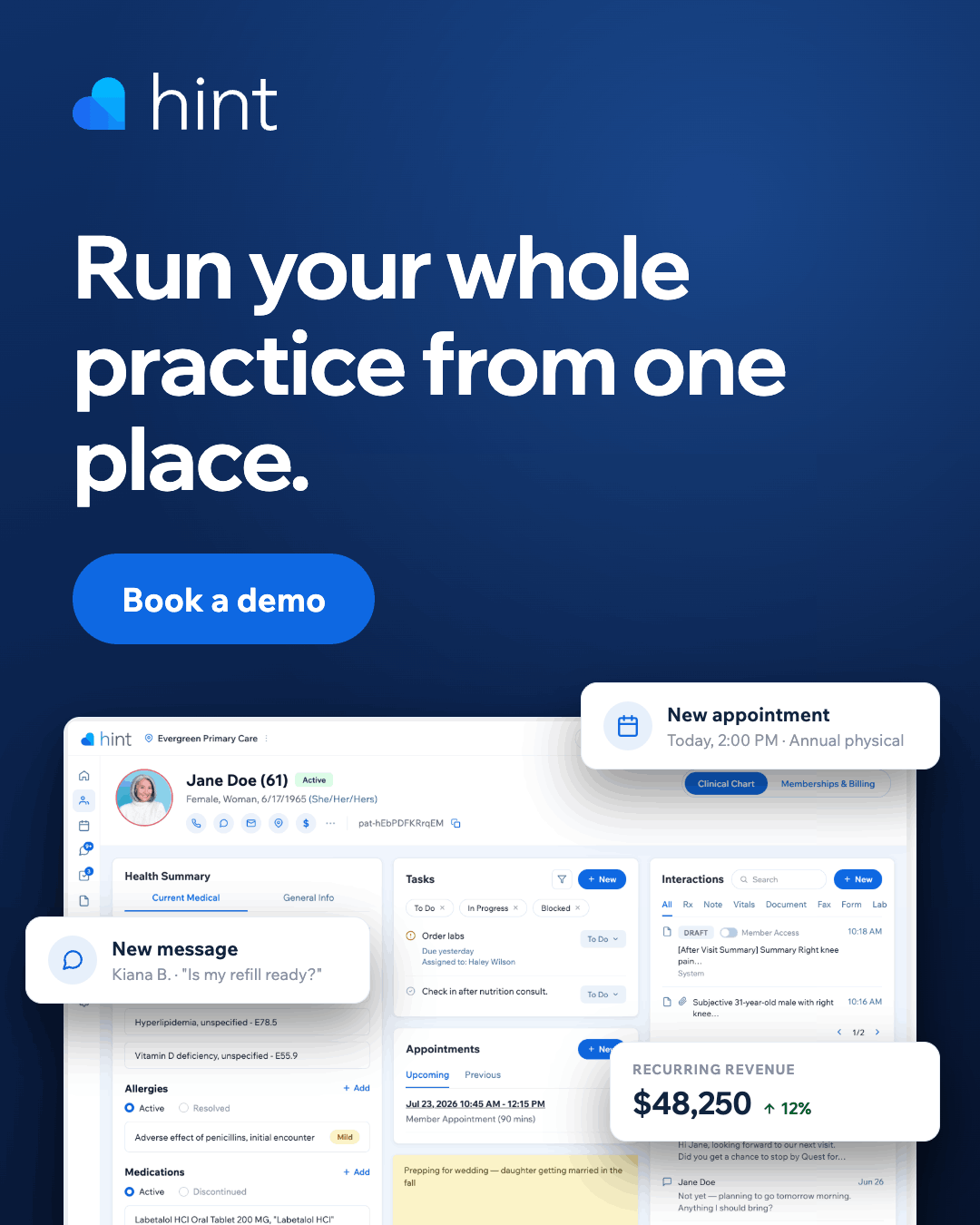
Atlas MD was built by DPC physicians for DPC physicians. Charting is straightforward. Patient communication — texts, calls, video visits — is built directly into the record. Membership billing is automated. A solo physician can run an entire practice without an office manager, a billing department, or a scribe. The system works for you because it was never designed to work for an insurance company.
The contrast is not subtle. Physicians coming out of Epic into a DPC EMR describe it the way people describe getting off a highway and onto an open road. The destination is the same. The experience is completely different.
I became a doctor to take care of patients. Every minute I spend navigating a system designed to extract billing data is a minute I’m not doing that. DPC gave me tools that actually point in the same direction I do.
That’s not a small thing. That’s the whole job.