DPC Docs Do IT!
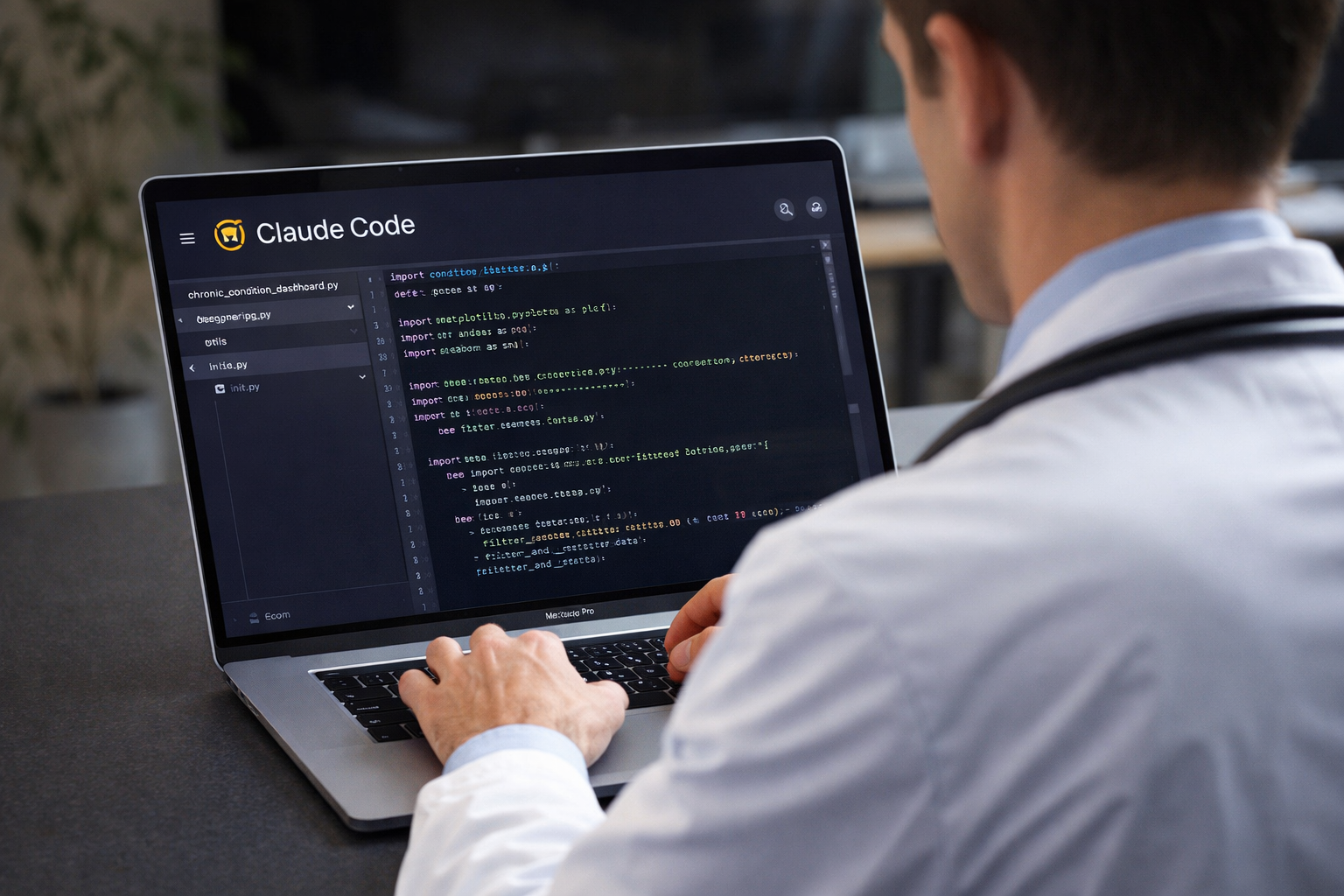
I never thought this is where I would end up.
I remember it was the year 2000. I was a freshman at Cornell University. My mom wanted me to go into computer science. It was the era of Y2K, and everything was about computers. Going into IT was going to be the wave of the future.
And yet, while I appreciated technology and even loved it, I also loved the sciences—and I loved being around people. I couldn’t see myself sitting in front of a computer all day long.
And yet somehow, today, it feels like much of my day is spent doing exactly that.
I remember in medical school, during my third- and fourth-year rotations, I was essentially trained on a computer. Our hospital system had adopted electronic medical records early, and paper notes were not something I was truly trained in. Occasionally, I might have had to write one, but most of my learning happened through the EMR.
Over time, I began to understand something important: many of these systems were not built for physicians. They were not designed to make our practice easier. They were not designed to help deliver better care. They were designed to generate metrics and report cards—and to use those to justify financial decisions.
Along the way, I had the opportunity to work with Iora Health, where we had an internal team of programmers who built an electronic medical record from scratch. I worked closely with a product team and helped design workflows, particularly in pediatrics.
That experience gave me my first real understanding of the interface between physicians and the people building the technology we use. I began to see both the power of these systems and the barriers that exist—especially the fact that many frontline clinicians don’t have a direct way to communicate their needs to developers.
When I started my direct primary care practice in 2019, I became an early adopter of technology. I tried different software platforms. I experimented with integrations. I worked to understand how systems could—or could not—communicate with each other.
More recently, I met a fellow DPC physician, Dr. Mike Hobbs from Lakeside Pediatrics. At the time, I had been subscribing to backend databases within my EMR and speaking with multiple startups, many of whom were trying to convince me of the importance of accessing my data.
After speaking with Mike, I began to realize something much more important: the true power lies in physicians having access to—and control over—their own data.
That realization started me on a new path.
I began learning about APIs, authentication, and how systems communicate. What I once thought was limited to those with formal technology backgrounds started to feel accessible.
I began building.
I started identifying workflow issues and solving them in real time—then pushing those solutions directly into my EMR without needing permission from anyone else.
I began generating my own reports and analyzing my own data.
I began looking at operational pain points in my practice and solving them myself—because I understand what we need as clinicians. I don’t need someone without clinical experience to tell me how my workflow should function.
Years ago, when I pursued my Master of Science in Health Informatics, I began to understand data. When I completed my MBA, I began to understand the business side of medicine.
And now, in many ways, it feels like those worlds are coming together.
I think the beauty of direct primary care is that—with the right knowledge—we can become independent not only from the traditional healthcare system, but also from the limitations of the technology imposed on us.
We can become builders.
With the advent of AI and the growing ability to create with assistance—rather than waiting for technology to catch up to our needs—this shift has become even more tangible.
For me, this ability to create within technology has been one of the most liberating experiences of my career.







Hated EMR to the end of my career. More efficient to dictate notes rather than force docs to be freaking secretaries. The voice activated stuff wasn’t that good and a PITA to do. Was easier to hand write orders in the hospital and docs quickly learned if the hand writing was illegible, they’d be paged up the wazoo. I sometimes printed or wrote orders very carefully so the nurses could read them. Doubt many FP’s do full scope practice: office, hospital work and take call anymore. EMR destroyed production too and if one is paid on that income suffers. No wonder med students eschew the specialty! It sucks! So glad I was able to retire. I miss many of the patients I cared for and still see a few in Walmart. I tell them I retired because I was widowed and have a mentally handicapped son to care for. Their eyes bug out and respond, “We didn’t know.” Though I gave the “administration” permission to give the details of my retirement to my patients if I didn’t get to tell them personally. So glad I was able to “get out”.