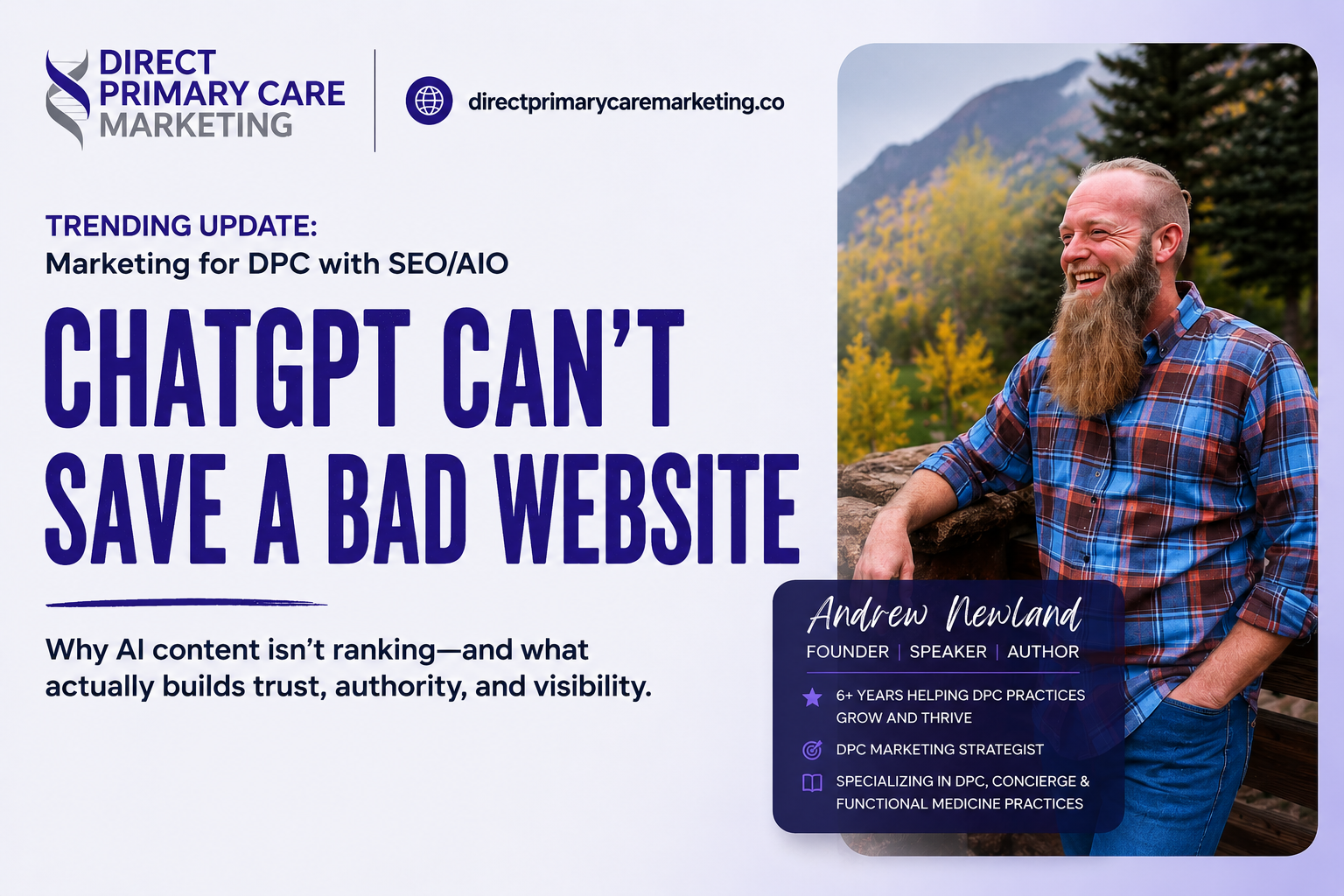
ChatGPT Can’t Save a Bad Website
The internet is rapidly filling up with AI-generated healthcare content.
Unfortunately, so is Google’s digital graveyard of ignored websites.
Right now, thousands of businesses are mass-producing AI blogs hoping to rank higher in search results. But over the last year, Google has rolled out multiple algorithm updates specifically targeting low-value, unhelpful, mass-produced content. In many public SEO case studies, websites relying heavily on generic AI-generated articles saw traffic declines of 30–70% after recent Helpful Content and Core Updates.
Why?
Because Google doesn’t reward content simply because it exists. It rewards content that demonstrates:
- real expertise
- originality
- authority
- trust
- actual usefulness
And honestly… AI still struggles with that.
Several recent studies evaluating large language models have shown hallucination and factual error rates ranging anywhere from 15% to over 50% depending on the platform and query type.
Translation?
AI sounds incredibly confident… even when it’s wrong.
We recently had a client run an “AI SEO audit” on their website. The tool confidently recommended fixing multiple technical SEO issues:
- metadata problems
- indexing concerns
- missing optimization elements
The only problem?
All of those items had already been fixed months earlier.
The AI wasn’t malicious. It was simply working from incomplete information and generic assumptions.
That’s important because right now many healthcare practices are being told:
“Just use AI to create content.”
“Just run your website through an AI tool.”
“Just publish more blogs.”
But putting generic AI content onto a confusing, trustless website is like putting racing stripes on a lawn mower. Technically, something changed… but nobody’s impressed.
Here’s the reality:
AI is changing search. Fast.
Patients are using ChatGPT, Google AI Overviews, voice search, and conversational search tools more every month. But these systems still rely heavily on the same foundational trust signals Google has valued for years:
- clear website structure
- authority
- local relevance
- expertise
- consistency
- patient trust
- real-world reputation
The DPC practices that will win in this next era are not the ones mass-producing generic AI blogs.
They’re the ones building genuine authority online.
That means:
- clear messaging
- helpful educational content
- strong local SEO
- technical website health
- authentic doctor voice
- websites designed for humans first
The good news?
Most DPC practices already have the hardest part:
real expertise and real patient relationships.
Now it’s about building a digital presence that actually reflects it.
AI can be an amazing tool… but only if you know how to use it!
Want to see how your practice currently looks to Google, AI search tools, and potential patients?
Visit DirectPrimaryCareMarketing.co for a free SEO and AI visibility review and get our Price List.
Andrew Newland