Medical Bills Are a Social Determinant of Health
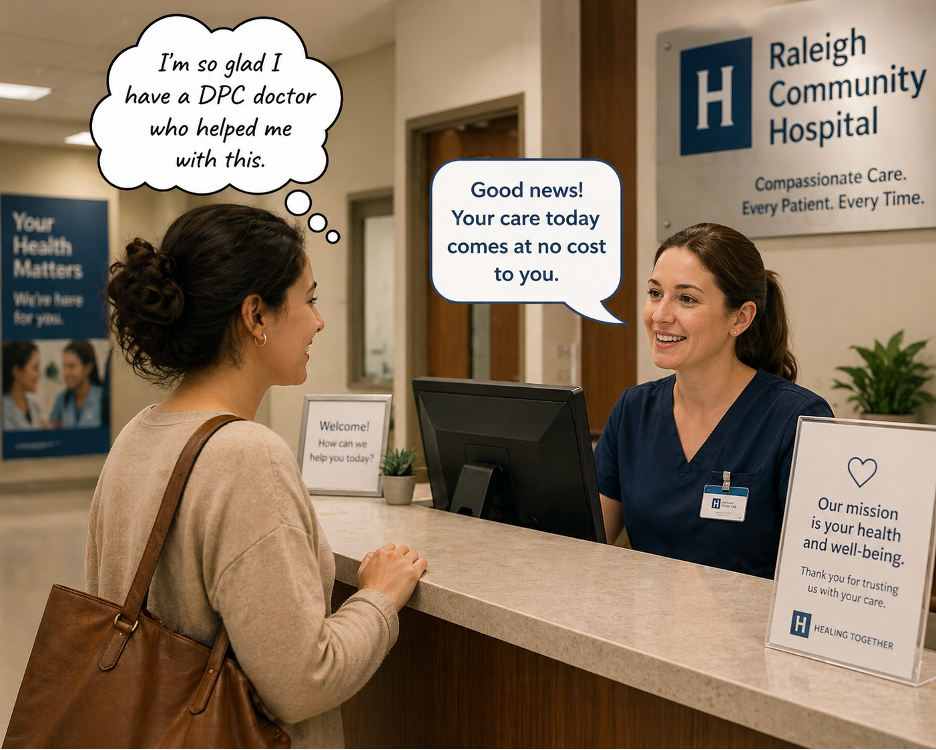
You live in a community. The address of your home sits within a zip code, a town or city, and a county. In your county, you might have a non-profit hospital. You most likely live in that hospital’s medical service area (MSA) if your zip code is close enough. In my county, there’s only one hospital. However, you may live in an area with more than one nonprofit hospital and be in multiple MSAs.
| Household Size | 100% FPL | 138% FPL | 250% FPL | 400% FPL |
| 1 | $15,060 | $20,794 | $37,650 | $60,240 |
| 2 | $20,440 | $28,207 | $51,100 | $81,760 |
| 3 | $25,820 | $35,620 | $64,550 | $103,280 |
| 4 | $31,200 | $43,033 | $78,000 | $124,800 |
| 5 | $36,580 | $50,446 | $91,450 | $146,320 |
| 6 | $41,960 | $57,859 | $104,900 | $167,840 |
As a citizen in your exact spot on the map, you have a right to access care at that hospital for a free or reduced rate based on how close to the Federal Poverty Level (FPL) your household income sits.
Non-profit hospitals are required to offer deeply discounted rates to residents in their medical service area whose household income does not exceed 400% of the FPL. Each year, the federal government establishes these FPL parameters, and a simple online search will bring up the 2026 grid. However, each hospital may establish its own Financial Assistance Policy (FAP) under section 501(r) of the Internal Revenue Code, a provision added by the Affordable Care Act. They are required to post their FAP on their public website.
Some of the most innovative health plans in America measure eligibility of health plan members and pre-empt future hospital claims by advocating on that member’s behalf as soon as they are deemed eligible. This helps save time when you know your patient needs advocacy and you can initiate that prior to the visit.
Dr. Shane Purcell showed me that 501(r) advocacy is just a tap away in his EMR.
Imagine this scenario – a single Mom in her 50’s with a family history of colon cancer needs to get her first screening colonoscopy. There are some symptoms, and you’re both concerned. She’s put this off for too long because she’s concerned about the cost. After talking about her options, you and your patient decide to schedule a colonoscopy.
Let’s say she has a household size of 3 – herself and 2 children, and her annual income is $50K. She is likely to be eligible to access this care at the local non-profit hospital and have the cost for that care written off. Seizing your opportunity to help your patient is just a click away.
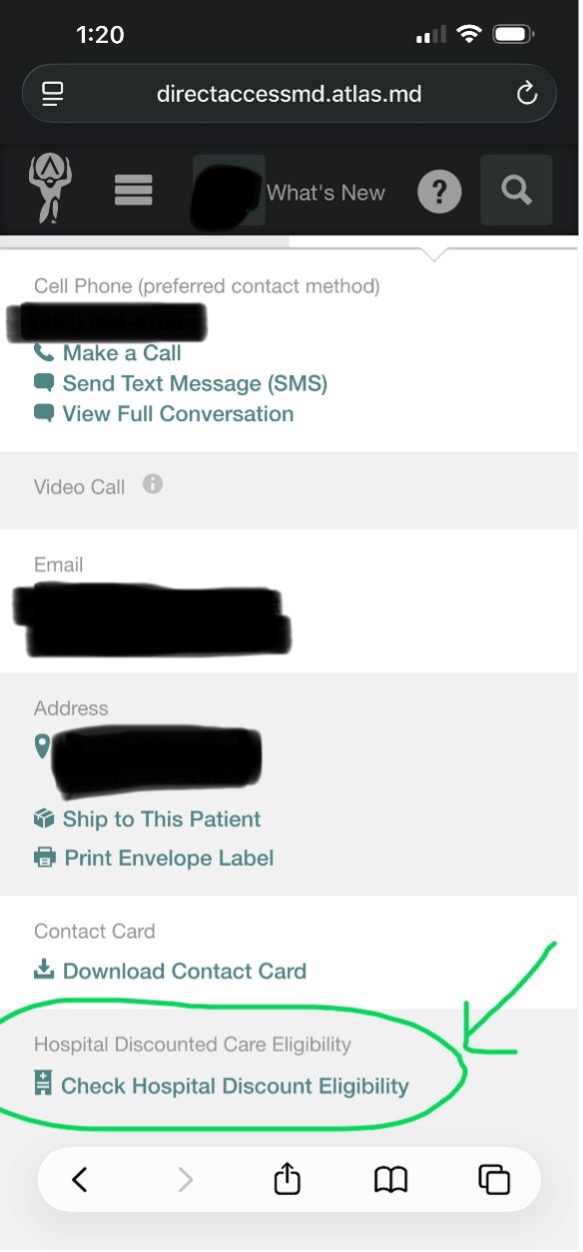
And just like that, you can help your patient determine if they can get the care they need at no cost (or close to it) based on their eligibility.
Let’s face it non-profit hospitals do not pay property taxes. We, as residents in their MSA, cover their property tax costs. In exchange for being exempt from taxation, they’ve already agreed with the IRS to provide care to those in their area who need help. Let’s give them the opportunity to live up to their mission and values as a non-profit healthcare provider.
Your patients who are eligible for this care will never forget how you helped them.








I never knew that info was a click away. TY !!