DPC Diary: Three Years in Photos

Photos solidify onto pixels or film otherwise fleeting moments in the flow of time, moments we consider significant enough to grab onto as we hurtle forward. The photo on the left was the first picture I took after my accent wall got painted. I was finishing residency and this was the first moment I saw my brand color realized. The picture on the right could well be the first moment I saw my logo realized, but those who are more observant may have noticed the higher picture resolution and dimmed fluorescent bulb. These pictures in fact were taken three years apart and the picture on the right captures the moment I moved the final items out of the space which housed my practice for the last three years. We all love to take pictures because we know how fast time moves and how fleeting significant moments can be. The last three years have gone by truly in the blink of an eye and I’d like to share through photos some lessons I’ve learned along the way.
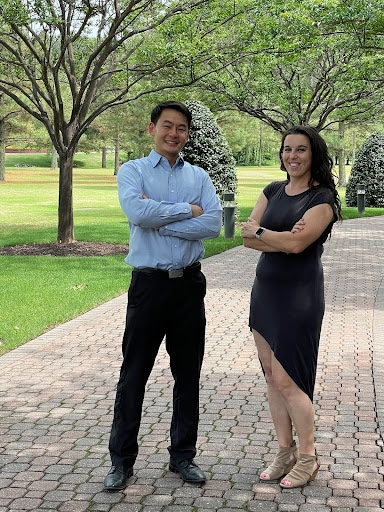
While everyone else was celebrating with friends and family right before our residency graduation ceremony, I took the opportunity of being already dressed up to take some photos for my practice website. This is the first cover picture on the first version of my website. To my right is my friend and now business partner Dr. Mariana Keener who took the risk of joining me when I opened my practice. She is a fantastic physician, an overall incredible person, and is the reason I’ve been able to do everything I’ve done to date and the driving force behind the success of our practice. During his talk at the recent DPC Summit, Doug mentioned successful practices usually have some sort of partner arrangement, most commonly a significant other. I would agree that having someone to share the labor of the business and medicine aspects significantly improves the effectiveness of each person. That being said, talking to the hundreds of DPC docs that I have, 50/50 partnerships almost always fail and it’s almost always due to some variety of “creative differences.” The reasons Mariana and I have worked out professionally are because
1. We did residency together and know each other fairly well.
2. We have complimentary personalities (sometimes having two hard-headed entrepreneurs just doesn’t work).
3. We have our own lanes. She sees more patients and I carry more of the admin tasks.
3b. This works out because I keep up my side gig and focus on building her panel by directing patients in her direction whenever possible. I’ve also stayed opted in while she has opted out.
Starting a practice alone is daunting and even though hundreds of docs have done it, finding someone to go on the journey with you makes the journey so much better in so many ways. Just make sure both the person and business structure set you up for success.

From left to right: Dr. Cindy Richards from Ruckersville, VA is the nicest and most helpful person you will ever meet. Dr. Dan Moore started his practice at the same time as me about 20 minutes away and has been fun to grow alongside. Dr. Jill Zackrisson is the OG Richmond area DPC and my first several patients came off her waitlist as she was actively referring patients to us. Dr. Joe Fields-Johnson, who started just over a year ahead of me, also about 20 minutes away, has been a great friend to discuss big ideas with. Dr. Andrew Anderson from Lynchburg runs the largest DPC in Virginia and has maxed out stats for EQ and IQ.
I’m very fond of our Virginia DPC community. The relationships we’ve built have been invaluable for growth of the practice and for social enrichment. Nationally, DPC has grown quickly and most localities have clusters of DPC practices. Some have formal organizations, some have local Facebook groups and meetups, and some are simply group text chat groups. As DPC continues to grow, forming close ties with local DPCs will help weather challenges and supercharge opportunities. Plus, on an individual level, DPC docs are the best, so there’s no downside to befriending more of them.

I spent hours upon hours drawing my logo only to launch with the worm around a chopstick on the right side. Luckily, I learned about golden circles and cleaned it up to the final iteration on the left before too many people saw the worm. I knew photoshop, didn’t want the generic junk from Fiverr, and insisted on doing everything myself. Doctors are all oddly neurotic in their own ways which is a trait almost pre-requisite to make it through medical training. This will bleed into running a business. My logo was certainly not the last thing I obsessed over too much, but over time I’ve learned what matters more and learned to loosen my grip on the things which, while maybe interesting or fun for me, frankly don’t matter in the big picture. Another hard lesson was learning where I have weak spots and finding help to cover them. To the point above about having a partner, someone who works alongside you can help cover weaknesses and help you more quickly realize where those are. We have not needed to hire any staff yet, but I am approaching the point in my professional development where I’m itching more to learn how to work with more people rather than learn how to do everything myself.

We took stock photos for the website when we first started. Face masks in casual settings will forever help orient historians to COVID era photos. The patient in the picture is a good friend of mine from college who is not in healthcare. He is also an actual patient of mine who I onboarded as patient 1 and have him on a lifetime $0/month plan. I used him to test all our processes before we opened and still use him to test anything new we implement before rolling it out to everyone else to make sure it all works. He’s also been a fantastic sounding board for all my thoughts. As someone who spends too much time thinking about medicine and the healthcare system, I appreciate having a friend who is not in the field to challenge fundamental assumptions and ask good questions which alter my thought processes.

Networking is my superpower so I leaned hard into that when I started. On the left is the new member orientation meeting for our local Chamber and on the right is our set up for the weekly farmers market we sponsored. Both of these efforts came as recommendations from DPC docs I had talked to prior to starting; yet, neither really led directly to new patients. Even as I talk to DPC docs now and see people post on social media, everyone engages their communities in different ways. There is no one answer to what group you should join, what events you should do, or how you should engage your community. Start with what you’ve read or heard and adapt to what makes sense to you. We stopped doing the farmers market as soon as our sponsorship ended because it took a lot of time and didn’t yield anything. I continue to be an active member and sponsor of the Chamber because, even though we don’t get patients directly from the Chamber, interfacing with the community there has led to many other opportunities such as being invited to my current BNI group which has been great for business.

Nothing quite beats the rush of getting your first (paid) patient and that’s the moment we captured here. When I talk to my friends in the FFS system, they often dread new patients because they know they won’t have enough time to talk to them and the appointment will set them back in their already packed schedule. We love our new patients because we allocate 90 minutes to our initial visit and enjoy getting to spend the time developing these new relationships. Plus there’s the honor of knowing this patient chose you and wants to pay for your services rather than randomly picking you off some insurance directory.

On the flip side of the excitement from growth comes the pain of churn. This screenshot perfectly captures some highs and lows. May and June 2022 saw consecutive months of high loss which almost canceled out the new patients. And then in Dec 2022, with few new patients, we saw no increase in the total number of patients that entire month. In between those challenging months, there was September where no one left and we had our largest growth to date. Growth doesn’t happen in a straight line and learning to weather the hard times and remembering to celebrate the good are both vital to persevering.
We had slow growth in year one because we were new docs in a new town with a new model while both working full time at urgent care. Before starting a practice, make sure to establish a realistic runway, which is simply the time you give yourself to succeed before you call it quits. Having a side gig can provide the funds to extend the runway, but it also takes time away from building your practice. I took this approach, but I know others who went all in and grew faster out of necessity. There is no absolute right way to determine runway, but make sure you have the right resources to let yourself stay open long enough to succeed.

From left to right: my residency advisor who took over the PD role right after I graduated, the chair of family medicine at VCU (my alma mater, see fleece), and co-director of the family medicine student scholar program at VCU.
From the outset, I took residents on their elective month to teach them about the DPC model. Their rotation included time with me as well as other DPCs in the area to show them how it works and how we all do things differently. To my above point about community, I had no trouble sending students to nearby practices because we are all friends dedicated to growing the DPC movement. Once Dr. Keener had enough patients, she started taking students to rotate with her. Staying involved with MedEd has reciprocal benefits. Learners can experience DPC and we get to stay sharp when teaching and receive benefits from the school such as UptoDate. See one, do one, teach one embodies the educational nature of medicine and in that spirit we should always strive to inspire the next generation by staying involved with residents and medical students.

This comes from one of our uninsured patients who had gone years without seeing a doctor. Some residents are afraid of starting right after training. To be sure, I’ve learned a lot in the last three years that I didn’t encounter in residency. But resources like econsults and UptoDate and the ever connected forums like doctor groups on Facebook have made the learning experience less daunting. Medicine is a process of lifelong learning and DPC allows learning in a setting where you can actually spend time reviewing literature rather than referring constantly and rushing to the next patient.
Even in middle-class suburbia are those, like this patient, left behind by the traditional system. We can have an outsized impact on these individuals and potentially spare them from a future of severe disability or early death. DPC is a model for ALL and anyone who actually practices in the model can easily identify an ignoramus when they accuse DPC of cherry-picking and not caring about the poor or underserved.

In our second year of sponsoring the Chamber monthly lunch, I had patients who were active Chamber members agree to publicly give testimonials about our practice instead of doing my usual pitch. Word of mouth has consistently been the number one way we get new patients. Networking yourself takes time, effort, and sometimes money. Having patients tell all their friends and family about your practice multiplies your efforts by however many patients you have and costs nothing. Patients on social media are also powerful. We had a nice bump in sign-ups when a couple of our patients active on the Richmond subreddit posted about our practice. I used to think word of mouth was a passive event that naturally happens. While somewhat true, you can develop a word-of-mouth strategy. This involves giving your patients something to talk about and making it easy for them to share what you do. Part of our strategy includes our long, relaxed first visit which ends with us giving the new member several brochures to share with their loved ones.

Dr. Tom White and I gave a talk on ten tips before starting a new practice during DPC Summit 2022. We were paired to bring out the differences in advice from someone who started straight out of residency vs someone who started later in their career. When I first learned about DPC in 2017, there were a handful of people giving the vast majority of fairly standardized advice and education. The community has grown beyond this stage and there’s more variety now than ever. As the movement grows and as each of our practices grow, it’s important to approach the future with an open mind. Try something new even if it goes against the grain and stop doing anything which inhibits your growth or doesn’t align with your personal philosophy even if it’s what “everyone” does. The beauty of a grassroots movement in a democratic system is the innovation which arises from variety.

A first look at our new space right after I had some friends help me put up our new signage. Our new space is slightly bigger and way nicer which physically represents how we’ve grown as a practice. The move has made me a bit nostalgic since the chaos of moving reminds me of my initial startup days. I re-read my DPC Diary series Doug had me write as I was starting up and the lessons in this post are fairly similar to what I wrote back when, but now with three years of experience to confirm them. This move also represents a sort of graduation from “DPC residency” as I’ve now had my practice the same length of time I spent in residency. In the spirit of a graduation celebration, how long have you been open and what lessons have you learned in that time? Bonus points for those of you who send the earliest plus most recent picture with your logo to Doug at [email protected].







Well done Kenneth. Every DPC doc has their journey which makes DPC even more rewarding EVERY day.