Words and Labels: Deciding Where to Belong
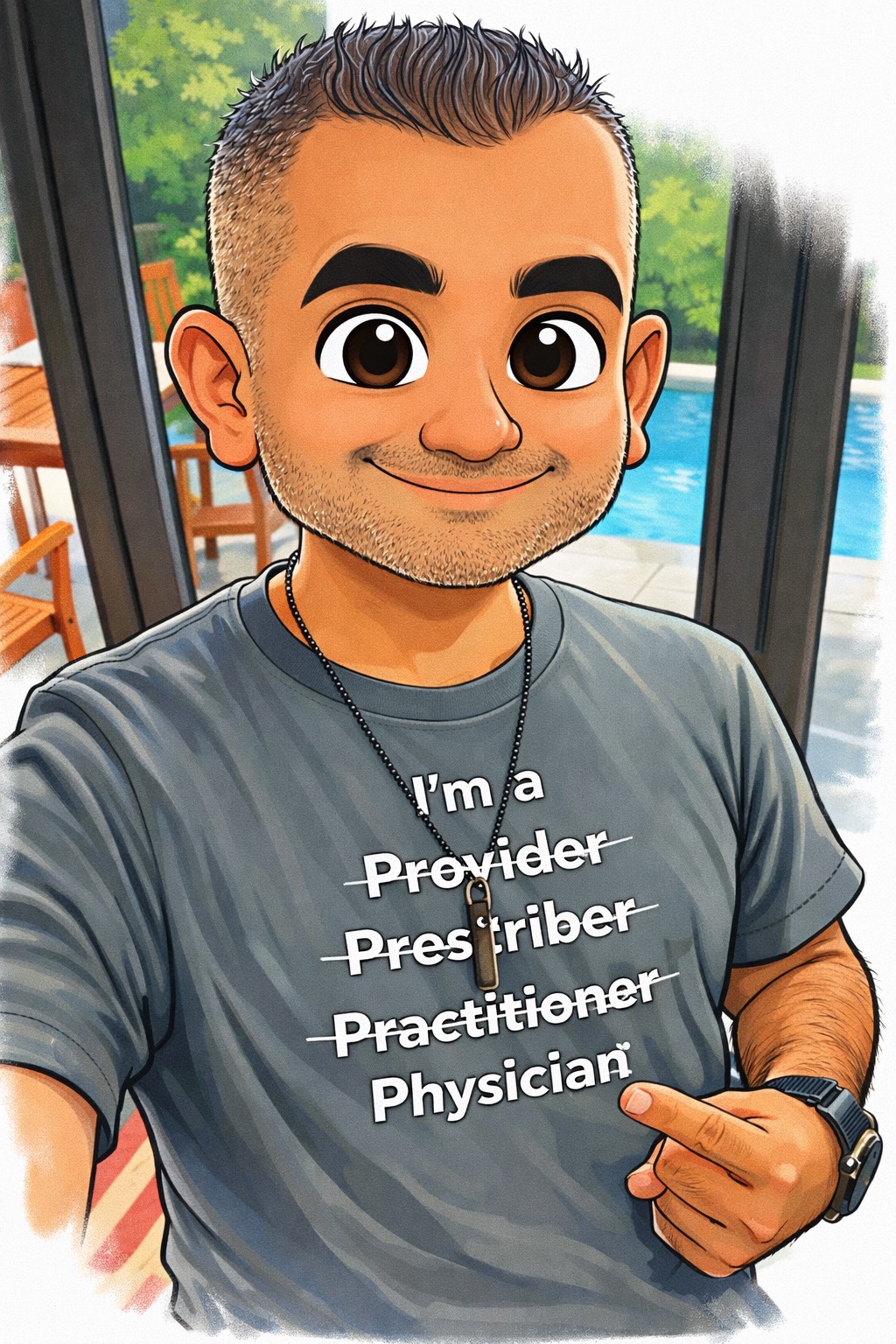
I recently read an article by the American College of Physicians discussing how the term “provider” should not be used for physicians. As someone who, at one point, worked in the system, I used this term a lot and was strongly influenced by mainstream medicine to equalize training and skill sets across all people in healthcare. Over time, however, as my own experience grew and I better understood the landscape, the naïveté with which I viewed healthcare began to fade, and I realized there are clear differences.
This is not about arrogance or ego; it is about respect for each individual’s skill set and the journey required to get there. I often see articles in which non-physician healthcare professionals discuss how many years they worked in another capacity before becoming what they are today. While that experience deserves respect, it is not necessarily equivalent to the training required to practice in their current role. So, words and names are key pieces of our identity which are reflections of our training and experience.
Concurrently, I had an healthy discussion with my cousin about groups, community, the desire to fit in, who is included, who is excluded, and how each of us perceives our identity. Some people draw their identity strongly from a group, whereas others do not need a group to define them. There is also another school of thought that avoids labeling altogether.
In light of the recent ACP article, my thoughts today focus on words, groups, and labels. Who am I as an individual? Do I identify as a physician? A direct primary care physician? A concierge physician—which itself brings up an interesting and often heavily debated conversation in our community.
Words can sometimes place us within a group, and at other times exclude us from others. As someone who has always existed between multiple groups, perhaps I am more comfortable with moving across boundaries. I was always both American and Indian. I was always a degree holder in the arts—linguistics—and in the sciences—biology. Even today, as both an Internist and a Pediatrician, I wear multiple titles. So perhaps I am also not a “DPC Physician”; perhaps I am a “Med-Peds DPC Physician.”
I believe one of the key pieces, as each of us explores our practices and creates vision and mission statements, is understanding who we are as individuals—not only for our practice brand, but also for our personal brand. What identity are we trying to showcase through our practices? Which groups do we choose to include ourselves in, and which groups do we choose not to be a part of? Can we belong to multiple groups? And if so, how do we articulate our public-facing words in a way that allows inclusion rather than exclusion for those groups to which we want to belong?
Identity is an essential consideration, both as a business owner and as a physician, when deciding what you present to the public. For individuals who are not business owners, this may feel less relevant. But for those who are—where you are, in many ways, on display, judged by your marketing, and defined by your words—knowing your identity is critical.
I often tell people that my practice is an extension of who I am and what I believe in. Without that alignment, authenticity is lost. This is also why, during every new patient intake visit, I ask my first question: If I didn’t look at your paperwork and ask you who you are, what would you tell me? It may sound philosophical, but I ask this of every new patient. What they share, how they share it, and the order in which they share it begin to reveal their values and who they are as individuals. And if you don’t understand that, how can you truly deliver individualized care?










Can I really get a t-shirt like that?!