Déjà Vu: Not Just Another Good Van Halen Song
My colleague Kenneth Qiu posted “A Well-Balanced Diet” here on DPC News on Thursday. It was the first in a 2 part essay, and I very much look forward to reading part 2. However, I feel compelled to respond to part 1 even before we get a chance to read part 2. I’m being a film critic of a movie I only watched half of, but I’m super busy; it was now or never.
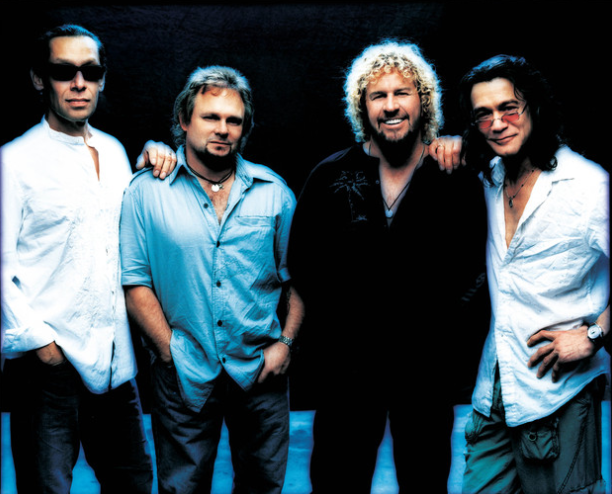
I thought of the Van Halen song Take Me Back (Déjà Vu) from their underrated 1995 album Balance as I was writing this. So much so that I took a break from the “No Mariah Carey, Wham!, Or Paul McCartney Christmas Playlist” and played the album while I was writing this. I have no doubt that the driving hard rock pace of tracks like Big Fat Money (remember this song for later) will flavor the tenor of my words. I blame Eddie, Sammy, and crew.
My take will be as equal a helping of Déjà vu to our regular readers as the article I’m responding to was. We just keep doing this. Somebody says “Let’s talk about getting back to working with 3rd parties” and another of us asks “Umm..why?”. So lets go.
In context of his post, Dr. Qiu will say I’m addicted to meat and too old and jaded and close-minded to consider returning to toast, even if I have healthy meat to go with it. And for the record- it’s possible he’s right. Toast doesn’t kill everybody. Maybe there’s a responsible way to eat it.
But if I have diabetes and hyponatremia from eating nothing but toast, and reverse the disease process by switching to meat…why would I EVER go back to eating the poison that was killing me?
Middlemen caused our problem.
I will reluctantly go along with an employer paying an employee’s DPC directly (if for some reason, they insist—I mean, why can’t they just give the employee money and let the employee pay it?…but I digress). I reluctantly agree, here, because the money is the same and there is no 3rd or 4th party taking a cut. (It seems arbitrary- why not pay their rent/mortgage/utilities/groceries too? But it can be a fringe benefit, might help with taxes etc. so this is my exception).
But every other version of working with 3rd parties will be working with some corporate entity (DINO, matchmaker, or even government entity). This is an entity that will both interfere with care (want data, PA,s etc.) and want a cut, driving up costs. That $ comes from SOMEWHERE and it’s unnecessary. It enriches the corporate administrations at the cost of care quality and doing financial harm to patients. EVERY TIME. We know that’s what will happen, and you’d have to be purposefully sticking your head in the sand to say it wouldn’t.
This leads me to the conclusion that those who push for us to get involved with the government or other 3rd party payers, do so for one of three reasons:
1) They never suffered too bad on the inside. They lack the memory of the pain that pushed us all out. Yesterday I ran into a rant by a former FM doc on Reddit, who made a horrible comment about the execution of the UnitedHealth CEO:
“I burned out of primary care and left my PCP role permanently partly because I spent countless hours on the phone and inbox appealing denied orders and MD and BS. My last weeks as a PCP I lost it and started cursing loudly in my office as I was on hold with aetna for the nth time, to the point another doctor next to me just told me to hang up and that they’ll inherit the patient. Took me less than 1 year to have passion for primary care to despising it. F*** any bootlickers defending insurance execs. I think of all my patients who had delayed care due to denials. Meanwhile this CEO made more in 1 year than iI will in several lifetimes. May he rot in hell.”
UGH! His celebration (sort of) of murder is abhorrent, but this doctor’s pain is palpable. This is the pain I’m talking about, the pain that pushed us out. I think some doctors either forgot or never experienced it—it’s one of 3 rational reasons to push us back toward 3rd party payers.
2) They want to make lots of money. This one is self-evident. If a doctor is pushing toward corporate DPC where they become that corporate administrator charging employers a fortune for DPC and keep a percentage, and farm out the work, of course they’re going to be in favor of something like this. The idea is: “Yes, this will drive up the cost of care and might decrease the quality and access to some degree, but it won’t be as bad as the old system, will be kind of DPC-ish at least, and all that extra $ will go to me, and I like money.” I understand this, and as a good capitalist, I won’t criticize their entrepreneurial spirit. But pushing 3rd parties in DPC often boils down to a person “selling something” and they are not being honest about their motivation or admitting their bias. [Big Fat Money plays in the background, just reminding me that there is no such thing as coincidence.]
3) They have some version of Stockholm syndrome, and return to their abusers against prevailing logic and reason. I would lump those who overly trust the government in with this group.
History repeats itself, and dealing with 3rd parties is a clear path to repeating it, despite the oft-repeated idea (that’s voiced in Dr. Qiu’s post too) that “Well…we’ll just do it right this time”. This reminds me of all the people that defend communism and when confronted with the 100 million deaths it’s caused, say “It just hasn’t been done right yet.”
This “let’s just do it right next time” idea comes from a defeatist attitude that I am too idealistic to get on board with, and Dr. Qiu, while well-meaning, has demonstrated this with a word used twice in this article: “REALITY”. The mantra is always some version of “The reality is that the majority of patients get insurance and medical bills paid for by an employer or the government, it’s been that way since WWII.” They are simply declaring: “That’s just the way it is.” YES! That’s the way it is, but the way it is sucks! The assumption that the status quo is the only way forward is wrong. History will always prove that. “That’s just the way it is” is always a bad reason to do anything irrational. CHANGE THE WAY IT IS.
I’m looking forward to chapter 2 of this post, and I’ll stop this déjà vu with quotes addressing the paradigm shift needed to change the way it is; quotes we use often in DPC:
“You never change things by fighting the existing reality.
To change something, build a new model that makes the existing model obsolete.”
― R. Buckminster Fuller
“The electric light did not come from the continuous improvement of candles.” -Oren Harari








He who pays the bills makes the rules. Every time.
Great response here, Dr. Lassey. As I have written, we have reached a fork in the road. Can we move forward with partners that understand and embrace the DPC model genuinely? Sure we can. However, we will do so only by remembering our past and not stepping in the same pile of poo others did. The truth is there is NO money in primary care, and certainly not in the DPC model. The margins are too thin and those in power (GOVT, Insurance and hospital suits) will never spend more than 4-6% on primary care. If there are federal changes like HSA changes, we could see beneficial employer-employee shifts to DPC where employees (patients) have more power. I too am looking forward to part 2 of Dr. Qiu’s article so I can understand scaling DPC.
I think there is a #4 and #5 of those who push for govt and 3rd party payers – – #4 Lack of passion for patient care. Some DPCs don’t want to do the actual relational and clinical hard work of excellent and comprehensive primary care. It’s easy to put this in old farts and upstarts columns but if I think about what I want for my own loved ones, I would 100% rather have a personal DPC doctor who isn’t chasing scale and getting involved with 3rd parties. And this may fall somewhat along the lines of people who trained after work hours restrictions and learned to cut off care at an arbitrary time that had nothing to do with the clinical situation. We feel a strong commitment to our patients b/c each relationship is personal and we do what it takes to care for them with excellence, occasionally at a significant personal cost. Not everyone wants to do this. Being a good DPC doctor is not the easy road. # 5 Low/Slow Enrollment. Filling a DPC panel with no employer patients is harder than courting employers or signing up with 3rd parties for patients. If everyone one of your patients chooses you directly you may grow slower than if memberships are paid by someone else. It is often easier for established (older) doctors to grow quickly (if they are good) than a doctor right out of residency without a previous panel, deep professional relationships or a good reputation in a community so it is understandable that the allure of 3rd parties may be stronger if you are just out of residency and your DPC has low enrollment. I don’t think it means that the meat eaters are wrong or stuck in the past – it just may be easier for some physicians to eat meat than others.
– Old lady Fischer
Thanks for the insinuation that new grads don’t care about their patients and people who start fresh out of residency are desperate. Luckily neither of these apply to me. The opportunity cost and real financial cost to start a DPC straight out of residency was a big risk; one done because of the promise to have deep relationships with patients. It was a good choice too. With three doctors across two practices with only direct patients, we’re having a good time.
I’ll agree with the comments so far – no 3rd party money in dpc is the only real way to go. The exception of employers paying on behalf of dpc has worked out well for nearly 15 years b/c we’ve kept it as true to the dpc model as we can. The employer pays on behalf of the patient, but they don’t have a right to patient data, to dictate care, or really be involved past the point of payment in any way.
I think thas has been helpful for dpc to grow b/c it allowed employers to get tax breaks, streamlined enrollment while people were still learning about dpc, etc.
As independent dpc continues to grow (and dino’s countinue to lose money like #ForwardHealth), it’ll make more and more sense (to employers and employees) to have the company pay the employee, and the employee pay the clinic.
One of the beautiful things about DPC is that every month, the patient puts down their money and in effect says “I still want you to be my doctor”. When a 3rd party pays it, it dilutes that powerful statement. If an employer wants to finance the employees choice, that is great. To just pay it creates an interloper in the Doctor-Patient relationship in some way.
That is my point of view about it.
Jean