Communication Breakdown
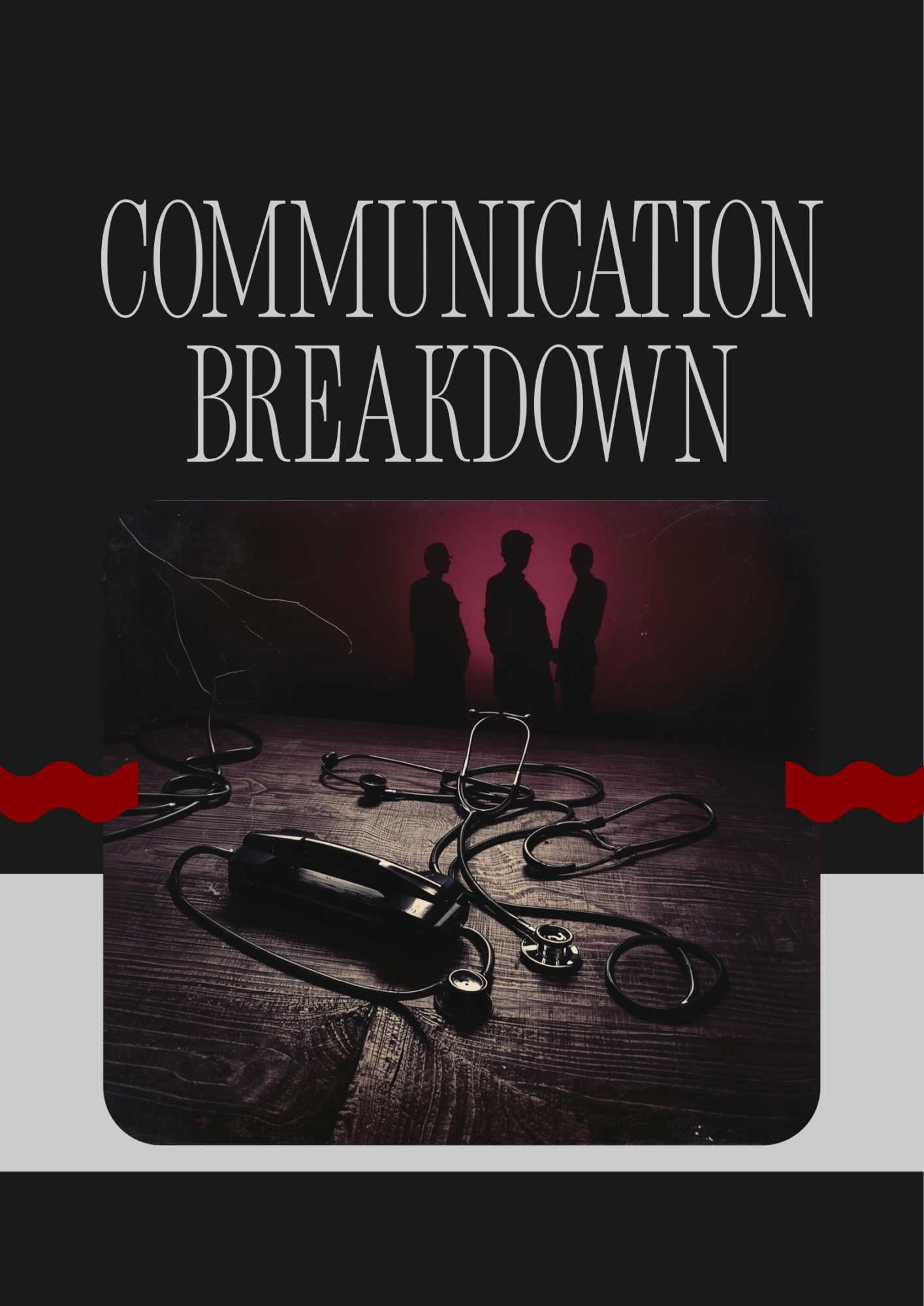
I saw a patient yesterday for a testicular mass. Today my nurse called him to coordinate the ultrasound. During that call, he mentioned that his cardiologist had been concerned about it too.
News to me.
When my nurse asked why the cardiologist was concerned, the patient explained: they’d gone through his left groin for a cardiac ablation, and the cardiologist thought there might be a problem there.
Let me make sure you understand what happened. A cardiologist performed a procedure on our mutual patient. He then suspected that procedure may have caused a complication. And then he… did nothing. Didn’t order imaging. Didn’t call me. Didn’t send a message. Just left the concern floating in the ether until my nurse happened to ask the right question weeks later.
I learned about a specialist’s suspected complication of his own procedure the same way I learn about most things now: from the patient, by accident.
So I tried calling the cardiologist myself. I – a physician, calling about a potential complication of his procedure – found myself navigating the same phone tree hell patients endure. Press 1 for billing. Press 2 for appointments. Press 7 to speak to someone who will never call you back. As of this writing, still waiting.
—–
Physicians don’t communicate with each other anymore. I don’t mean we lack the tools – we’re drowning in tools. Hospital secure messaging. EMR in-basket notifications. Secure email. Direct phone lines. Pagers, for those still clinging to the 1990s. We have more ways to reach each other than any generation of physicians in history.
And yet we’ve never been more isolated.
The cardiologist could have called me. I would have picked up – my office number is publicly listed. I’m also in the hospital’s secure messaging system. And the secure email system. And the EMR. Three separate systems, ostensibly built for exactly this kind of communication. After the visit, I checked all three. Nothing. Billions of dollars in health IT infrastructure, and I found out about a suspected procedural complication from the patient.
This is what passes for “care coordination” now. Somewhere, a hospital administrator is collecting a bonus for implementing it.
—–
I’ve been in practice long enough to remember when it was different. Specialists and primary care physicians shared hallways. You’d catch someone between patients, ask a quick question, get a real answer. Curbside consults happened in actual hallways, not as billable telephone encounters. We were colleagues in the original sense – people who worked together.
Now we’re “providers” in different corporate silos, connected only by the fiction that sending a note into the EMR void constitutes communication.
—–
Here’s what frustrates me most: everyone laments how broken healthcare is. We commission studies, convene panels, implement new care coordination platforms, hire navigators and liaisons and transition specialists. We throw technology and workflow solutions at problems that don’t require either.
The problem isn’t that we lack a better messaging system. The problem is that a three-minute phone call between physicians has become structurally impossible.
Think about what stands in the way:
Productivity expectations measured in RVUs that penalize any activity without a billing code. A phone call to a colleague generates zero revenue. Worse – it takes time away from encounters that do. The system has decided that talking to each other is, quite literally, a waste of money.
EMRs designed not for communication but for billing and liability documentation. “I sent the note” becomes the legal checkbox. Whether anyone read it or acted on it is irrelevant.
Consolidation that scattered us into different health systems with deliberately non-interoperable records. The cardiologist and I might as well be practicing in different countries.
Physical separation that eliminated the shared spaces where spontaneous communication happened. No common hallways. No shared break rooms. No chance encounters.
And beneath all of it, a system that profits from our fragmentation. Duplicate testing. Redundant visits. “Care coordination” as a billable service rather than a basic professional expectation. Isolated physicians are easier to manage, easier to replace, and generate more downstream revenue than connected ones.
I don’t think this is accidental. I think the medical-industrial complex architected it this way.
—–
Physicians who actually talk to each other are dangerous. We might compare notes on our contracts. We might realize we’re all getting squeezed by the same administrative bloat. We might form professional alliances that threaten the corporate structures sitting on top of us.
Connected physicians are harder to control.
So the system keeps us apart. Not through explicit prohibition – that would be too obvious – but through structural barriers that make real communication feel impossible. By the time you’ve finished your twenty-minute appointment, documented it, and moved to the next room, who has time to call anyone?
—–
Here’s the thing nobody wants to admit: this is fixable. Not with better technology. Not with another care coordination platform. Not with AI scribes or interoperability standards or secure messaging upgrades.
It’s fixable by removing the barriers that made physician communication structurally irrelevant.
Stop penalizing phone calls that don’t generate RVUs. Stop pretending EMR notes equal communication. Stop consolidating physicians into competing corporate silos. Measure what matters instead of what bills.
Or, more simply: get the system out of the way and let physicians be colleagues again.
I still pick up the phone. I still call specialists when I have questions. I still answer when colleagues call me – not that it happens often anymore. Most have forgotten it’s even possible.
But it is possible. It just requires remembering that we’re physicians first, providers never, and that the person on the other end of the line is facing the same broken system we are.
We used to talk. We could again.
Someone just has to pick up the phone.
As of this writing, I’m also waiting on callbacks from oncology and radiation oncology. Mutual patient. Metastatic lung cancer. The clock is ticking in a way it doesn’t for testicular masses.
Still waiting.








This actually saddens me and makes me sick at the same time. What happened to our healthcare system?!?! Remember, doctor lounges? We would talk there. Remember get-togethers where you would get to know other doctors? It makes it easier to talk to them. All gone.
I miss those days of chatting with specialists. Not only because I learned so much, but because then you actually knew who you were referring to.
More technology = more isolation.
Maybe that is another reason DPC doctors find meaning again in medicine. We talk, we share. We know each other. We find colleagues and friendship.
Do you think a DPC doc hosting a get together and inviting some of the specialists would be helpful? I know that we know some of our local specialists personally because we happen to know them either outside of the healthcare system or because some of our providers/staff used to work with them. Definitely makes it easier to chat with them when there’s a back door. I know you can’t make them come but it might be worth a shot?
I think it would. I’ve tried it a few times. Unfortunately unsuccessful. I haven’t given up though.