A framework for what to post on social media (and when), part 1
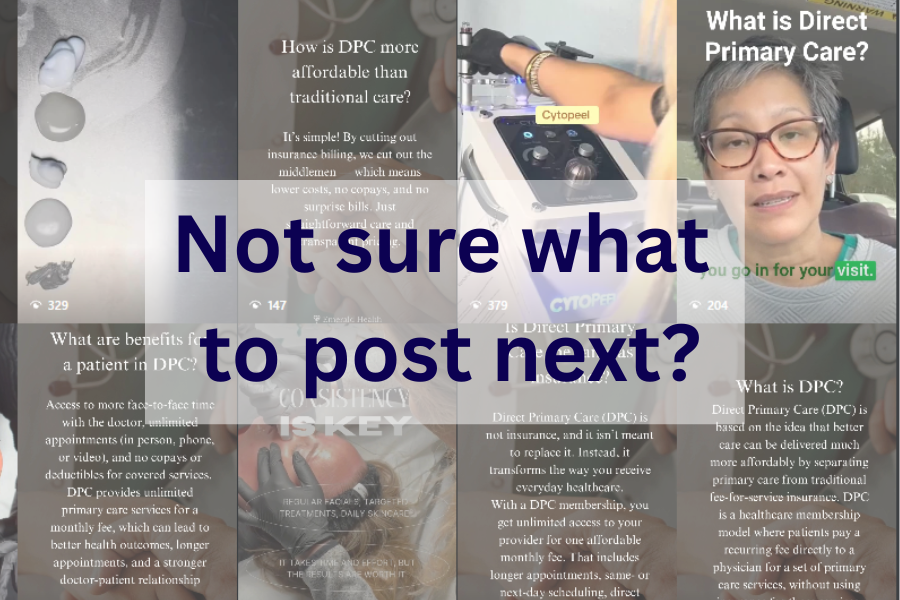
I talk to a lot of DPC physicians who are posting regularly and not seeing results. They’re showing up and trying, but nothing is happening.
The content is fine, but the order is the problem.
They’re posting cost comparisons before anyone knows who they are, or they’re sharing testimonials before anyone understands what Direct Primary Care means. They’re inviting someone to “book a meet-and-greet” five minutes after a stranger found their account.
On social media, nobody is waiting for you to show up. They’re scrolling. The only thing that stops them is a person they feel like they already know a little. It works like a relationship. You have to date someone first before getting married, right?
A patient who finds you online is trying to answer one question first: Is this someone I can trust? Everything else, including the DPC explanation, the cost comparison, and the enrollment link, only works after that question is answered.
In a previous post I talked about the elevator pitch, the short in-person explanation you can give anyone, anywhere. The elevator pitch works in person because someone is standing right there in front of you. On social media though, you have to earn the right to share it.
So let’s walk through a framework for what to post and when. I think of it as four pillars, in order, with a reason why the order matters. We’ll cover the first two here.
Pillar 1: Who are you?
This is where everything starts, with your origin story.
Why did you leave fee-for-service medicine? What were you looking for? What did you find?
Talking about yourself online can feel weird and self-indulgent, but it’s not. This is how a stranger starts to feel like they already know you. It’s called “Social Media” because it’s about people being social. People follow people, not practices, which is why you start with you and not your services. That comes later.
Don’t worry about sounding boring or think that you have nothing to say. Tell your story honestly. No one else has the same story as you. Explain your “why” because that will build the kind of trust that makes someone click your link six weeks later.
If the idea of telling your story online makes you want to run away, you’re not alone. A lot of DPC docs shut down here. You don’t need to share everything, just share some things that are true. Share your “why”, a moment from your last few months in insurance-based medicine that solidified your choice to leave, or one thing you noticed in your first month of DPC that surprised you. Start there and see what happens.
If you feel stuck on what to post, ask yourself: does someone who finds my account today know who I am within three posts? Keep coming back to Pillar 1 posts, even once you’ve moved on to Pillar 2 and 3 content, so whenever someone new finds your account next month or next year, they still learn about who you are. And there’s no rule against reruns, so if a particular post gets a lot of attention, bring it back in a few months. Odds are that new people will see it this time around.
Pillar 2: What do you do? Why is it different?
Once someone knows who you are, they’re ready to learn about what you offer.
This is your core DPC education content. Your job here is to explain a model that someone’s probably never heard of. Why pay monthly? What happens during a visit? How does DPC work alongside insurance or a health share? Answer the questions you get every week from people who are new to the DPC model.
A lot of DPC docs skip Pillar 1 and start here. It’s easy to understand why. Talking about yourself feels hard and uncomfortable. Explaining DPC feels easier and useful. A patient won’t read your explanation of DPC until they trust you enough to keep reading. You earn that trust through your Pillar 1 posts.
To be clear, following this framework gets results, but it works over time. If you’re three weeks from opening and need patients now, it’s worth doing, it’s just not the whole answer. Word of mouth, community talks, and direct outreach will bring in your early patients. Organic social media (this means not ads) is a slow build. Start it now, but don’t expect it to fill your panel by next month.
In Part 2, we’ll cover Pillars 3 and 4, including what to actually do with all of this week to week.
What’s one true thing about why you left fee-for-service that you haven’t said out loud yet, online or otherwise?





This is great stuff!