Direct Legislation
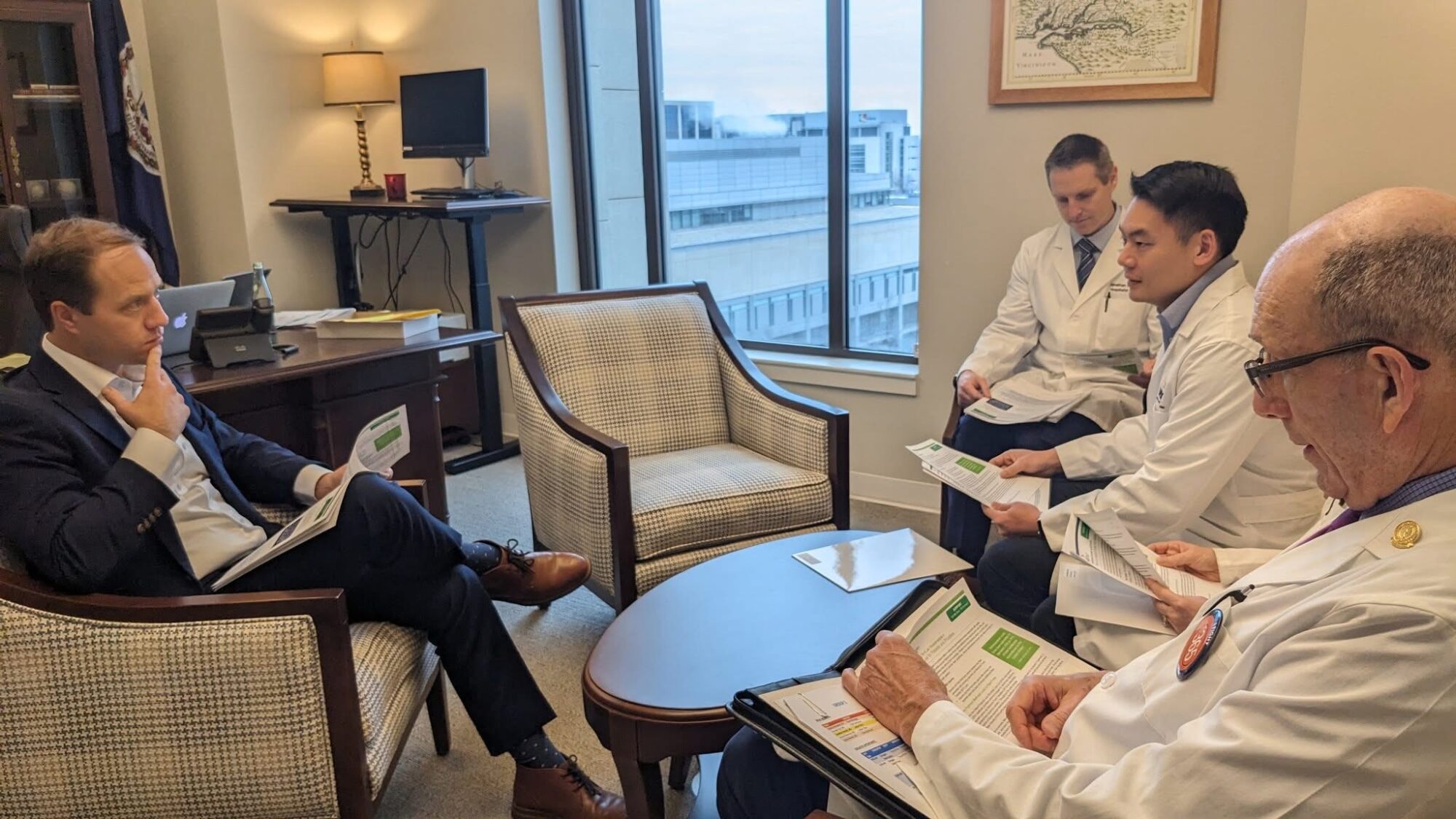
Virginia recently finished its annual General Assembly session. Across the country, the parade of doctors in white coats through state general assembly buildings is a familiar sight during legislative sessions. State medical societies make the experience stress-free and easy, pairing experienced speakers with newbies. Despite its reputation, the legislative process isn’t all that complicated. Family physicians already have the communication and advocacy skills needed to be effective voices for primary care and DPC. The real challenge isn’t understanding how a bill becomes a law – it’s making sure lawmakers actually hear what matters.
The first step is getting to know your legislators. Going to the State House or General Assembly building may seem intimidating. Certainly, when the legislature is in session, the environment is intense. However, state legislators spend most of the year in their districts hosting events or office hours at their district offices. Even if there’s no specific ask or agenda, getting to know who represents you can help them learn about DPC and be an advocate down the road. Texas legislators, for example, support DPC largely because so many of them personally have DPC doctors.
Now suppose there is a bill you support or oppose during the legislative session. Hopefully, you have built a relationship with your representatives so you can call on them to take appropriate action on the specific bill if they can. All bills need to pass a committee before heading for a full House or Senate vote. Identifying the right committee and its members ahead of time is crucial. Medical societies parade doctors around to discuss pertinent bills before committee hearings, ensuring lawmakers are at least vaguely familiar with a bill before they vote. In committee, lawmakers have just a couple minutes to see the bill and cast a vote. Decisions on a bill are generally already made by the time the committee vote occurs. If the legislator has never seen or heard of your bill, they will either abstain, vote on party lines, or go off their own preconceived notions of the bill. By that point, the narrative should already be locked in. Any testimony given during the committee meeting is mostly performative.
Once the bill comes out of committee,it moves to the full House or Senate for a vote. Bills that sail through committee with strong support usually get passed as part of a block vote and then move to the other chamber. The process then repeats. If your bill crosses over, you need to find the equivalent committee in the other chamber and once again visit committee members to educate them on your bill. The good news is that by the time a bill reaches the second chamber, legislators tend to take their cues from the original vote, making things a little easier.
Finally, if your bill successfully passes both chambers, it goes to the Governor’s desk for signature. Most bills get signed unless they run into serious political resistance or aggressive industry lobbying. Sometimes you may be surprised. In 2017, Virginia’s bill defining DPC initially got vetoed before eventually getting passed into law thanks to pressure from the insurance lobby. Getting face time with the Governor is significantly harder than chatting with your local legislators, but if the opportunity presents itself, it never hurts to make an impression.
Success in this process hardly happens in isolation. Some states have enough critical mass and leadership to form DPC advocacy groups. California and New England are notable in their organization. State medical societies usually have decent presence and influence. Even though they are usually dominated by retired, or close to retired, specialists, anyone with good ideas and enthusiasm can influence that machinery. For example Dr. Wendy Molaska was a former president of the Wisconsin Medical Society and Dr. Kim Wadsworth is on the board of the Washington State Medical Association PAC Board. On the national front, Dr. Lee Gross and his team at DPC Action have advocated for DPC legislation at the federal and state levels. DPC Coalition has also been a longstanding organization for DPC issues.
DPC principles often align with other healthcare efforts. For example, while price transparency is largely missing from our healthcare system, DPC doctors are already familiar with it and practice it daily. In Texas and Tennessee, a new lawallows for cash pay prices to be applied to deductibles if the price is lower than the average in-network price. That means when a DPC doc helps a patient find a $500 MRI which would cost $1000 with insurance, the patient can now apply the $500 to their deductible. Dr. Nick Jones has taken the initiative to introduce this bill in this year’s Oregon state legislature to try and pass it there.
DPC has enabled physicians to be more engaged in their communities and take an active role in improving our healthcare system. The legislative process plays a crucial role in driving systemic change. While not everyone needs to take on a leadership role or join a large medical society, simply building a relationship with your local representative can make a difference. Policy-making is largely driven by relationships, and primary care doctors, especially those in DPC, excel at fostering connections.
ALSO








Thanks for the information. I did not know about the laws in Texas and Tennessee for getting cash expenditures applied to the deductible. I just asked a friend to get me in contact with my local representative. We will see where it goes.