Can You Be a Doctor Without Being a Politician?
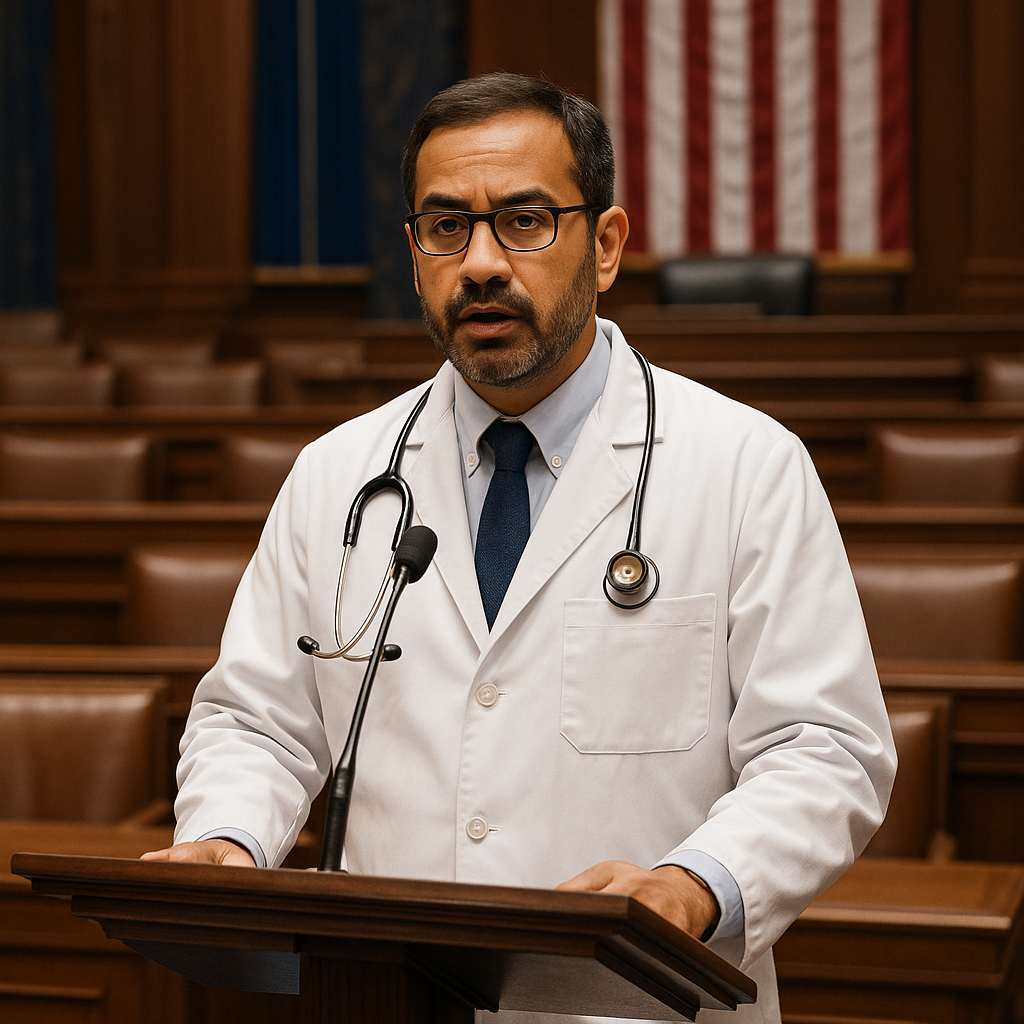
We live in an incredibly complex and hyper-connected world. Information is more accessible than ever—thanks to artificial intelligence, even the effort it takes to search has diminished. But with that convenience comes a double-edged sword: the rise of misinformation and disinformation. In this environment, discerning what’s credible and who’s trustworthy has become increasingly difficult.
Social media—and media at large—has added fuel to this uncertainty. It has led people to question the authenticity of peer-reviewed articles, the integrity of science, and the motivations behind public health recommendations. Are we advocating because it’s the right thing, or because there’s money involved? Is it science, or is it politics?
Healthcare has become commoditized—and politicized.
So, the question is: Can you still practice medicine without becoming political?
What was once viewed as advocacy is now easily misconstrued as a political agenda. If you speak in favor of vaccinations, you’re accused of profiting from “Big Pharma.” If you support individual choice, you’re labeled anti-science or a radical libertarian. The middle ground—where many physicians genuinely live—feels increasingly invisible.
Even an honest, nuanced discussion about medical autonomy and shared decision-making can be met with suspicion. Patients, consciously or not, may assess your answers for signs of political allegiance. And for those of us who don’t neatly align with any one party, it’s exhausting. Everything we say can be interpreted as a political statement, even when it’s not.
I recently saw a viral post highlighting how physicians in Congress voted on a controversial bill that was apparently big and beautiful. The implication? That our role as doctors now carries an expectation of political alignment. Are we supposed to declare party loyalty? Does supporting vaccines automatically brand you a Democrat? Does advocating for medical choice make you a Republican?
Even physician influencers online have blurred these lines. Many frame their content as “public health messaging,” but often, it’s difficult to separate it from partisan commentary. A post about regulating harmful food additives somehow becomes a referendum on entitlement programs. A concern about dismantling vaccine advisory committees turns into an accusation of collusion with pharmaceutical companies.
And yet—for so many of us—this isn’t why we became doctors.
We chose medicine to help people, one person at a time. To listen, support, and guide them through complex health decisions.
But now, what if that one person’s decision contradicts public health guidance? Does our obligation to society outweigh our responsibility to the individual? Or does the sanctity of the doctor-patient relationship come first—even when it bucks broader trends?
These questions don’t have easy answers.
What I do know is this: It’s becoming harder to practice medicine without being seen through a political lens.
So I write this post particularly for my fellow Direct Primary Care physicians—those who operate independently, run their own practices, and walk this tightrope daily.
How do you stay true to your oath as a physician while navigating the political minefield that healthcare has become?
And more importantly: Is it even possible to be a doctor today without being political?
(EDITOR’S NOTE: I do not want this to be a right vs. left debate. Please, please, please keep your answers respectful without bashing this administration or the last administration. Everyone thinks they are right, but we can disagree without being disagreeable. We don’t need specifics here and I will delete any comments that are inflammatory towards any person or party. Keep your answers generic. Thank you.)







Ha! This isn’t a problem with medicine. This is a problem with our current society. We are daily barraged with the latest hate that the left and right throw at one another. My wife is a school teacher in Texas. Try that to work that occupation without being political. I am a local health authority in my small county. In 2020 I was voted citizen of the year for my work on Covid prevention and treatment. In 2021 my office was picketed for the mask mandates (that I had nothing to do with incidentally).
I have little love for either political party. I have supported both in the past and been disappointed by both. I really wish both of them would shut up and just let me do my job. I’m quite good at it.
Thank you Dr Kainkaryam for this thoughtful article. This is really well thought out and helps us consider how we navigate the challenges of today in our landscape. I am doing this by maintaining a few guiding principles. I assume that everyone is trying to get their needs met and we are all more similar than different. Coming from a place of compassion for another is how I am approaching this and it is helping me sit with the discomfort of these times.