My Visit to the Royal College of Surgeons of Ireland
Author: Sarah Zaheer, MD
I recently had the opportunity to go on a heritage tour of RCSI- Royal College of Surgeons of Ireland. The college was built in 1784 and since 1810 somehow managed to exist in the same location, although significantly more spread out then it initially was. Back in the day, physicians and surgeons were not under the same umbrella. In fact barbers and surgeons were lumped together. Dublin was the first place where surgeons had their own declaration of independence and were no longer considered barbers-surgeons. Interestingly, the early barber-surgeons were called General Practitioners. Some of the GPs continued towards the new found surgical path whereas others joined with the apothecaries to form their own dedicated path by 1844. At that time, the United States also adopted the same system and then built on it.
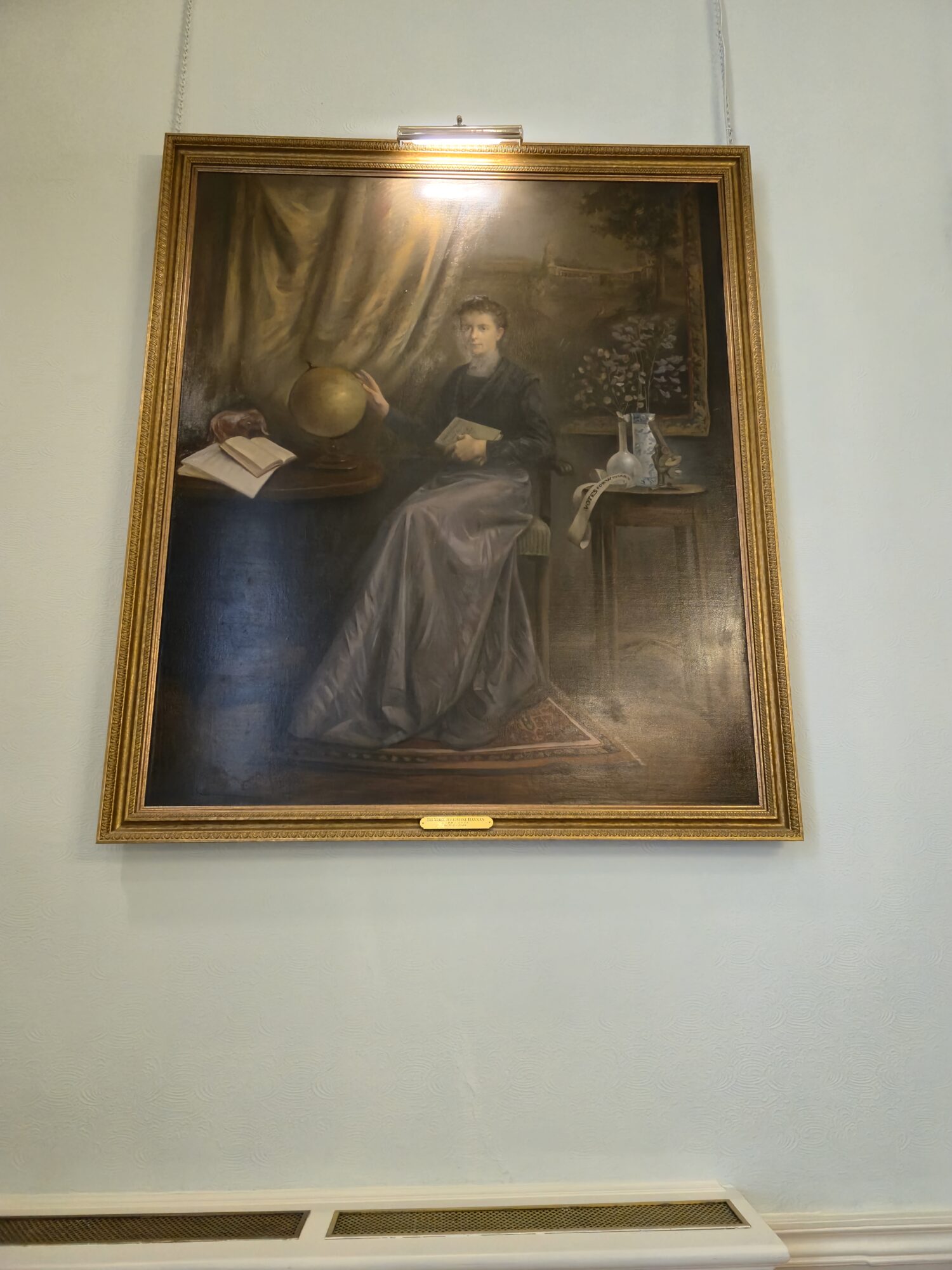
Many groundbreaking discoveries were made at RCSI, including Smith and Colles fractures named after two prominent RCSI surgeons. They both have rooms named after them. There were portraits of famous physicians, with the art being noteworthy just on its own. I also noticed that about half the portraits were of female physicians of the 19th century. Since 1885, the college had been admitting female medical students who went on to practice medicine outside of Ireland. Pictured here is Dr. Mary Josephine Hannan (see pictured) who went on to practice in India ( and what is now Pakistan) by appointment of the Queen. I don’t think I have ever witnessed women having significant and almost equal representation among doctors of that era. The college several years ago had made a conscious effort to make their prominent female physicians over the centuries more prominent. I am sure people had things to say about that, at that time but I can certainly imagine how inspiring it must be for the young female medical students. Women have always been a major part of the healthcare force, as physicians and nurses, and seeing representation on the walls among the greats is a powerful message that they belong and always have.
We were also able to see the registration binders, which listed every student that had been enrolled along with their home address. What was so interesting to see was that many students were from outside of Ireland. RCSI continues to have a significant international medical student population. Some go back to their home countries, some proceed to the US and some stay local. For centuries, doctors have travelled far and wide to gain expertise and further their training. This tradition continues today.
In keeping with that, I met doctors who practice in Ireland, Canada, US, Norway, Bahrain, Trinidad, UK, Jordan to name a few. The conversations were fascinating. There was a sense of awe about practicing medicine in the US, but mostly pity. What I learned was that every country had its issues, but no surprises that the US healthcare system made the least sense in those conversations.
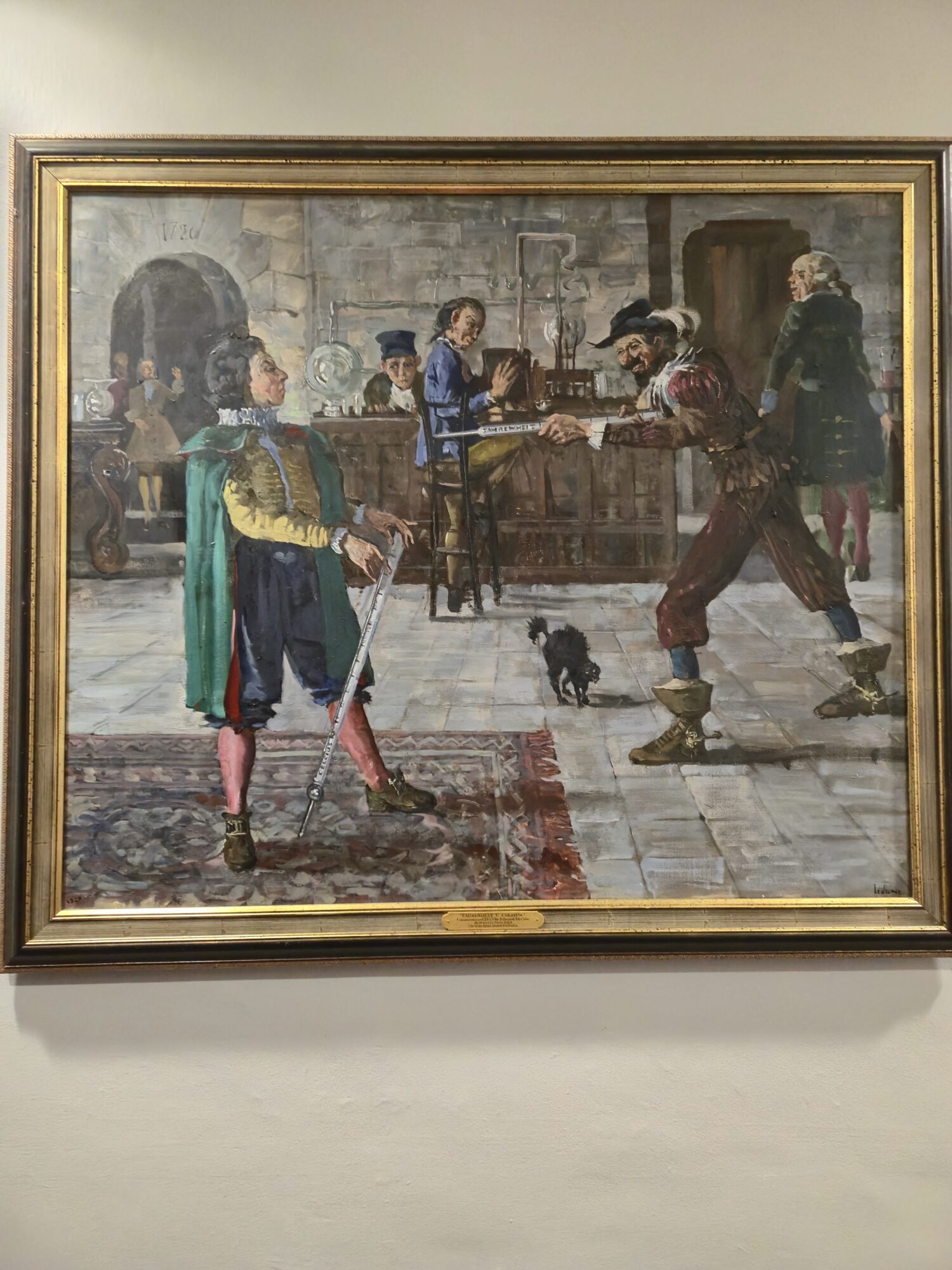
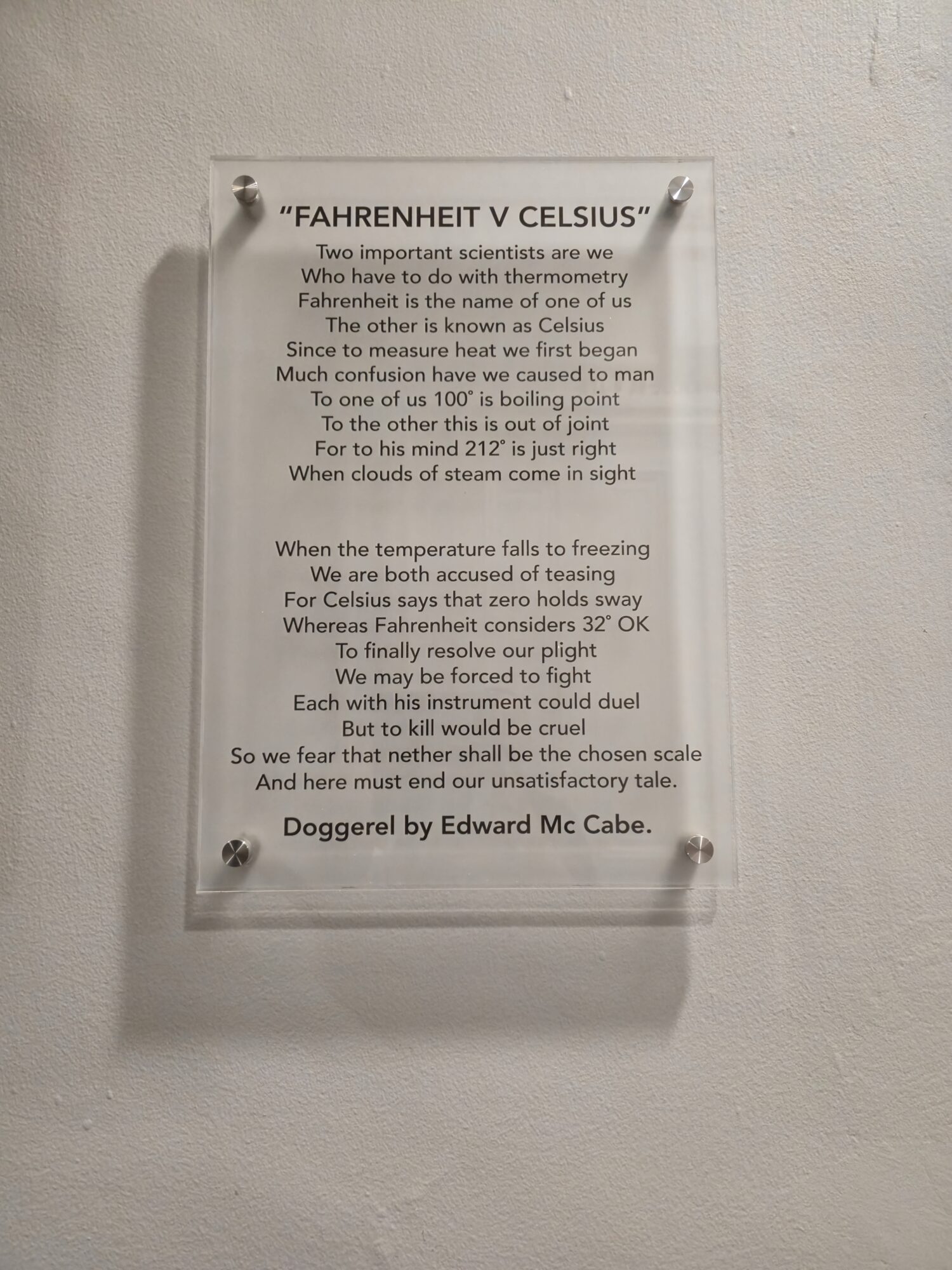
The weather in Ireland was amazing for August and was a topic of every conversation. Constantly reminding myself of the centigrade and fahrenheit conversion was annoying more than confusing. So when I saw this (see attached) on the walls, it really spoke to me. The title Fahrenheit vs Centigrade was enough to catch my attention but the poetry definitely made my day.
Despite the struggles we face today, it was a helpful perspective to recognize that over centuries, doctors have been forced to be on the forefront of innovation just so they can take better care of their patients. DPC doctors are continuing in the same tradition. We are doing what doctors have always done- pushing for better ways to meet patient needs.









What a great article! Thank you so much for your thoughtful piece.