Bringing My Whole Self Into Medicine
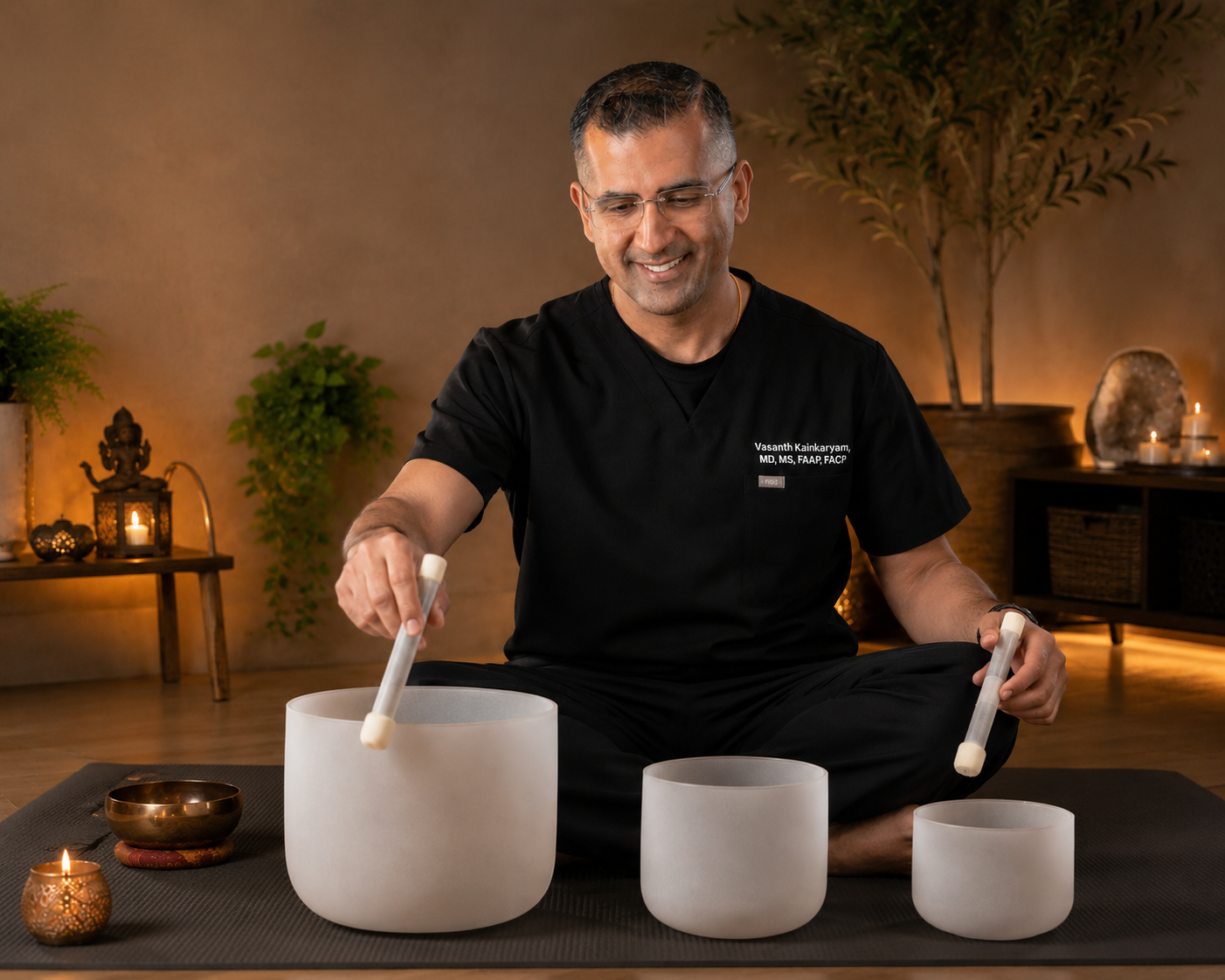
Recently, I had a patient ask me how my practice evolved into what it is today and what makes me different than another doctor. It gave me pause to reflect on how our Direct Primary Care practice came to be.
As our patients are encouraged to be their authentic selves, and as we get to be our authentic selves as doctors, I think what has been especially interesting is that we also get to be our authentic selves as people.
One of those aspects is bringing elements of our own personal cultures into our practices. This includes our views on health and wellness and many of the principles that we follow ourselves. After all, one of the quickest ways to lose patient trust is through a lack of authenticity—telling patients one thing while practicing another. At the same time, we are all human, and there is grace in that reality.
We live in a world where more and more people are spending money on supplements. There is increased curiosity around functional medicine. Lifestyle medicine has expanded into an entirely different realm, with a goal of avoiding pharmaceutical therapies when possible and minimizing them when they are necessary. There is also growing mistrust of a traditional Western medical system that can feel heavily pharmaceutical-focused and driven by a billing and coding structure that rewards complexity of medical decision-making but often does not account for intensive coaching, education, and relationship-building as part of the value of a visit.
All of these factors have created a chasm in society where people are looking for options. Some are seeking integrative medicine approaches. Others are looking for energy medicine. Others are seeking mind-body-soul experiences. Regardless of the path, many people are searching for a broader definition of health and healing.
I have often wondered how to take things that I personally believe in—things that are low-risk and potentially beneficial—and thoughtfully incorporate those elements into my Direct Primary Care practice.
Recently, we started offering sound healing in our practice, something I never necessarily envisioned years ago. Sound healing has roots in traditions such as Nada Yoga, which derives from South Asia. While some people may take these practices to the level of claiming they cure disease, I tend to view them differently. At a minimum, I see sound as a tool to help activate the parasympathetic nervous system and encourage a rest-and-rejuvenate response within the body.
As someone who has also learned acupuncture in a limited capacity, I have seen firsthand how fascinating a tool it can be. What has been especially rewarding is being able to take personal elements that I once took for granted and thoughtfully bring them into my practice.
As someone who has been exposed to Ayurveda, yoga, meditation, acupuncture, energy healing, and other traditions, I have found that, as I have evolved as a physician, I have begun to weave many of these elements together into my practice philosophy.
That does not mean abandoning science or evidence-based medicine. Rather, it means acknowledging that not everything we do has a double-blind, placebo-controlled trial behind it. We are taught throughout our training to critically appraise the medical literature. If every study were perfect, we would not spend years learning to question methodology, analyze data, identify bias, and evaluate whether study populations truly apply to the patients sitting in front of us.
I think there is also a role for lived experience and observation, particularly when there is minimal risk of harm. Certainly, some supplements can have interactions and adverse effects, and those deserve careful consideration. But there is also a vast set of modalities—including meditation, yoga, sound healing, acupressure, tai chi, qigong, and many others—that may offer meaningful benefits and deserve thoughtful exploration.
My reflection today as a Direct Primary Care physician is that not only do I get to provide individualized care, but I also get to bring elements of my own individuality into my practice.
As I answered the patient’s question about what makes me different as a doctor, it gave me an opportunity to reflect and better articulate my identity and belief system as a physician.
All too often, we spend time articulating our practices, but this was a chance for me to articulate my philosophy as a physician: a blender. Someone who takes different schools of thought, different traditions, and different perspectives, evaluates the risks and benefits, and thoughtfully puts them together in a way that feels authentic to what I believe.
Perhaps that is what makes this stage of my career so rewarding—not simply practicing medicine, but practicing it in a way that feels increasingly aligned with who I am.





This is amazing! Thank you for doing sharing this!