Being Present in Your Own Life
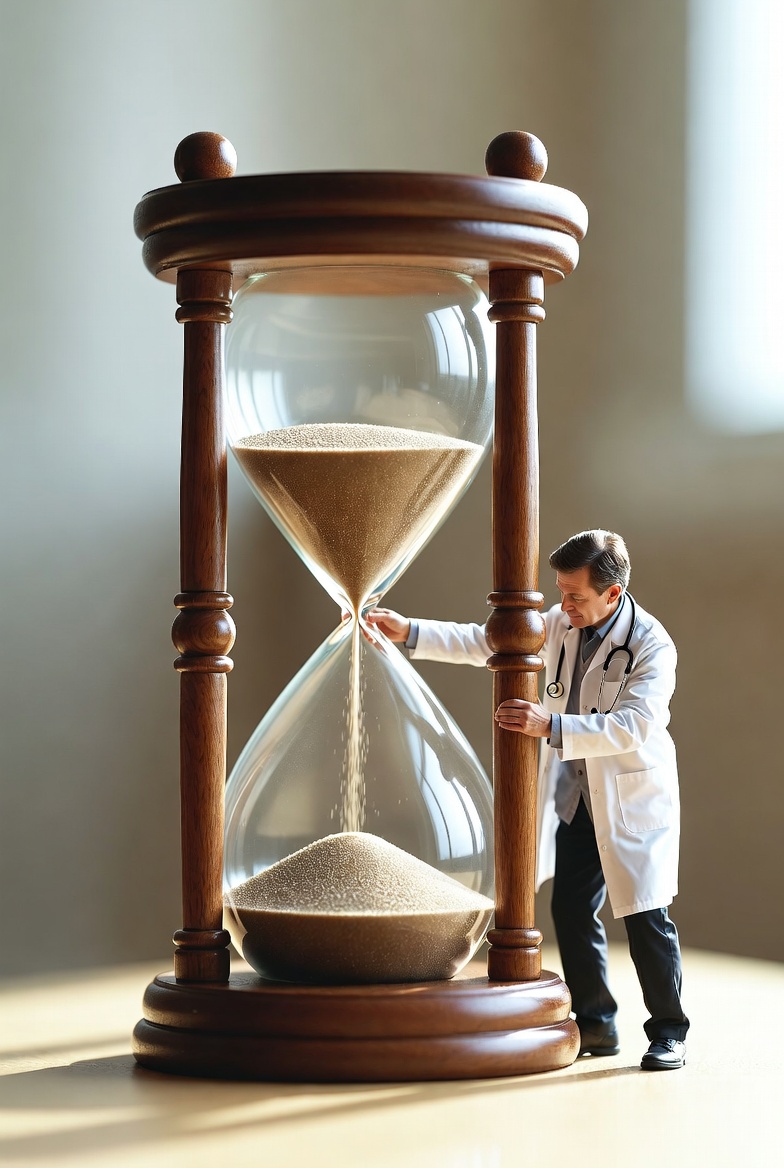
I recently read this editorial in JAMA and thought I would share the whole thing because we all need to hear it. It was written by Jenna Taglienti, MD, and it is called Time is Finite.
I’m going to start with something that might surprise you.
I look young. I look healthy. I look like there is absolutely nothing wrong with me.
I thought I was healthy—a lifelong nonsmoker. A wife and mother of 3. A psychiatrist and residency program director who loves her patients and her residents.
And then I was diagnosed with lung cancer.1
When I went in for my lobectomy, I did not think I had cancer. Neither did my physicians. The lesion had grown, yes. But statistically? A 45-year-old who never smoked? It was still unlikely. I underwent surgery assuming the lesion might be inflammatory. Perhaps an atypical infection. Maybe something rare but benign.
The operation was not minor. Two nights in the hospital. A chest tube. Pain I was not prepared for. At home, I slept in a recliner because I couldn’t lie flat. My husband took over everything—the children, the meals, the logistics. Family and friends helped with after-school activities. I focused on recovery.
I was not anxious about the pathology results. Not even a little bit. Ten days later, I opened the patient portal. The report was already there.
I read 1 word: adenocarcinoma. I remember thinking, that can’t be correct. My husband was sitting on the couch watching television. I said it out loud almost casually, as if saying it that way might make it smaller. He took the laptop from me. “That’s cancer,” he said. I stopped reading.
I sat back in the same recliner and felt something shift that I did not yet have language for. The shock of that moment still feels physical. The week that followed blurred into appointments, scans, and treatment plans.
The fear every parent carries quietly moved into the foreground. The possibility of not watching my children grow up was no longer abstract.
Then came chemotherapy. I remember the first infusion; the quiet hum of machines, clear medication moving through tubing into my vein. Sitting there, I had the disorienting thought that I had spent years giving everything to my work. Now my body was asking for something I could not negotiate.
I loved my job. I still love my job. I poured myself into it—into residents, into patients, into systems. Residents later told me they did not fully understand the depth and importance of our work together until I had left.
That mattered to me. And yet the program continues. The teaching conferences still happen. The clinics still run. The system adapts to absence.
That does not diminish the meaning of the work. It simply reminds me that institutions are designed to endure beyond individuals. On the other hand, families are not.
From the first day of medical school, we are taught endurance. Years of training with little money and long hours because eventually it will be worth it. Residency reinforces the lesson. Emotional depletion becomes normalized. Fatigue becomes proof of commitment. Delayed gratification becomes professional identity.
There is nobility in that commitment, but endurance has a quiet cost. The inbox fills. Meetings multiply. Small conflicts accumulate. Problems are constant and immediate. Not dramatic. Not catastrophic. Just steady. And steady depletion follows us home.
I believe in medicine. I believe in training the next generation. I believe in the meaning of this work. What has changed is my willingness to absorb depletion without question.
The meaning of my work is profound. The meaning of my presence at home is irreplaceable. When confronted with the possibility that time is finite, the hierarchy becomes unmistakable. The tolerance for workplace drama drops. The energy once absorbed by “noise” becomes precious.
No professional title replaces watching your child grow up. Institutional loyalty does not protect you from what happens when you postpone your own care. Medicine asks a great deal. And we give deeply. But it cannot take everything.
I am being treated with curative intent. I am hopeful. I am strong. But I am different now. I am no longer willing to keep postponing life.
Medicine can have extraordinary meaning. But it cannot substitute for being present in your own life. The world may need us as physicians. But the people who love us need us as ourselves.
And that is the role no one else can fill.
This is so true. I pray that Dr. Taglienti recovers and does well.
The bigger picture is how we physicians need something as horrific as cancer to realize what really matters. Yes, time is finite. We all need to take care of ourselves and be present with our families.
This line hits home the most: No professional title replaces watching your child grow up.
Unfortunately, I lost years of my life being in the system. I think I tried to be there for my family as much as I could, but it wasn’t enough. Medical school and residency were a blur, and I missed so much. Being an employed doctor was better, but nothing beat doing Direct Primary Care. Unfortunately, my kids had grown and moved out by then. Still, it was the best thing for my professional and personal life, and I think others would say the same. I only wish I had done it earlier.
It is never too late for you to learn these lessons. Take control of your personal life because time marches on.