The Consumer Health Bar Is High. Here’s How Forward-Thinking DPC Practices Are Meeting It.
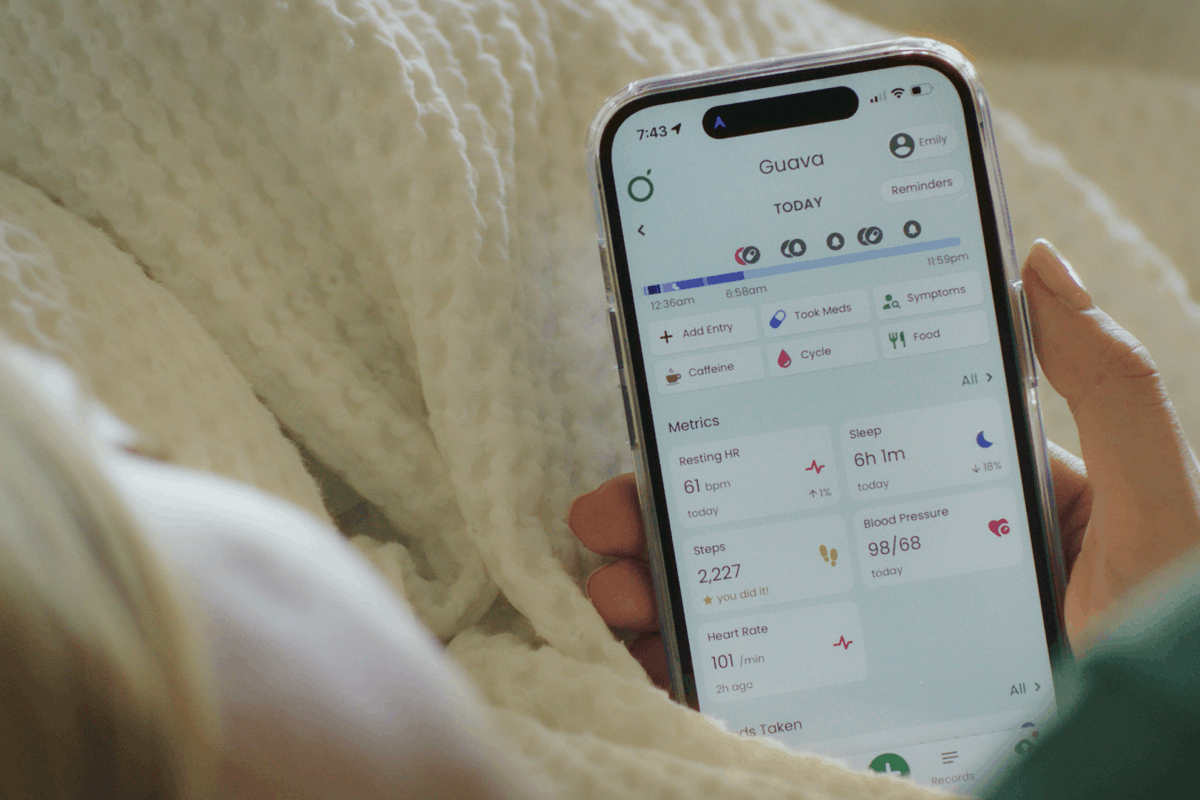
As of 2023, over half of US patients were already using wearables for daily tracking1, yet only 11 percent2 of physicians reported integrating that data into their practice by 2024. In membership-based models where patients self-select for this kind of engagement, those numbers are likely much higher. This signals something very clear: your patients aren’t waiting until their next visit to think about their health.
By the morning after the appointment, patients may have checked sleep scores, reviewed lab results with an LLM, and logged symptoms, blood pressure, or glucose. Health information accumulates continuously, thus changing expectations: care becomes something patients experience continuously through their devices, not only during appointments. That shift doesn’t just create more data; it raises expectations for how care should feel between visits.
So, in an era when patients can generate personalized health protocols at the drop of a hat, how do DPC physicians deliver an experience that meets the bar set so high by consumer health tech?
Unlimited Access Is No Longer Enough
Unlimited visits and direct access still matter, but they’re no longer enough to differentiate the experience within the world of DPC. The answer starts with a well-known tenet of the tech space: people notice user experience most when it fails. Patients aren’t thinking about integrations, EHR choices, or clinical workflows, but they do notice when it feels disorganized. They notice when they get stuck in feedback loops while looking for their records, when they have to re-explain their health history for the twentieth time, or when blood pressure readings they’ve been instructed to log go completely unaddressed.
Just as health occurs between visits, so does a patient’s perception of their physician. Trust builds through small interactions over months. This could be a lab result accompanied by personalized context rather than standing alone in a portal, a physician who’s already aware of what changed since the last visit, or a timely answer that prevents uncertainty from becoming frustration. Supporting those moments requires infrastructure that many clinical tools lack.
This is where tools like Guava can be incredibly helpful. Guava connects a practice’s existing data, tools, and communications into an experience that works for both sides of the relationship.
The Next Evolution of the DPC Stack
As consumer health advances and clinical workflows expand, matching a top-tier patient experience has become increasingly complex. Most DPC practices rely on entire ecosystems: EHRs, secure messaging, wearables, outside lab reports, specialist records, and patient-reported health data. As the stack grows, prep time increases because before the clinical work can start, someone has to find everything.
For physicians, the value shows up first in preparation. Mike Stone, MD, founder of Pillars Health, described his workflow this way:
“I go to Guava easily as often as I go to Elation for client prep and review before I meet with somebody. I’ve got all of my notes and all the labs that have already come over from Elation. Plus, I’ve got the biometric data and the ‘Ask Guava AI’ functionality, so I can have it give me the three-month summary of everything going on with this client and help me get prepared for a call.”
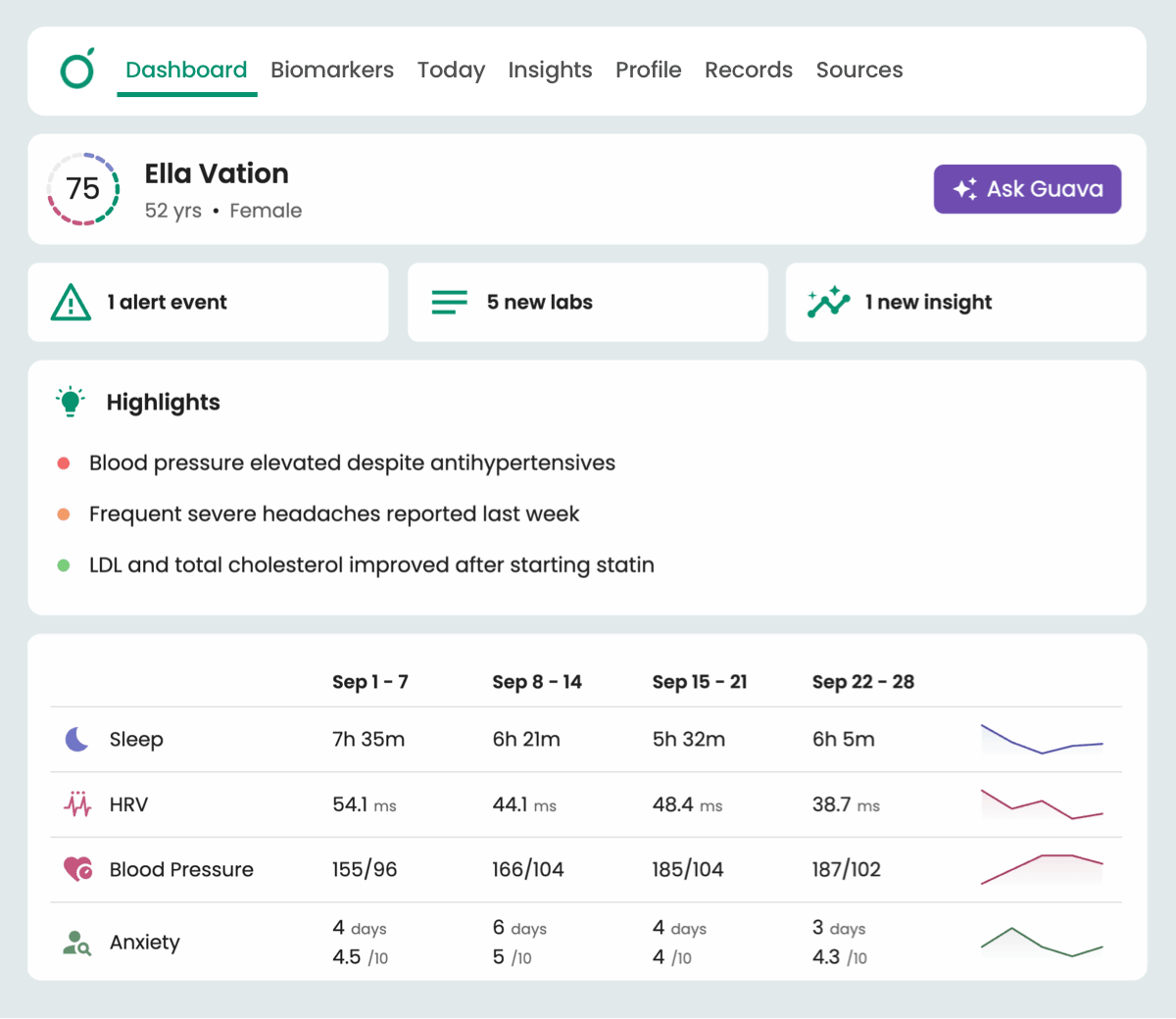
That preparation shapes the visit before the conversation even starts. Guava connects data across systems: EHR data from platforms like Elation, Cerbo, athenahealth, Hint, Akute, Practice Fusion, and more, alongside external patient portal data and messages from Spruce. It integrates this with wearable data, symptom tracking, uploaded documents, and AI-generated clinical summaries. Clinical highlights are automatically surfaced, and physicians get a single longitudinal view of each patient. That matters not only for clinical efficiency, but for the patient experience on the other side of the visit.
Designing an Experience Patients Notice
With Guava, patients access records, wearable data, labs, and health insights in one place. Their experience can now exceed expectations set by consumer wearables–and it’s hand-delivered by their physician.
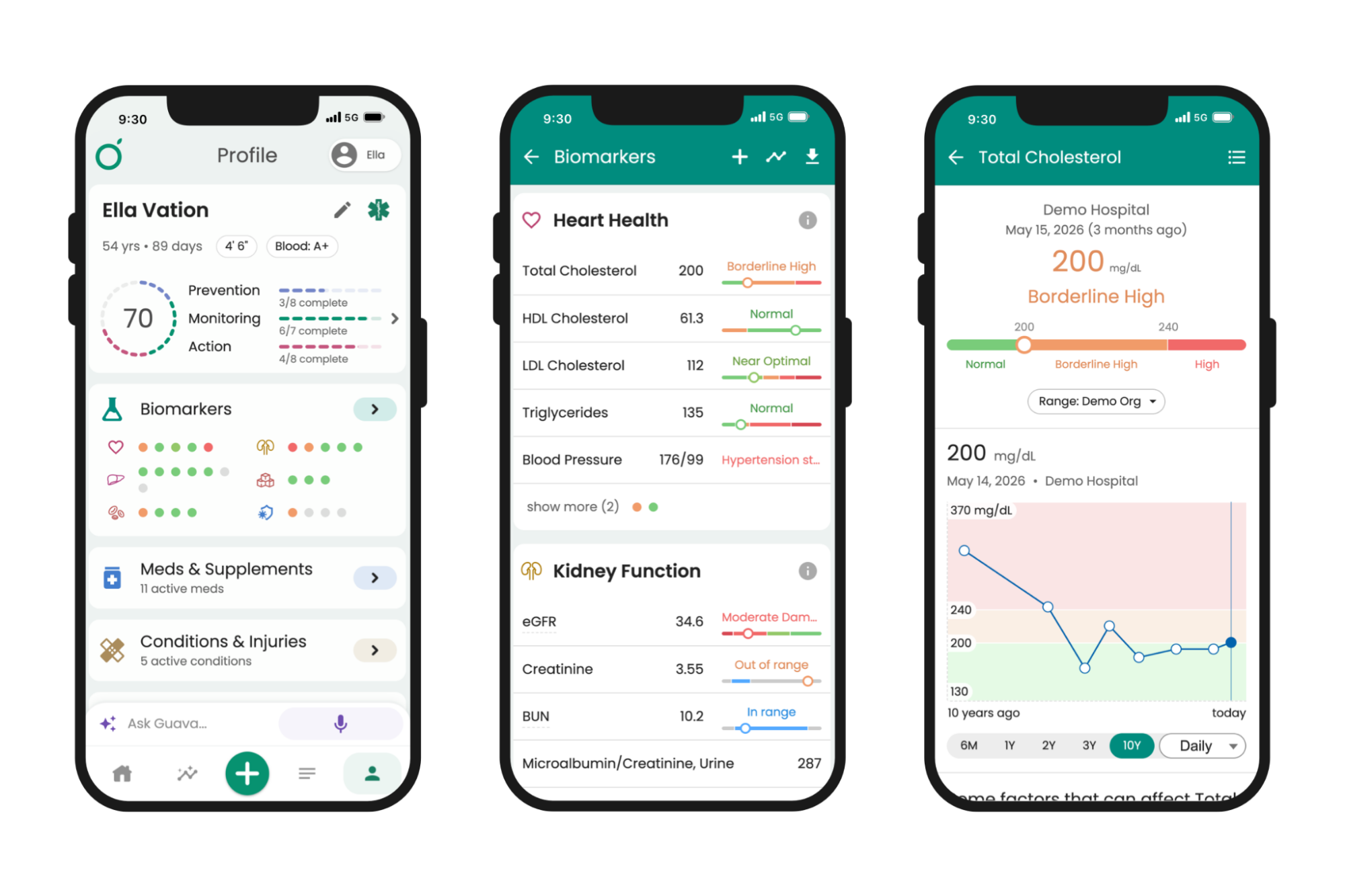
This differentiation extends to personalization as well. Clinicians can customize reference ranges for individuals, provide cohort-specific explanations alongside lab results, and build health scores that reinforce preventive care plans between visits. The experience with the practice is clinically informed in ways no consumer wearable can replicate on its own.
One patient who got Guava through her provider put it simply:
“No other app makes tracking symptoms easier, and in the same space, I have access to all of my medical records! The design is seamless and easy to use…I wish every medical provider used this platform.”
Relationships Need Infrastructure
Technology can’t create trust on its own, but it can remove the small sources of friction that gradually erode it. It can help physicians arrive better prepared, give patients clearer visibility into their health, and keep conversations moving forward between appointments.
For practices built around long-term relationships, those details become part of the care itself.
The consumer health bar is high. Guava helps independent practices meet it.
Learn more at guavahealth.com/provider-dashboard.
Sources:
- Venn RA, Wasfy JH, Atlas SJ, et al. Characteristics and attitudes of wearable device users and nonusers in a healthcare system. J Am Heart Assoc. 2024;13:e032126. doi:10.1161/JAHA.123.032126
- Sermo. Wearable health devices: Examples & 2026 technology transforming patient care. Published April 25, 2025. https://www.sermo.com/resources/wearable-devices-for-healthcare/