The DPC movement is national, but healthcare remains local
In 2011, when I opened my practice in Kansas, the nearest kindred physician spirit was about 300 miles away. At that time, very few people had ever heard the phrase “Direct Primary Care.”
The early years felt like being the captain of a ship lost at sea. For most of us, there was nobody down the hall or even across town to ask: How should I treat this? What is a fair price for this lab panel? How should I handle a member who wants to “pause” a membership? Was I crazy for doing this? (The jury is still out on that last one.)
Even though we seem to be multiplying like Gremlins in recent years, solo practice is how many DPC practices start. And, even as we grow our clinic team, most remain relatively small by design. We don’t have a physician lounge to grab a curbside opinion, talk business or vent. (Do many hospitals even still have those?) Either way, it is easy to lose whatever camaraderie remains when you venture out on your own.
At least, until you find your people.
Our little DPC club
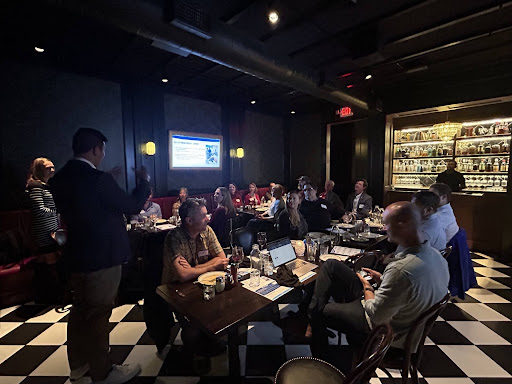
By 2016 or so, a few more of us had opened clinics around the greater KC metro. We met for lunch, then dinner or drinks, and then started texting each other at odd hours. We eventually took on the name “Midwest DPC Alliance.” Perhaps, at the time, we wanted to sound big and important. However, there was no structure, no dues, no officers, and no bylaws. Even now, with about 35 DPC businesses across our region, we still don’t.
We remain friends and colleagues who happen to share a stubborn idealism. That’s not to say our group is unimportant. It has mattered more than any of us realized. A doctor two years in talked a doctor two months in off the ledge. Someone shared the hard lesson that kept the rest of us out of trouble. The practice that was running short on lidocaine found a few spare bottles from another.
We also shared the direct-pay resources we found. I’d call a radiology center and ask the price to help out a patient needing to pay cash. If they gave one, I’d mention friends with similar patients. As word of DPC spread, direct-pay patients began to look like a market worth competing for. A cash MRI here once cost $500 to $700. Today, many facilities post one for $300 to $400.
Our practices and patients have benefited greatly from these friendships, even if we are technically competitors.
Stepping away from national advocacy
Some of you know me from the primeval days of this movement. Once upon a time, I was very active in online forums and wrote and spoke about DPC often. I defended us from critics at national conferences, helped organize the first few DPC Summits, and served in some leadership roles. All that work was crucial in getting the DPC brand off the ground and helping more PCPs learn about the model. However, I now question if that work has any tangible benefits locally for my practice and patients.
In retrospect, a desire for our model to get more respect likely distracted me from my own small business and, at times, my family. So, around 2022, I quietly withdrew from public discourse and social media for the most part. Since then, several people have asked me, “Where did you go, dude?”
Don’t worry. I’m fine and didn’t give up on DPC. I went back to practicing it. (And to be an unpaid Uber driver for my kids.) The benefits of our informal regional group were always more obvious in my own practice, so I stayed engaged there.
Find your people nearby
I have managed a website and simple directory for our “Midwest” group since the beginning. As our ranks swelled, our little group didn’t feel so tiny anymore. Our quarterly meetings remained awesome, but keeping our digital conversations and resources in order got harder. An email list, Google Drive, and Slack just couldn’t serve our needs. So, I spent a lot of time over the past year contemplating and building better online tools for us.
Somewhere along the way, I realized this project shouldn’t belong to just one city. The platform could help practices everywhere connect and form their own local groups—serve as a hub.
DPC Hub is an online community where DPC practices in any part of the country can build what we’ve done in the Kansas City area for about a decade, but with a much easier way to do it. Each region gets its own group. Members keep shared lists of good local resources and plan the next meetup, because the best part still happens in person. Some conversations are truly no matter what city you reside, so some forums are too.
It’s also built for the whole practice team. Most groups in the DPC world are either physician membership organizations or platforms run by a software company. DPC Hub is for everyone who makes an authentic practice work: the nurse answering the evening message, the front desk explaining memberships to every new patient, the practice manager hunting down a fair lab price.
The physicians still lead. Every member practice meets our definition of DPC and is physician-led. The doctors who own these practices are ultimately in charge, because it’s their names on the door and their businesses on the line. Clinicians keep a space of their own for curbside questions, owners have a private room for the business side, and people planning a practice find mentors who’ve already made the mistakes.
Every member is verified, so you know who’s in the room. There are no ads and no algorithm deciding what you see. It’s for independent practices only, and volunteers from member practices run it. (In other words, it’s about as far from social media as I could get.)
So, just another Facebook group?
I can already hear the question: We have Facebook groups for this, so why do we need something else? That’s fair. Social media groups are a good front door. Plenty of doctors first discovered the passionate DPC tribe there, and it gave them some hope again. That matters, and I’m glad they exist.
But that’s about where their usefulness ends. They aren’t built for local networking or keeping knowledge organized, let alone helping a practice’s staff learn what works. And with hundreds or thousands of members and no clear structure, it only gets harder.
DPC Hub was purpose-built and organized by topic and by region, so a good answer is still there years later. And you choose what reaches you. Follow your region and the topics you care about, mute the rest, and stop wading through every question just to find the three that matter to you. It’s the difference between a crowded conference room with everyone answering at once and a well-kept chart.
There’s a bigger reason, too. I’m deeply skeptical of big tech companies. It’s part of why I stepped away from using them. Their business is our attention, and they decide what we see and who can reach whom. A community built on independence shouldn’t run its most important conversations on a platform it doesn’t control.
The vision for DPC Hub
To be clear about what it isn’t: DPC Hub is not a formal organization, nor is it a business. There are no fees and no elections. It’s a passion project, built in my spare time to help keep DPC authentic, rooted in local solutions. We will need more volunteers to pitch in as it grows, but nobody needs to build or pay anything. Just show up and use it.
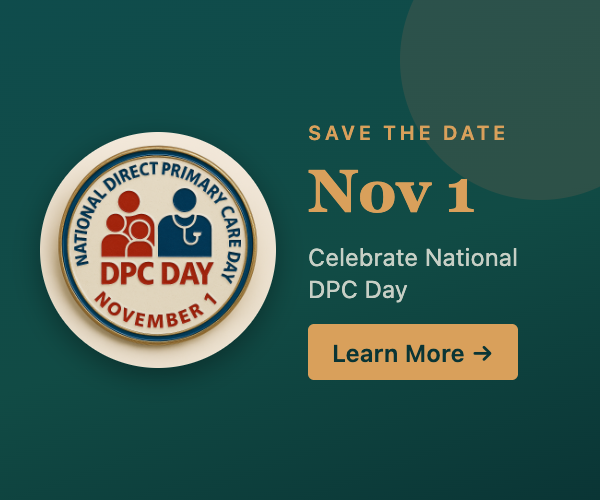
Kansas City is our first regional group. On National DPC Day, November 1, we open the door to DPC practices everywhere at DPCHub.org/join. If you already have a few DPC friends in your area, you have the start of a group.
If you don’t, come find them in the lounge purpose-built for DPC physicians and their practice teams. That’s how it started here.





Awesome! My two competitors/friends are in my building! Plenty of business to go around.
Indeed! “A rising tide lifts all boats” is more apt at local level than anywhere. There are plenty of disaffected patients looking for DPC. Although our movement was built on entrepreneurial spirit, a collaborative spirit that remains true to our principles is the best way to maintain our independence. 🙂
SO. COOL.