Electronic Consultations: A Thing of the Past?
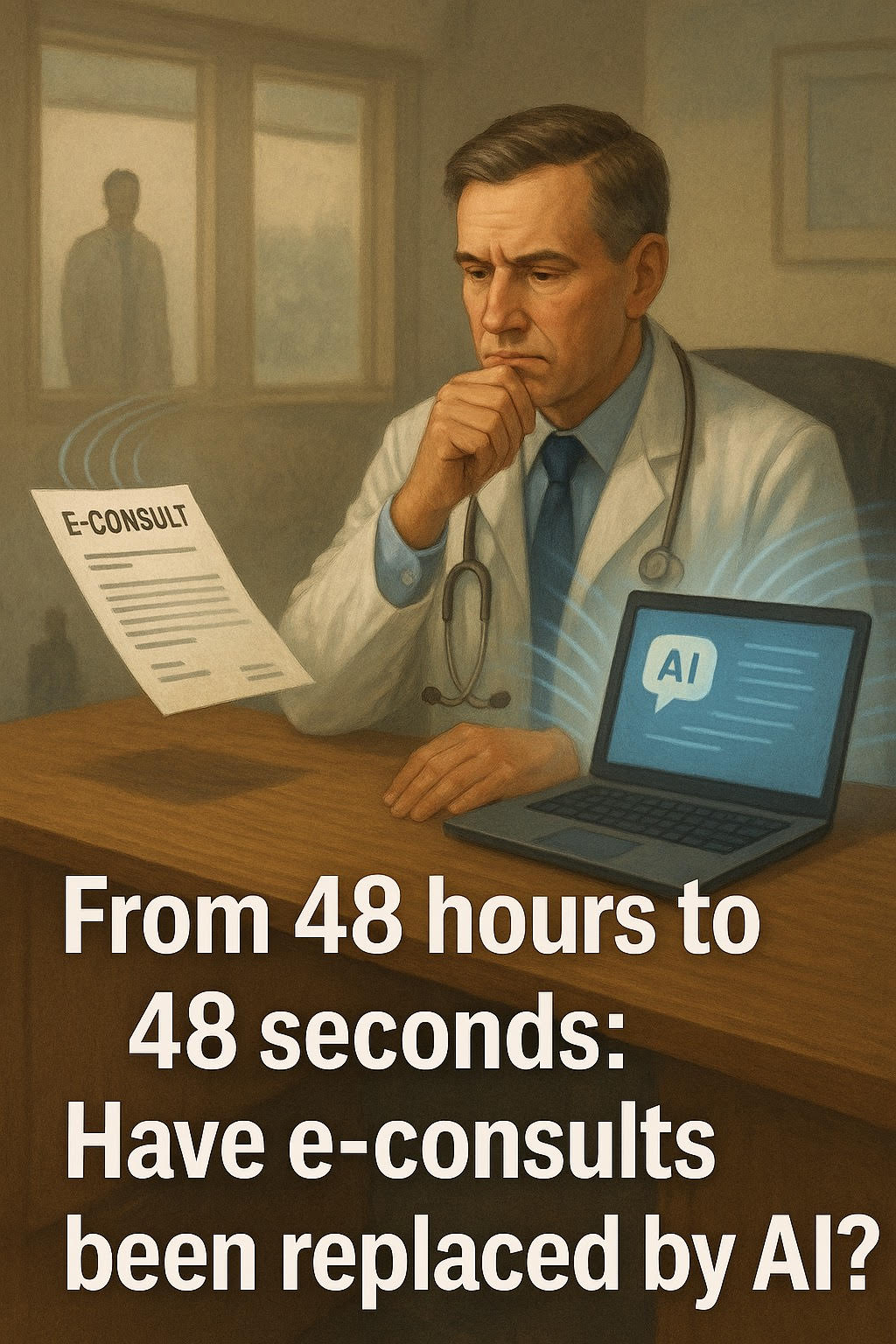
A lot has changed in the last several years. With the explosion of artificial intelligence tools, primary care physicians now have access to knowledge that once took days to track down.
I remember more than a decade ago being fascinated by the idea of electronic consultations. When I hit a clinical question beyond my scope, I would carefully write up a consult, laying out the patient’s history, exam findings, and relevant data. That packet of information would then be sent electronically to a specialist, who would review it and send back an opinion.
What I needed was knowledge—not a procedure, not someone else to manage the patient, not a new doctor–patient relationship. Just answers. Eventually, insurers even created billing codes to reimburse the time it took physicians to put these consults together.
Fast-forward to today. Information is at our fingertips in a way I couldn’t have imagined. One tool that fascinates me is OpenEvidence, a platform that not only aces USMLE exams but also processes differential diagnoses, suggests next diagnostic steps, reviews literature, and summarizes the latest evidence.
What once required a 24–48 hour turnaround through an e-consult, I now accomplish in minutes by probing an AI chatbot. What it can’t provide, however, is nuance. And nuance is where primary care physicians shine: we own the patient relationship, we understand context, and we know enough to ask the right questions. What we sometimes lack is the most up-to-date evidence or a fresh approach to problem-solving—and that’s where AI fills the gap.
Of course, this raises bigger questions: Will AI replace doctors? Could lower-paid professionals armed with AI tools step into our role? And with data suggesting AI use may actually decrease critical thinking, are we risking long-term damage?
For me, the shift is clear. I’ve stopped using electronic consult platforms. I now refer directly to specialists when truly necessary, but I lean on AI to sharpen my thinking, fill knowledge gaps, and keep me current. It hasn’t replaced all forms of learning—I still rely on videos for visual understanding—but it has streamlined much of what I once got from journals or CME modules.
That said, AI is not complete. It lacks experiential wisdom. Medicine is not only evidence-based but also experience-based. Some answers come not from randomized trials, but from a colleague’s lived knowledge of what has worked for their patients.
So yes—AI is a powerful tool, but an incomplete one. Then again, so are we as individual physicians. The future will lie in how we combine the two.
Is AI the new electronic consult? Or is there still room for both?