Protect the Mission: What Costco Can Teach Us About the Future of DPC
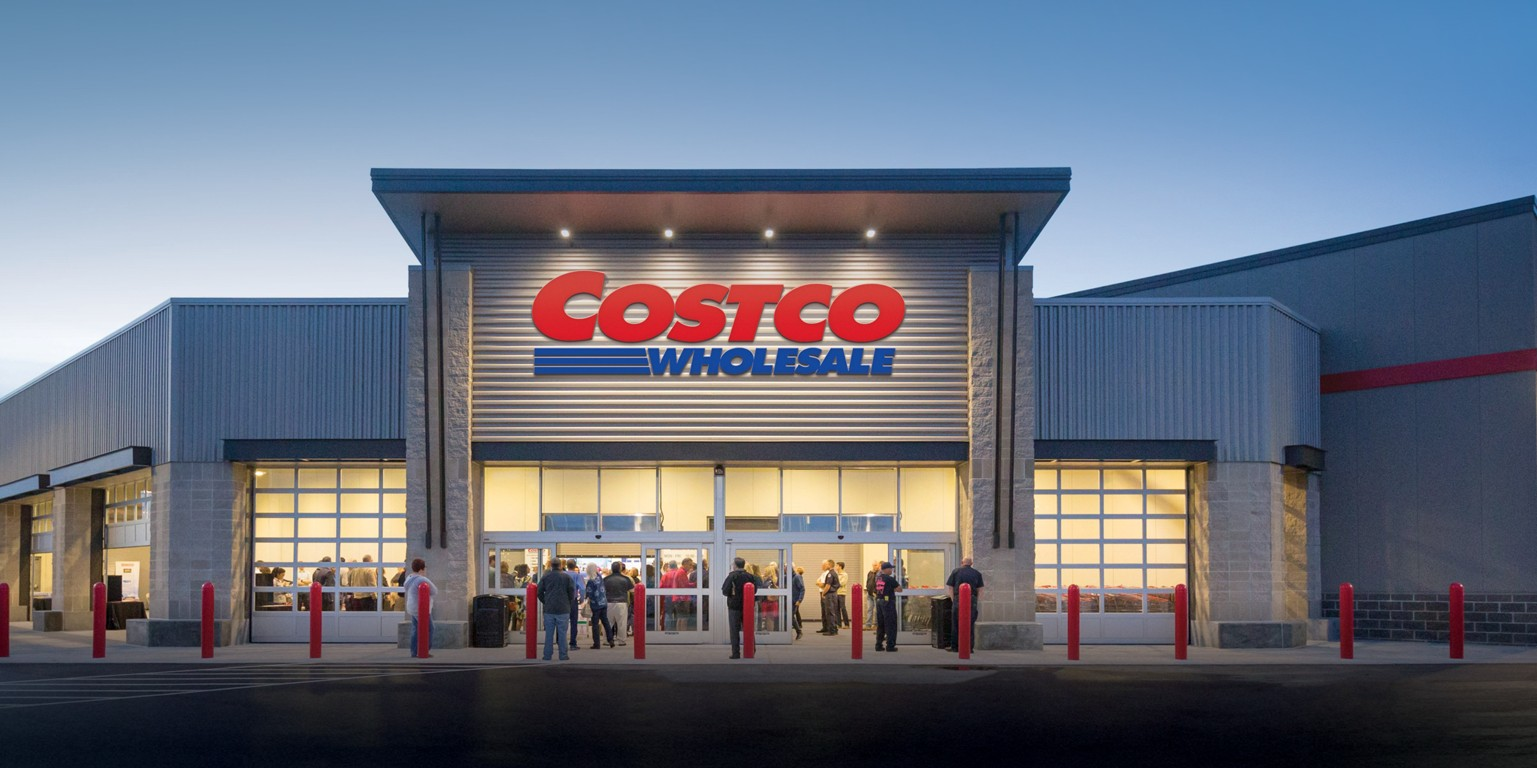
I was first introduced to Costco by my best friend, Alisa Biederman, and her family. As a teenager, I could not understand why a family would be that loyal to a grocery-store-meets-warehouse.
Then I became an adult. 
And somewhere along the way, I became one of “those” people—fiercely loyal to Costco. Like, 90% of the things in our home are from Costco. TVs, furniture, clothing, decorations, tools, and food, of course.
But here’s something I’ve noticed lately: I’ve been reading a lot of business books, and Costco keeps showing up.
Different authors. Different lessons. Same company.
One points to the way Costco invests in and retains its employees. Another tells the story of Jim Sinegal explaining Costco’s relentless focus on customer value to Jeff Bezos—a conversation that influenced Amazon’s pricing strategy.
And in Incorruptible, Eric Ries comes back to Costco several times.
But one particular story stopped me in my tracks. I literally stopped reading to share it with my husband, then immediately started writing a Facebook post before realizing: no, this deserves so much more than a Facebook post.
The story was about food safety.
Costco has historically required its food suppliers to meet standards that exceed federal requirements.
“When one of Costco’s produce suppliers installs expensive pathogen-testing equipment in order to keep Costco’s business, that same equipment tests all of the produce leaving that facility, including those sold at competing grocery stores.”
— Incorruptible, p. 265
Ries goes on:
“A single retailer controlling 9% of grocery sales performs roughly 30% of the nation’s food safety audit workload and is doing it more frequently and consistently than the federal government itself.”
— Incorruptible, p. 266
He calls this mission transmission.
Costco set out to protect its members. But by relentlessly protecting that mission, its influence extends far beyond the people who actually shop there.
And THAT got me thinking about Direct Primary Care.
If you’ve been around DPC die-hards long enough, you’ve probably heard us talk about “protecting the model.”
Keeping panels small. Protecting our time with patients. Maintaining boundaries. Staying independent. Not slowly adding back all the things we left traditional healthcare to escape.
Sometimes “protect the model” can sound rigid.
But what if protecting the model is actually the point?
Because we aren’t really protecting a “model.”
We’re protecting a mission.
Or at least I think we should be.
Hear me out.
Those choices don’t just protect today’s patient experience. They protect the health and longevity of the practice itself.
If we can build DPC practices that last—where physicians aren’t burning out, patients have real access, relationships have time to develop, and the economics actually work—we GET to keep doing this.
The economics make it sustainable. Protecting the mission makes it worth sustaining.
And longevity matters because a mission can’t travel very far if the practices carrying it don’t survive.
That’s where I think mission transmission comes in.
Costco’s influence on food safety doesn’t stop with the food sold in its warehouses. Its standards change what its suppliers do, and those changes benefit people who may never become Costco members.
Mission transmission.
A patient experiences what primary care feels like when their physician actually has time for them. Even if their spouse, friend, or coworker never joins a DPC practice, their idea of what primary care should look like has changed.
Mission transmission.
A physician sees a colleague practicing medicine with purpose and autonomy—and starts questioning whether burnout and 2,000-patient panels really have to be the price of practicing primary care.
Mission transmission.
An employer sees what happens when employees can actually reach a physician and begins questioning whether spending more on insurance is the same thing as providing better access to healthcare.
Mission transmission.
And as those expectations spread, health systems in communities where DPC is growing eventually have to respond to patients, physicians, and employers who now know something different is possible.
Mission transmission.
DPC doesn’t necessarily have to take over American healthcare to change American healthcare.
Just as Costco doesn’t have to sell all of America’s food to influence the safety of America’s food supply, DPC doesn’t have to care for every American to influence what Americans expect from primary care.
But for that influence to spread, we have to build practices capable of staying around long enough to spread it.
Which brings me back to protecting the mission.
Costco didn’t set out to regulate America’s food supply. It simply refused to compromise on what it believed it owed its members.
And the effects traveled far beyond its warehouses.
I think there’s a lesson there for those of us building DPC—and for those considering taking the leap.
DPC still serves only a tiny fraction of the U.S. population—roughly 0.4% by some estimates. And yet I think its influence is already reaching far beyond the patients who belong to DPC practices.
Which leaves me with a hypothesis I’d really like to test:
DPC practices built around a clearly defined purpose—and whose leaders fiercely protect that purpose from mission drift—will be healthier, more sustainable, and ultimately last longer than practices that don’t.
I don’t know yet if the data would prove me right.
But I think it’s a question worth asking.





Angela, thanks for writing this exceptional commentary about a book I have too have recently read. As your article shows, this book is full of information and guidance for anyone in this movement and should be required reading for us. In a movement that needs reassurance and confirmation, this book is a reminder that we are on the right path. It shows us that ethical mission driven companies can not only succeed, but far outperform their competition. More importantly, it gives us multiple examples of great companies with great missions that are dragged into corruption, how that corruption begins and ends. It also gives us some interesting options that DPC has not yet considered, including iron clad ways to lock out corruption, beginning with our initial mission statement and business model design, Eric Ries’s example of best-in-class healthcare is worth some attention as well: Devoted Health – a Medicare managed care company – not what any of us would have thought. Execution and preservation of the mission is the point, regardless of the business model – and it requires focused leadership, intense monitoring of the effects on our patients and honest self-evaluation so that attacks on the mission and be discovered and corrected quickly.
As an aside, Angela and I met at the recent DPC summit, in the ultrasound course. Thanks for finding my gall stone.
Garrison
Well said Garrison and thank you! Nice gallstone!
Angela,
I am about to retire after 12 years from the date of founding my DPC practice, Unorthodoc. We have a fantastic succession team in place, a fiercely loyal staff and patients so committed that they are helping fund my retirement “hobby,” the nonprofit that is being born out of the practice. Our mission 1) Expand DPC to patients who might not otherwise afford it, 2) preserve sustainable, regenerative and loan-forgiving workplaces for new primary care doctors, and 3) become reproducible enough for new communities to adopt without the “blessing” of government or corporate oversight.
I just wanted to stop letting profiteers borrow my oath for their own purposes and stumbled backward into DPC before it even had an agreed-upon name. Then I proceeded to have a career experience more fulfilling than any idealistic dream I ever had about being a doctor. One of its greatest joys has been watching my patients steadily raise the bar for what they expect in other healthcare environments. They inspire me every day. And I certainly resonate with the final sentiments of “Incorruptible;” where we assign our agency is a choice, even when the structures around us appear immovable. Physicians can take their oath and go somewhere that honors it. Patients are learning to vote with their voices and their wallets because they are starting to see options. Our colleagues see a troop of happy doctors and wonders where they are getting that. Mission transmission, indeed. And just like the examples in Ries’ book, success attracts vampires. Don’t let them in. We are doing far more here than just saving our personal sanity and ethics. We are building the future where 40 years from now, a young doctor works with their patient for an hour using whatever technology actually supports that relationship. The patient leaves with a plan they have bought into and knows they can afford it. The relationship holds both of them into the far distant future … And neither one of them has ever heard of me, Unorthodoc, or Direct Primary Care, because, in that future, it is the way that healthcare is practiced everywhere. THAT is mission transmission!
So good! Thank you for what you are doing! Should do a talk at the summit about this!!
Shoot. The article made me look up Costco and unfortunately the nearest one to me is in East Peoria. Oh well, I have Aldi’s, Hy-Vee and Kroger that takes me less than 5 minutes to get to (unless I hit a couple of red lights!) Sometimes I buy electronics online and I scour online the prices and even with shipping usually cheaper than a brick and mortar store.
LOL