NPR’s Membership Based Care
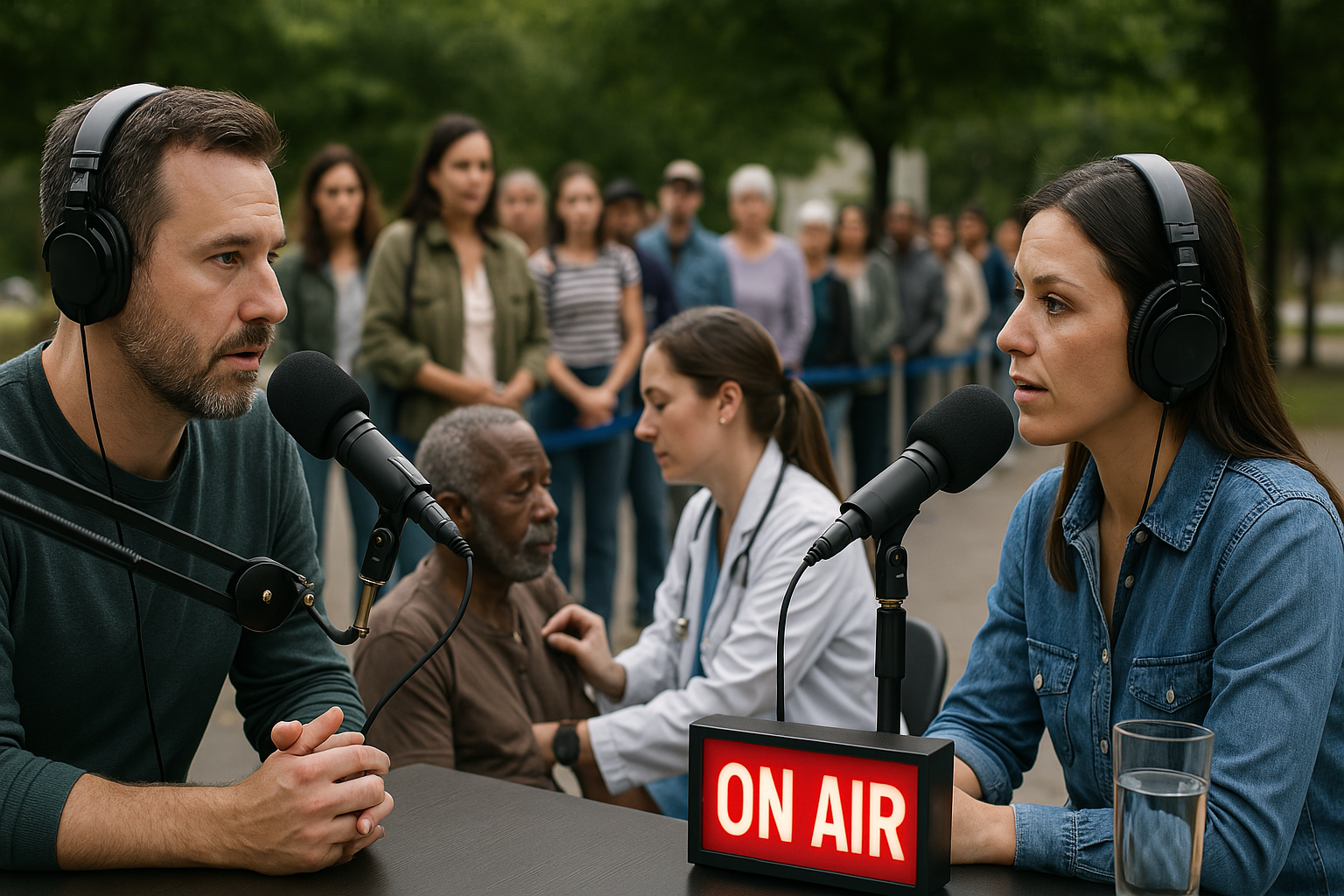
NPR recently aired an episode of Morning Edition highlighting membership based primary care and concerns around cost and access these practices may cause. This piece brings up several of the common misconceptions as well as some points worth discussing further. As DPC grows, more people will have opinions about the model. Therefore, clarifying misunderstandings becomes more crucial than ever.
DPC = Concierge
One of the stickiest conflations occurs between DPC and concierge. According to the NPR episode, “Direct care is a version of concierge that bypasses insurance altogether.” Explaining direct care in this manner makes DPC carry all the connotations of concierge medicine (expensive, elitist, inaccessible) while skimming over the most important aspect of the model – no insurance. They may as well also say “cars are a version of airplanes which bypass having wings altogether.” Concierge medicine started at the same as direct primary care but gained faster traction and awareness in the general population. They have generally charged a membership fee in addition to billing insurance. Part of the confusion comes from a lack of consistency even from the DPC community itself. Over the last two decades, there have been practices which have described themselves as concierge for marketing purposes, even if they do not bill insurance. Some in the DPC community reflexively call no insurance practices concierge if the monthly membership is above a certain dollar amount, even if the practice describes itself as pure DPC. A consistent definition is required in order to separate the culture and mission of DPC from the connotations of concierge medicine. Based on historical understanding, concierge medicine can be defined as membership plus insurance while DPC is membership only without insurance. There can be concierge practices with low membership amounts like One Medical, and there can be DPC practices with higher memberships. Whether or not a practice takes insurance is the vital difference which defines much of the core philosophy which differentiates DPC from concierge medicine.
Coverage = Care
The episode highlighted two patient responses to their doctor moving to concierge. One layperson and one retired nurse. The layperson responded “I’m insulted and I’m offended. I would never, never expect to have to pay more out of my pocket to get the kind of care that I should be getting with my insurance premiums.” In contrast, the retired nurse responded “…it might be to my benefit, because maybe I’ll get earlier appointments.” Most people in healthcare understand the value of good care and have begun to understand why coverage doesn’t equal care. In fact, many DPC practices around the country count doctors, nurses, hospital administrators, and even insurance company brokers and executives as patients. Insurance is fundamentally a financial product designed to manage risk, not to deliver care. Yet in healthcare, insurance is used for everything from preventive visits to minor illnesses, creating an overburdened and inefficient system. Coverage does not guarantee timely access. Patients often wait weeks for appointments, experience rushed visits, and receive unexpected bills, even when care is “covered.” After nearly a century of relying on insurance companies as gatekeepers to care, the general public understandably conflates coverage with care. As independent DPC practices continue to grow, each has both a responsibility and an incentive to educate their communities on this distinction. This is another reason why DPC physicians should define and defend the line between concierge and DPC as described above.
The “Health System”
Health insurance in America started in 1929, a year after penicillin was discovered. All care at the time was catastrophic and insurance as a financing vehicle made sense as medicine became more expensive with explosive advancement in care advancement and longer required training for physicians. In the 1960s, however, chronic care management and preventative medicine started developing. Technology also started making everything else cheaper in the ensuing decades. Meanwhile, post WWII, more people expected employers to provide health insurance; and then Medicare and Medicaid further expanded the use of insurance as the financing vehicle for healthcare. The last century has developed a fine tuned health insurance system. The growth of DPC is a natural separation of non-insurable services from insurance and begins the emergence of a pure health care system. This isn’t even just at the individual level. Self-funded employers which traditionally had TPAs and PBMs are now also adding DPC to their three letter arsenal, separating primary care from the rest of the funds used for insurance claims. Even as this happens, some don’t understand this separation. The interviewed patient complains, “You’re not fighting the system. This is a work-around the system.” As primary care continues to evolve out of insurance, more people will experience care unburdened by coverage. They may not understand the details of what is happening, but DPC will continue to move the system in meaningful ways.
A few other notable comments to address from the episode.
One issue which has no good solution in practice yet is the physician shortage. There are several commonly discussed opinions on this issue, spanning everything from financing and medical education reform to questioning the shortage itself. Several in the DPC community share Dr. Shane Taylor’s view from the interview where “she says it was either the membership model or leaving medicine, and serving only 300 patients is still better than serving zero.” Given the complexity of this issue, a subsequent post will look at the figures where the shortage narrative comes from and evaluate how DPC fits into the larger conversation.
Dr. Paul Carlan, a physician interviewed in the episode, suggests everyone “should be worried when folks are making decisions about how to practice that reduce their capacity to deliver that good back to the public” because the government helps pay for residency training. First, the federal government spending $55-70k/ year in a 3 year period does not quite make up for the $200k average debt students personally incur for medical school. Not to mention, part of the salary in residency goes to paying off interest on the $200k debt to the federal government. Second, even in a scenario where the government pays for the majority of medical school and residency, that is not a reason to be forced to take payments from for profit insurance companies.
Dr. Taylor’s interview feels incomplete. On the topic of costs, she notes “people are saying, oh, this is elitist, and this is only going to be accessible to people that have money. But ultimately, the numbers don’t work.” The quote feels like half of a full statement, but the bigger point is that most people pay indirectly into the health system via taxes and their employer. This is why, to grow DPC and to fundamentally change the healthcare system, engaging employers and the government is a difficult but important undertaking.
ALSO







Great discussion. Appreciate the insight and clarification. This will definitely help the discussions when patients start coming in the door. Day #3 – patience!
you had me clapping and shouting…right up until the last sentence. Engaging the “govt” is a bridge too far for me. I mean pigs might fly one day but I’ll believe it when I see it.
This is very helpful information and provides me some insight for navigating those who might have different views of DPC that might not be based on reality. Thank you
What exactly are you advocating for by this statement?
“This is why, to grow DPC and to fundamentally change the healthcare system, engaging employers and the government is a difficult but important undertaking.”
Employers provide some form of health coverage or care to 50% of Americans. This is a tradition that’s been growing since WWII. Government provides coverage to about 30% of Americans, a tradition started 60 years ago. This has two major implications. 1. Whole industries and committees exist in business and government, respectively, to tackle the issue to access to care and quality/cost. 2. Money for healthcare in the form of taxes and withheld wages are deeply ingrained in the American system and people expect to get some healthcare because of this.
For those in the DPC movement who care about saving primary care and reforming the healthcare system, we have to understand this reality. To address the points above, DPC needs to engage with those existing stakeholders to increase the visibility of what we bring to the healthcare system and to show them a better way. Change doesn’t happen passively. Without Garrison Bliss’ advocacy in the early 2000s, there would be no DPC movement today. Luckily there are people like Lee Gross and DPC Action who keep championing our issues: the HSA problem, the Medicare opt out problem, etc. On the business side of things, there are plenty of posts on this forum about “DINOs”. People will see a good thing and try to copy it without fully understanding it. Now, some argue that as long as independent DPC practices keep staying small and resilient, eventually the tide will turn our way. However, consider the CEO or Head of HR at a company of 200-500 people whose job depends on finding good benefits. They find an urgent care willing to provide access and care for a capitated rate and call themselves DPC. The care is much better than what you get in the traditional FFS model and now urgent care plus is what “real DPC” is in the minds of hundreds of employees and dozens of executives.
This is not for everyone. Having small, independently owned DPCs is vital for the movement overall. However, just as important are the minority, who hold all DPC truths as tightly as any other DPC physician, who are brave and crazy enough to jump into the deep end and deal with these larger issues to bend the healthcare system against a century of momentum.
Your post contains some assertions that I’d like to address.
First, implying that those who disagree with your perspective “don’t care about saving primary care” creates a false dichotomy that’s neither productive nor accurate. Many DPC physicians have different viewpoints on strategy while sharing the same commitment to improving healthcare.
Regarding employer engagement, I absolutely support showcasing our DPC model to businesses. However, we should be realistic about corporate priorities. Most CEOs and HR leaders aren’t primarily focused on continuity of care—they’re balancing employee benefits against budget constraints, shareholder expectations, and other business pressures. They may settle for solutions that appear sufficient on paper while lacking the relationship-based care that defines true DPC.
It’s also important to clarify that Direct Primary Care’s fundamental mission isn’t to “solve the healthcare crisis” in its entirety. One core purpose is restoring the patient-physician relationship—a mission I believe the advocates you mentioned (Bliss, Gross, etc.) would agree with. DPC was created to remove barriers between doctors and patients, not necessarily to overhaul the entire healthcare system.
While I appreciate your passion for expanding DPC’s influence, we should be careful not to dilute its core principles in pursuit of scale. There’s room for various strategies within our community without suggesting that those who choose a different path care less about healthcare reform.
I think this is a good discussion about a topic that is very difficult to figure out. Civil discussions are good. Thanks everyone.
Appreciate the thoughtful response Dr. Qiu and dialogue. DPC is arguably the best solution to primary care for patients, employers, communities, physicians and healthcare teams. At Nextera we prefer to be paid directly by the patient or by the employer (ie self funded where employee and employer contribute to health benefit plan premium). Over the past 16 years our membership has grown every year with the majority of that growth coming from employers (ranging from small businesses, to school districts, to municipalities, religious organizations and Fortune 500 companies).
It’s awesome to see more and more physicians doing DPC!