Evidence-Based Medicine or Evidence-Informed Medicine?
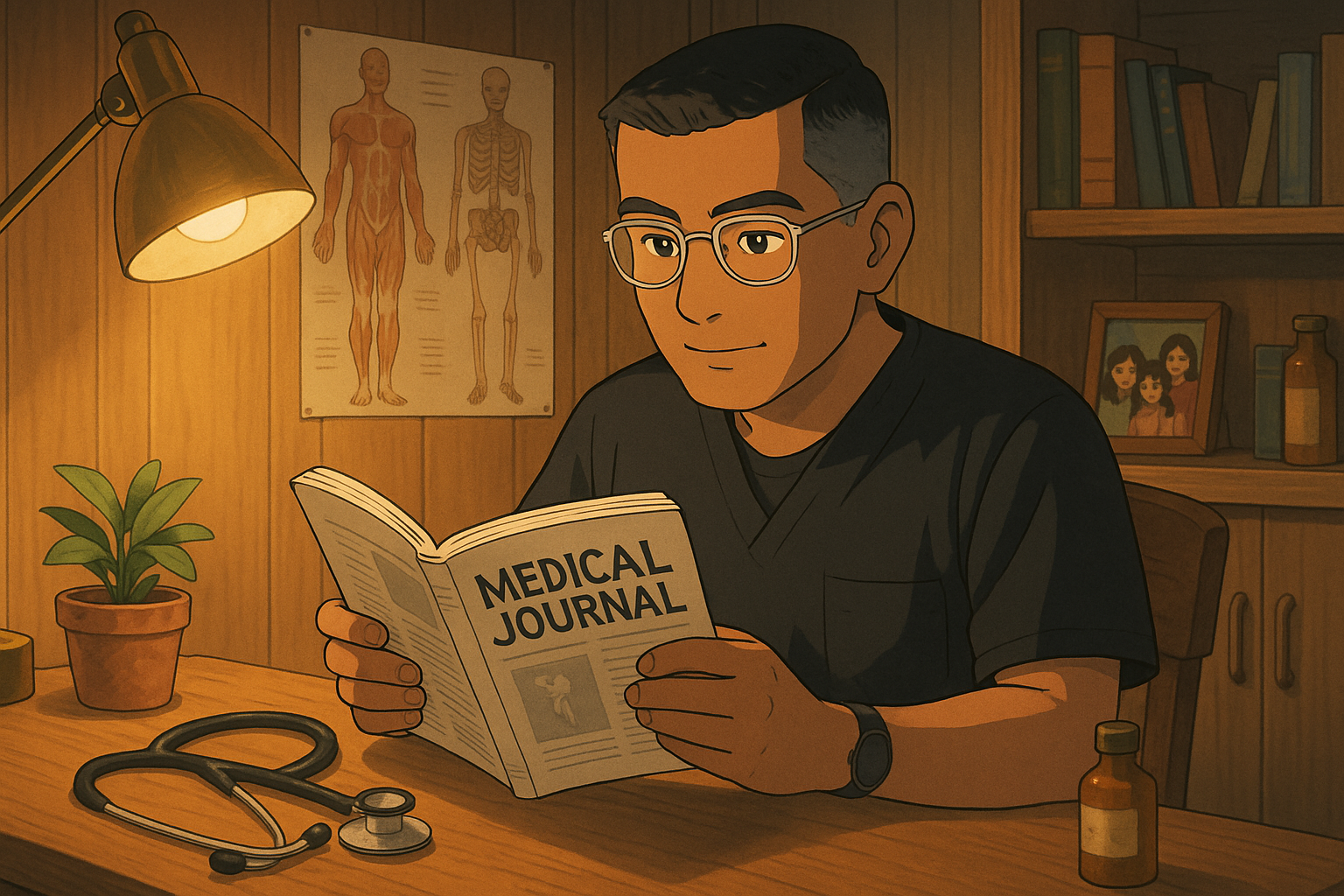
As doctors, we are trained to be scientists first. We’re taught to understand cellular processes, analyze patterns, identify missing data, form hypotheses, and ultimately decide whether to accept or reject the null hypothesis.
Our world is grounded in studies—once found in paper journals, then in electronic databases requiring strategic search queries, and now increasingly accessible through artificial intelligence-driven tools. But amidst this evolution, a fundamental question remains: What truly constitutes “evidence”? If something is published in a peer-reviewed journal, do we accept it as truth? And if something is not, does it lack value?
Fresh out of residency, I could list the hierarchy of evidence, believing it would guide every clinical decision. I often questioned the physicians who leaned heavily on anecdote, experience, and intuition. Shouldn’t science alone lead the way?
Yet over time, while I have remained a scientist, I’ve also learned to question science—constructively and critically. I recall countless journal clubs where we dissected studies to expose bias, scrutinize methodology, and determine if the findings were applicable to the individual patient sitting in front of us.
With experience, you begin to see the limits of population-based guidelines. Some patients don’t fit neatly into studied categories. Precision and genomic medicine now challenge us further—showing that what worked for a cohort may not work for the person in front of you. The era of the “N of 1” is here.
Early in my career, I was skeptical of the term evidence-informed medicine. Now, I find myself embracing it. Precision medicine often lacks large-scale trials. Integrative modalities may not be fully studied yet—but that doesn’t mean they’re irrelevant. We live in a globally connected world where information flows rapidly, and we must be discerning—not dismissive.
With this has come a growing awareness: data can be manipulated. Conclusions can be steered. Graphs can mislead. And some interventions, no matter how promising, may never receive funding for a randomized controlled trial. That doesn’t make them worthless—just unvalidated in a traditional framework. If used, we must be transparent about the limitations and the evidence (or lack thereof).
Even the concept of the placebo effect deserves reevaluation. When did placebo become a bad word? If an intervention is harmless and offers benefit—whether via biology or belief—shouldn’t we at least be open to it?
As a physician practicing in a direct primary care model, with access to cutting-edge testing and integrative approaches not typically available in insurance-based systems, I often encounter more questions than answers. What once seemed clear is now multifaceted. It’s freeing—and disorienting.
But one thing is certain: I now view science through more lenses than ever before. I understand that truth is only as accurate as the knowledge we hold today—and that knowledge evolves. As physicians, we must remain nimble, critical, and transparent. That is how we honor both the science and the individual.







The longer you practice the less you think you know!
What a wonderful summary of the challenge and promise of transparent patient responsive care. Doctors are not Oracles. Certainty is the enemy of truth, innovation and honest patient care. Primary care must convey both our evidence and our skepticism if we hope to earn the trust of our patients and optimize their outcomes.
Being a DPC physician means that I am better able to be a life-long learner. I now have more time to dig deep into unusual presentations of patients’ problems, and time to find out what the patient is really asking when they bring me an article to read.
One of my favorite things about DPC is having the time to individualize treatment plans for patients. That’s the art of medicine and why I believe we aren’t replaceable by AI.