Bogus Administrative Work is Removed with Direct Primary Care
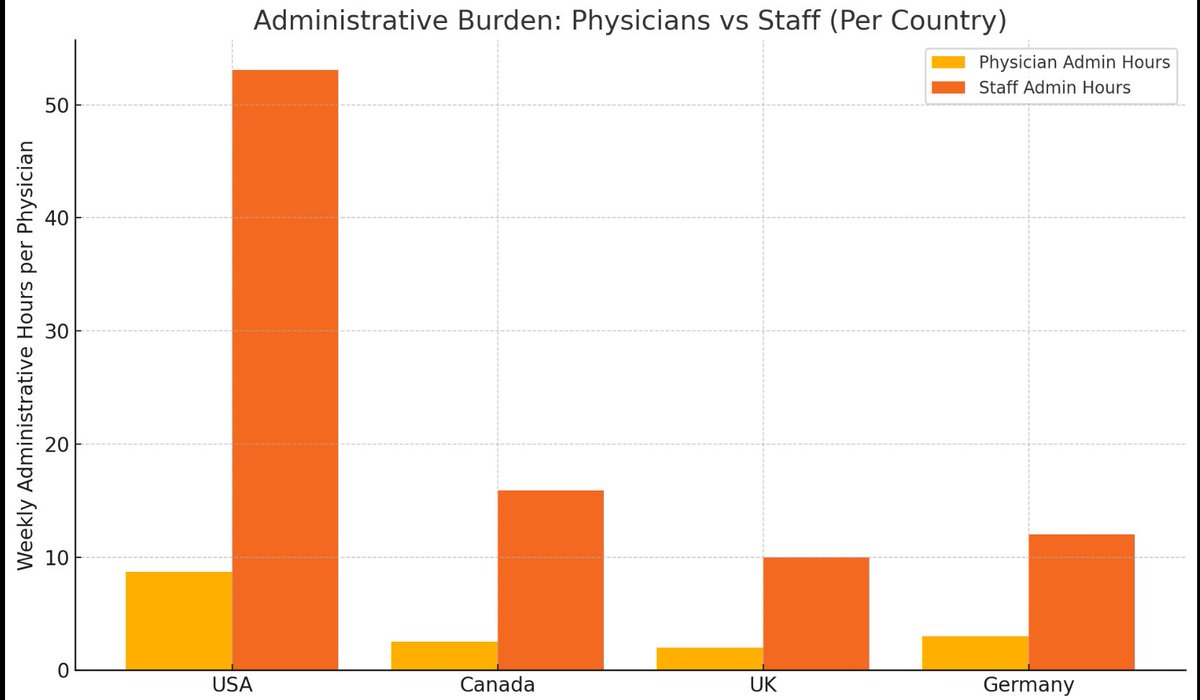
I found the above chart and found it very revealing. When you have no time to do real patient work, then your work suffers. The chart is from X:
Roughly 9 hours by the doctor, and 50+ hours by staff — just to keep up with the bureaucracy. That’s 60 hours not directed toward patient care. No other developed country comes close.
John Asghar, MD
Full disclaimer: This is a real doctor who is a spine surgeon. I cannot, however, find the source for the chart. That being said, these numbers for doctors here in the US seem accurate.
Direct Primary Care removes most of this administrative burden. There is no coding. There is no dealing with insurance companies or the government. Doctors also see fewer patients (on average, 8 a day vs. 25). This, in itself, makes for less administrative work.
The biggest benefit of DPC removing this burden is that it allows physicians to have more time with their patients and more time to think about their issues. We become better doctors. And they get better care.








Except in most areas with poor people they don’t want to pay a monthly fee for everyone in their family for care. I’m not slamming it and nice work if you can get it. Doubt many DPC docs do hospital care so continuity goes down the drain. I recognize that’s the standard now in most places except in rural areas. I have to disclose I retired four years ago but still socially visit the group practice administrator. She said they have no problem recruiting new docs who want to do a traditional practice. Office, hospital and call. An 8 hour office day with turfing admits to the hospitalists doesn’t sound too bad to me but I came from the “do it all” days and so glad I survived to make it to retirement age. No more on call chit.
I suspect that new F.P.’s are not qualified to do hospital or critical care anyways these days.