Be Like Mike – Direct Primary Car Care
Written by Liz Fischer
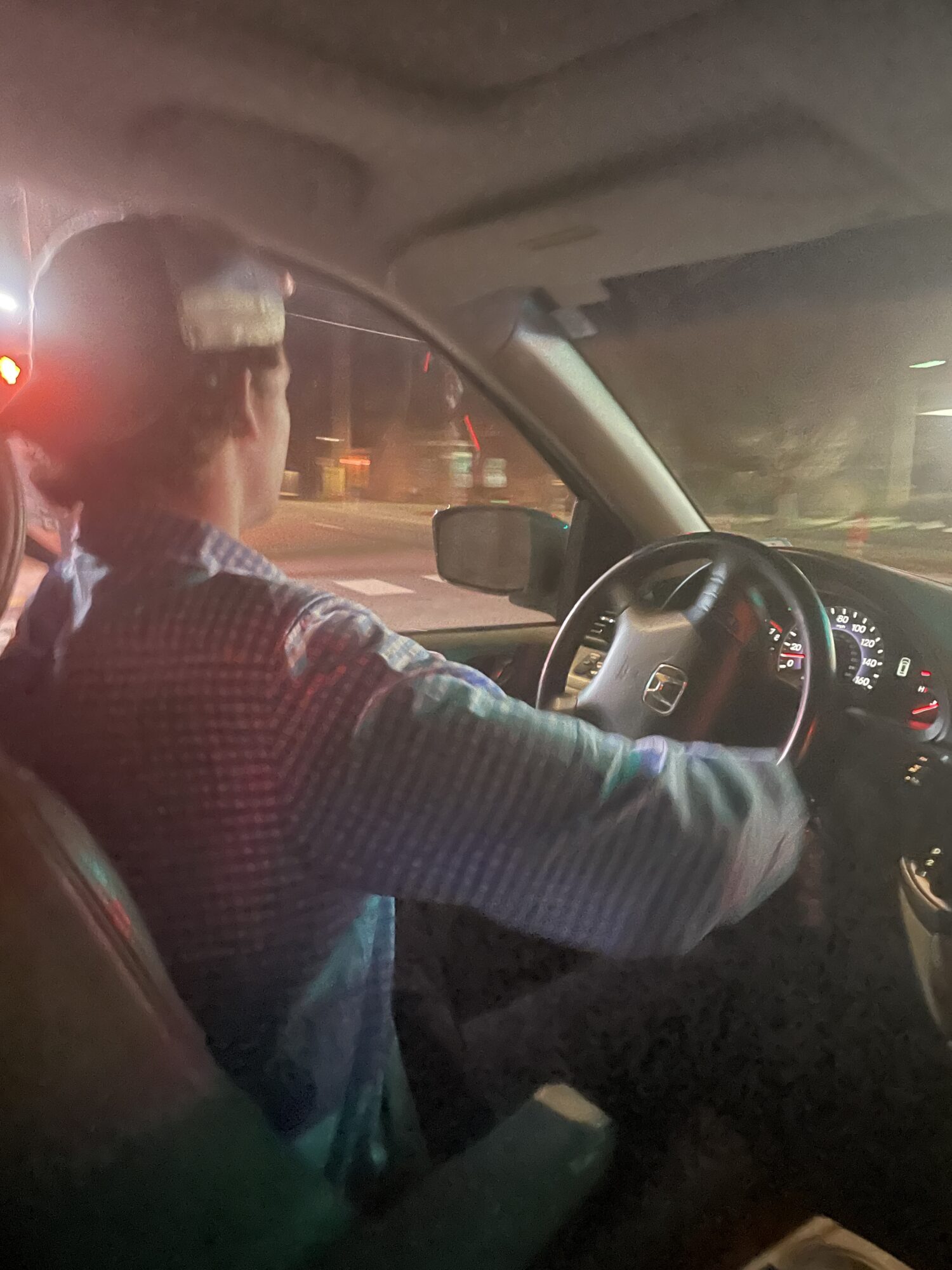
I love both of my 16-year-olds, my son and my Honda Odyssey minivan, and I want them both to function as well as possible for as long as possible. I believe that the prevention and treatment of injuries or illnesses that may afflict them are best overseen and directed by a person who:
- is well-trained
- is paid directly and
- is allotted enough time to give thoughtful and personalized care
My minivan receives primary care from such a person, Mike – who owns his own shop and who I pay directly for the time needed to keep her rolling in good working order. When she goes in for a checkup or a “sick” visit, Mike often offers his recommendations for repairs and preventive care and we engage in shared decision-making to determine the plan that we will take.
Over the years, we have developed an understanding that I am not going to agree to every treatment that he suggests, and I have come to trust that he will help me to not to ignore something that might prove fatal. For people, however, in insurance-centered medicine, you may have a doctor who is well-trained, but often isn’t allotted enough time to give thoughtful and personalized care.
When I make an appointment for my beloved minivan with my mechanic, Mike doesn’t just do what he can in a set interval of time, put his hand on the closed hood and say –that’s all we have time to address today, please make another appointment. Instead, I describe to him my chief complaint (as well as I can), he assesses the minivan, and he gives me an estimate of the time and cost to address (or hopefully fix) the problem. Sometimes this can be achieved the same day, sometimes we need to schedule a future appointment for the work and sometimes she just needs to be admitted. Whatever therapy or procedure needs to happen is given a realistic time frame that takes into account the time needed to actually achieve the work. The minivan was built in a factory on an assembly line so caring for it would seem to be straight forward. Even so, through the years she has amassed her own mechanical quirks and history, so I value the continuity of care she receives by having her worked on by the same primary care provider (mechanic). Having no verbal skills, she is an ineffective historian. The mechanic and his clinic know her very well, however, having seen her through some health challenges and injuries. Carrying around a family of 5 for 16 years, her lifestyle has not always been easy, and her health has not always been our top priority. Her left sliding door won’t open on an incline, she has skin damage that may eventually need to be addressed but is purely a cosmetic issue at this point and, until recently, her engine fan would blow for a few minutes whenever I stopped the car. I assumed that these hot flashes were due to advanced age, and I failed to mention the blowing symptom to her PCP until she recently overheated on a short drive. I cooled her down, gave him a call hoping to avoid needing an auto ambulance. Mike said to bring her in with a careful eye on the engine temperature light to avoid possible death.
Mike and I are working together to determine the root cause of the heat and what can be done to cure or manage it. We have engaged in shared decision-making to determine a conservative approach to addressing the problem and weighing the potential cost. The current plan is to observe her over the next month to determine if there is a very slow leak of coolant that she can live with or if she needs to go in for some higher-level diagnostics or a possible exploratory operation. At the acute visit, he gave her some much-needed fluids, showed me how to safely check the coolant and told me what to watch for in the temperature of the engine (i.e., stop if the engine light goes above the halfway mark, immediately stop if it is moving quickly). Mike has set my expectation that we are not fixing the problem, just managing it. We hope, like some human ailments, that the car will live a long life and eventually die from other causes before this problem is a mortal threat.
Unlike Mike, most doctors today have little control over their own clinical time. When I bring my car in, I do not know how long it will take to get fixed and neither does the mechanic until they engage with the car. In primary care, the problem must fit the time allowed (or half of the time if you are double-booked), which assumes that the issue will be presented, explored, observed, assessed and a treatment plan created in a finite time. The patient, who was not made on an assembly line, is treated like they are on a moving conveyor belt. The clinic factory must keep up production and can only slow down slightly (i.e. run behind schedule) for the benefit of a patient who has an issue that doesn’t fit the time allowed. The doctor, who was not trained to work on an assembly line (although our youngest Fischer Clinic doctor might disagree with this statement) must work at a pace that doesn’t allow for slowing the machine because there are appointments crammed to the end of the clinic day that must also all be addressed. The appointments can’t be moved to the next day, so, as the saying goes – something’s gotta give.
When my husband, Dr. Ben Fischer worked in an insurance-based clinic, he and his nurse Roxie worked incredibly hard to shield their patients from the reality of the 7- 7-minute visit, but this came at a personal toll for them. Primarily for Ben, it meant that he could only gain time with patients by pushing charting and calls to after-hours. It is a little bit of a haze now (thankfully), but he would stay after the clinic closed to return phone calls and he would come home when “all” he had to do left was charting. We would eat dinner together with our 3 young kids and after dinner he would do bath time and read to the kids while I cleaned up the kitchen, which I didn’t mind because our children weren’t there. I would have had PLENTY of time with the kids and he would have had none. We would typically chat for a few minutes after the kids went to bed as he signed back into the mothership EMR in the computer nook off the kitchen. He would peck away at the computer choosing the appropriate check boxes to satisfy the billing codes making sure that smoking status was not only documented, but that it was documented in the way that the billing code demanded for at least two hours a night, so I often was asleep before he finished. When the medical mill was open, he never went to any school performances, teacher conferences, and never ate lunch without also working. He rode his bike to and from work in part just to make sure that he spent a few moments of daylight outside.
If by working that way, he went to bed every night feeling peaceful and content that everything was properly addressed, that nothing important was slipping through the cracks and that he had cared for his patients in the way that he had imagined when he chose primary care, then we might not have recognized the potential of the direct primary care model and the fact that it was worth disrupting his professional and our personal life to try.
As a physician, you are well-trained, and if you want to have enough time to give thoughtful and personalized care, you will have to take control over your time, the way Mike has control over his. DPC allows you to do that.
Good and thoughtful care is now up to you, but by controlling your time you make it possible to deliver Mike the mechanic level primary care. Since I love my son more than my car, I have Dr. Zane Lapinskes – a quintessential and extraordinary physician in our DPC practice – look after him. He’s got Teddy running better than our minivan and has our complete trust.
As a side note, 16-year-old son has asked to take the minivan – now dubbed “The Old Grey Mare” with him to boarding school for his junior year and one (of many) stipulations is that he finds a local mechanic who can – be like Mike!