The Benjamin Franklin Effect: What the “First American” Can Teach DPC Docs About Marketing
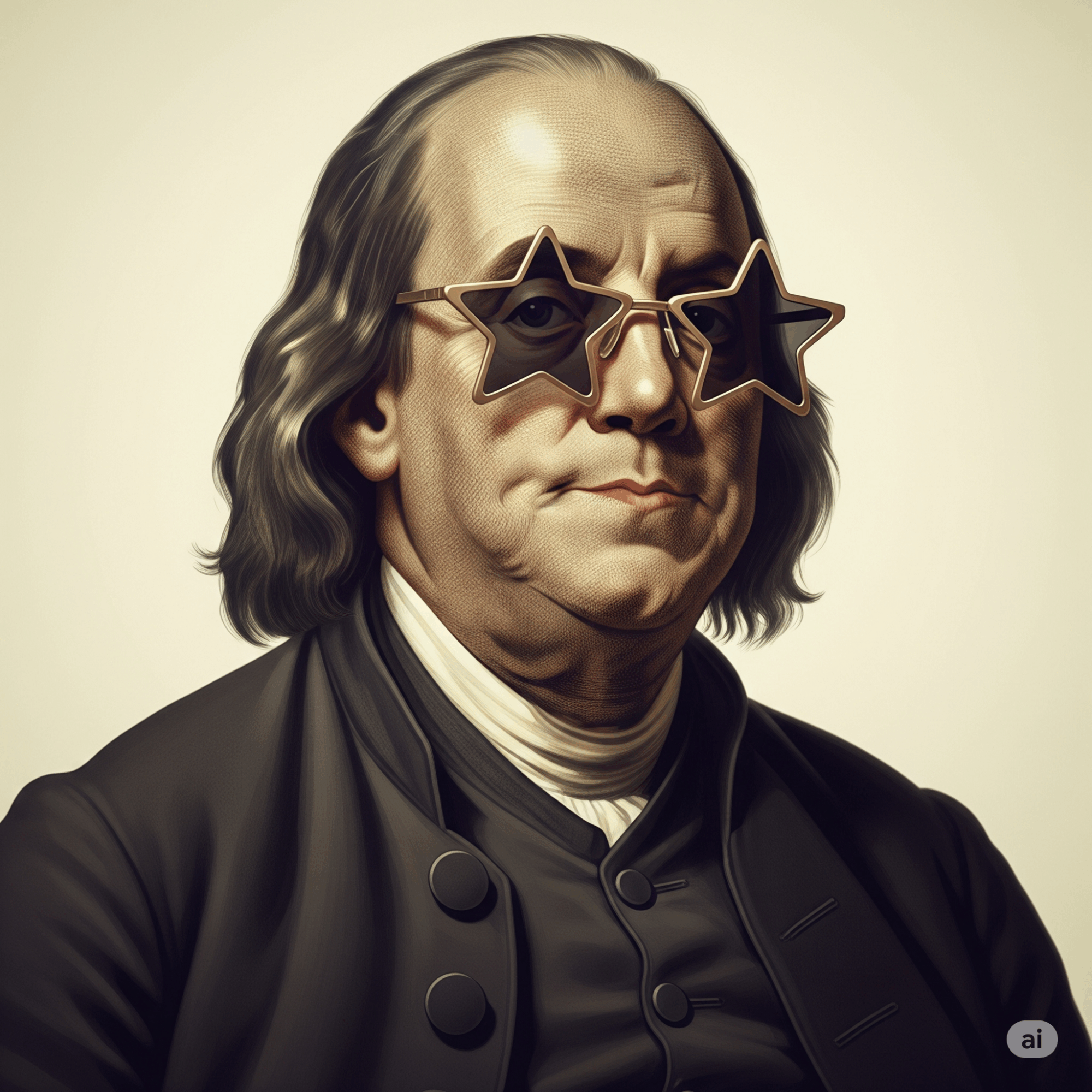
I love counterintuitive things that are supported by the data. And this is one of them. This particular paradoxical nugget started in 1736 when Benjamin Franklin was serving as a clerk to the Pennsylvania Assembly. A powerful new member of the assembly, “a gentleman of fortune, and education,” didn’t care for Franklin or his policies and threatened to make life miserable for him. Rather than resorting to submission, flattery or pandering, The Newton of Electricity invented a better approach.
When Franklin, who had founded the Library Company of Philadelphia (the first modern library in the United States) just 5 years earlier, learned that this “gentleman of fortune” shared a love for books, he reached out to borrow a rare book this man owned. The man agreed, Franklin read the book, and returned it a few days later with a thank you letter. “When we next met in the House he spoke to me, (which he had never done before) and with great civility; and he ever after manifested a readiness to serve me on all occasions, so that we became great friends, and our friendship continued to his death”, Franklin recounts in his autobiography. As history played out, that’s where their friendship began, and the Franklin Effect was born: “He that has once done you a kindness will be more ready to do you another, than he whom you yourself have obliged.”1
Over a century later, this phenomenon has been studied and confirmed. One of the landmark studies was performed in 1969 by psychologists Jon Jecker and David Landy when they enlisted 74 participants to take part in an academic contest with cash prizes. As is the case with these types of studies, the lead researcher was actually an actor, and he was instructed to be a jerk to the participants. There were two arms of the study wherein the participants were asked that the winnings be returned. In the first group, this distasteful “researcher” personally asked for the money to be returned because he was using his own funds and running short on cash. In the second group, they were approached by an office assistant who asked the contestants to return the money claiming it was a drain on the Department’s budget. And then there was a third arm of the study, the control, where the contestants were allowed to keep their winnings. Each of these three arms had winnings of different value, but what mattered was the direct request for a favor. Despite the “researcher” being rude, it was when he came and asked for a favor that people came to like him more. You can call it The Franklin Effect, social reciprocity, Self-Perception theory or good old fashioned kindness. But as we hem and haw about whether or not we should ask patients for Google reviews or to provide a testimonial for our website, let us remember the conclusion of these two researchers, “Under certain circumstances, when an individual performs a favor for another person, his liking for that person will increase.” 2
So next time you are on the fence about whether or not to ask a patient for a review, channel your inner Benjamin Franklin!
1 “The Autobiography of Benjamin Franklin”, page 48 Archived January 18, 2015, at the Wayback Machine.
2. Jecker J, Landy D. “Liking a person as a function of doing him a favour.” Hum Relat. 1969;22:371–8.