Maine Has a Physician Shortage and No Preceptor Tax Credit
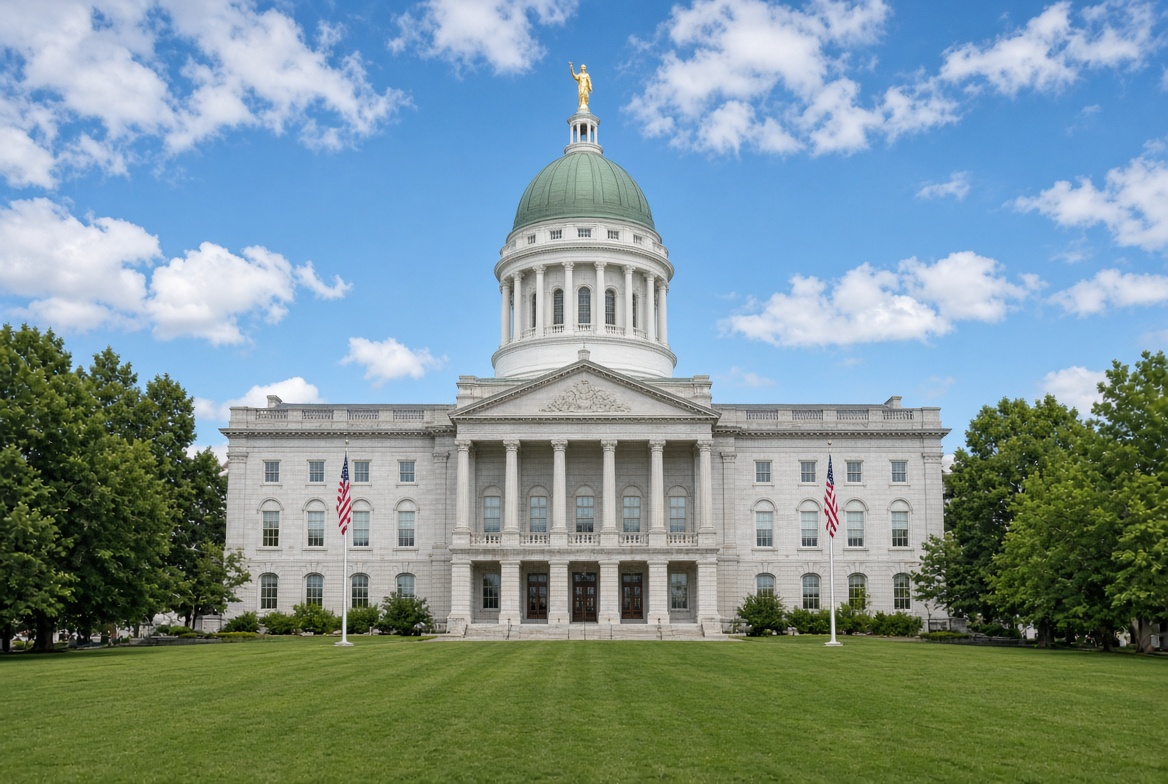
Every legislative session, Maine officials describe the physician shortage in serious terms. There are task forces, hearings, and testimony about rural patients driving thirty miles or more for care. I wanted to see what the state actually does to support the people who train the next generation of physicians.
For close to twenty years I’ve hosted a dozen or more learners a year in my practice, medical students and residents. It’s uncompensated, which is how it has always worked, and I’ve never minded, because someone did it for me. But it raised a simple question: does Maine do anything to recognize the physicians who do this work? Colorado does.[1] South Carolina does.[2] Maine does not.[3]
The bill that almost was
In 2019, the Legislature took up LD 1256, “An Act To Provide a Health Care Preceptor Tax Credit.”[4] The proposal was modest: $500 per student, capped at $1,500 a year, refundable.
It cleared the Taxation Committee in May 2019 with an “Ought To Pass as Amended” report, and an amendment was adopted by both chambers. Then it stalled. The Legislature’s own bill-status page lists its final disposition as “Died Upon Conclusion of the 129th Legislature, Nov 16, 2020.”[5] It never became law. The statute section it would have created, 36 MRSA §5218-B, does not exist; the Revisor’s index of Maine’s income tax credits runs from §5218-A straight to §5219.[3]
One more detail worth noting. As written, the bill would have paid only for precepting advanced practice nursing students.[4] Not medical students, and not residents. This is not a criticism of nurse practitioners or of training them. It does show that when the state first considered subsidizing clinical training, it chose to support one track.
Then it stopped
I looked for a sequel: a reintroduction, a revised version, a study bill. I reviewed the 130th, 131st, and 132nd Legislatures and could not find one. If I missed it, I’d welcome the correction.
Meanwhile, other states kept refining their programs. Colorado pays $2,000 per qualifying preceptorship to clinicians in rural and frontier areas, up to $6,000 a year,[6] and in 2022 extended the program to tax years before 2033.[1] South Carolina’s credit covers physicians, APRNs, and PAs, paid per clinical rotation, and its legislature has been taking up changes to it.[2] Neither is a particularly red or blue state. They simply decided the people doing the training should be recognized.
Why this matters to independent practices
A tax credit follows the physician, not the payer. It doesn’t depend on which insurer or program a practice contracts with, or whether it contracts with any. That makes it one of the few workforce tools that reaches small independent practices, including direct primary care, on the same terms as everyone else. Much of the training that happens in Maine happens in exactly those settings: one physician, a few exam rooms, and a student who gets to see what the work actually looks like.
It would also cost very little compared with the workforce and infrastructure spending moving through Augusta right now.
The takeaway
Training a physician is slow and largely invisible. It happens in exam rooms, on call nights, and in the hallway after a delivery. The state can’t see it, so it doesn’t pay for it, and the cost lands entirely on the people doing the teaching.
A state that says it wants more physicians should be willing to support the ones training them. In 2019 Maine came close to trying, and the bill expired. The shortage is real. So is that record.
Sources
- Colorado General Assembly, HB22-1005, “Health-care Preceptors Tax Credit” (signed June 1, 2022): leg.colorado.gov/bills/HB22-1005
- South Carolina Revenue and Fiscal Affairs fiscal impact statement, S. 969 (2023-2024), describing the existing preceptor credit for physicians, APRNs, and PAs: legiscan.com/SC/text/S0969/id/2994188
- Maine Revisor of Statutes, Title 36, Chapter 822 (income tax credits) index, showing §5218-A followed by §5219 with no §5218-B: legislature.maine.gov/statutes/36/title36ch822sec0.html
- Maine Legislature, LD 1256, HP 917, “An Act To Provide a Health Care Preceptor Tax Credit,” 129th Legislature (bill text): legislature.maine.gov/legis/bills/bills_129th/billtexts/HP091701.asp
- Maine Legislature, LD 1256 text, amendments, committee history, and final disposition: legislature.maine.gov/legis/bills/display_ps.asp?paper=HP0917&snum=129
- Colorado Department of Revenue, Rural & Frontier Health-Care Preceptor Tax Credit instructions (form DR 0366): tax.colorado.gov/sites/tax/files/documents/DR0366_2026.pdf
Remember, National DPC Day is November 1, the day when people start enrolling in insurance plans. Get the word out by sending them here.