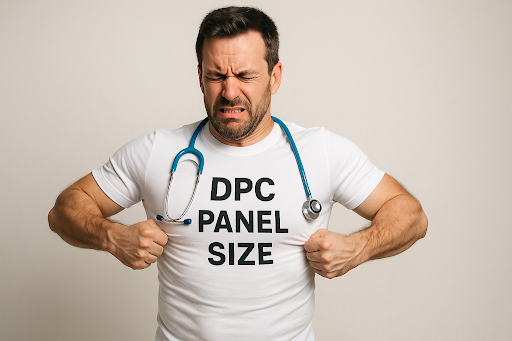
DPC Myth #4: A “full” panel looks the same for everyone (rethinking the magic number).
When I first considered Direct Primary Care (DPC), I made a full commitment. I read every book I could find, attended the national conference, spoke with local DPC doctors, and consulted with physicians around the country.
Everywhere I turned, I heard the same thing:
“A full-time DPC practice manages about 650 patients.”
At the time, that number sounded like a dream — especially after managing a patient panel of over 3,000 while working just 3.5 days a week in traditional medicine. 650? No problem, right?
Well, it turns out it’s not quite that simple.
When 650 No Longer Felt Right
Once I launched my own practice, reality set in. Yes, I wanted financial security. Yes, I loved seeing patients. But I also wanted:
- To be in the office only three days a week
- To pick up my son from aftercare by 4pm
- To actually have a life outside the clinic
Add to that the chaos of taking over aspects of a retiring practice while wearing every hat — clinician, business owner, marketer, admin — and let’s say 650 no longer felt dreamy. It felt like a recipe for burnout.
Six months in, I started slowing enrollment. Not because I was full, but because I was exhausted.
And that’s when my questions — and the answers I heard — began to change.
You Can’t Copy and Paste Someone Else’s Practice
Through honest conversations with other DPC docs and repeat conference visits, here’s what I started to understand:
- Panel size is personal. One doctor’s full and flourishing 500 may be another’s bone-tired 200.
- The type of patient population matters. Chronic conditions, complex cases, or high-need patients = more time and energy per individual.
- Unpaid or behind-the-scenes support matters. Some docs have spouses, family, or partners helping them — others don’t.
- Creative income streams impact the balance. Office subleases, side services, or additional skills can help alleviate pressure on patient volume.
That last point really hit home when I reconnected with Dr. Belen Amat, who previously owned DPC of West Michigan.
What Dr. Amat Taught Me About Sustainability
Dr. Amat shared that over her years in practice, she’d carried patient panels ranging from 200 to over 400. But what finally felt right was 250. She also diversified her income streams — subleasing space in her office and offering immigration physicals to offset costs and smooth out the financial ups and downs inherent in being a solo doctor.
Hearing that shifted something in me.
My New Magic Number: 200–250
I’ve realized this:
I like having time to think — to both ideate solutions to patients’ unmet needs and help my kid troubleshoot his DIY RC jet.
I like the mental margin to:
- Plan workshops and patient education
- Check in on colon cancer screenings.
- Read, dream, and build sustainably.
And right now? That margin happens when I stay near 200–250 patients.
And guess what? That’s okay.
Success Isn’t One-Size-Fits-All
DPC was built on the belief that healthcare can be personal, thoughtful, and freeing — for patients and for physicians. So why should our definition of a “successful panel” be boxed in?
If you’re thinking of starting or growing a DPC practice, I hope this leaves you with the freedom to ask:
- Who am I really building this for?
- What balance do I want?
- What kind of life do I want to live while practicing?
Your “full” might not be 650. Or 500. Or even 300.
And that’s more than okay — that may be your superpower.
This DPC Mythbuster Series aims to debunk the most common fears, misconceptions, and half-truths that deter doctors from embracing Direct Primary Care. These opinions are from each individual blogger. You may or may not agree with them, but either way, leave a comment with your thoughts.